




Showing posts with label Biomimicry. Show all posts

Friday, July 9, 2010

So THAT is Why Jane Lived for So Long

A recent published report getting a lot of play in scientific circles is about recent studies showing that highly stimulating, interesting, social environments reduces the incidents of cancer in mice.

Animal lovers proceed at your own risk:
Mice raised in a complex environment providing social interactions, opportunities to learn and increased physical activity are less likely to get cancer, and better at fighting it when they do, a new study suggests. A mild boost in stress hormones seems to be what keeps the cancer at bay by switching on a molecular pathway that restrains tumour growth.

Researchers from the United States and New Zealand injected mice with melanoma cells — the deadliest form of skin cancer. After six weeks, mice raised in an enriched environment — extra-large cages housing 20 individuals with running wheels and other toys — had tumours that were almost 80% smaller than those in mice raised in standard housing — five animals to a cage with no additional stimulation.
Once finished with their studies, each of the scientists removed their lab coats, grabbed their keys, found and started their Excursions in the amply provided parking area, and drove home to Shady Acres gated community.

I made that part up.

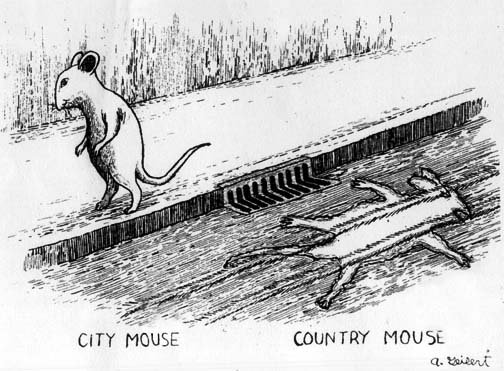
Rats in a cage, we are. Time to start burrowing an escape route.

But this does point to an interesting lesson. Jane Jacobs instinctively understood the importance of complexity in cities and the critical nature in confronting the nerve gas of modernist planning and engineering. That highly engineered solutions, aka those arrived at during the industrial and post-industrial eras, were perfectly fine for erecting buildings, bridging streams, constructing aqueducts, but they should not and must not interfere with the complexity of social structures, cities.

In many ways, Jacobs was Janine Benyus before Janine Benyus was Janine Benyus, just with regard to human civilization and habitat.

Driving highways through the middle of highly evolved, complex cities is the equivalent of trying to fly with birds like this:
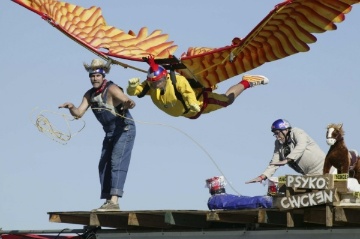
http://habercininyeri.files.wordpress.com/2008/05/flugtag1.jpg

I've said for years that the 21st century will be the biological century and that there is far more to learn from natural sciences with regard to cities than anything modern planners, engineers, and architects could ever theorize or imagine.

In other news, we get a mindless ranking of top 100 "green" architecture firms that reads more like 'last surviving architecture firms' or those having not been fully wiped out by global economic repurposing. None of the top 10+ really do any kind of planning or understand the intricacies of buildings within their neighborhoods, with the exception of AECom which has swallowed up every planning, landscape, and engineering company they can get their hands on. Truly green indeed.

On the other hand, here is the neighborhood Jacobs lived in for many years and wrote about during Life and Death:
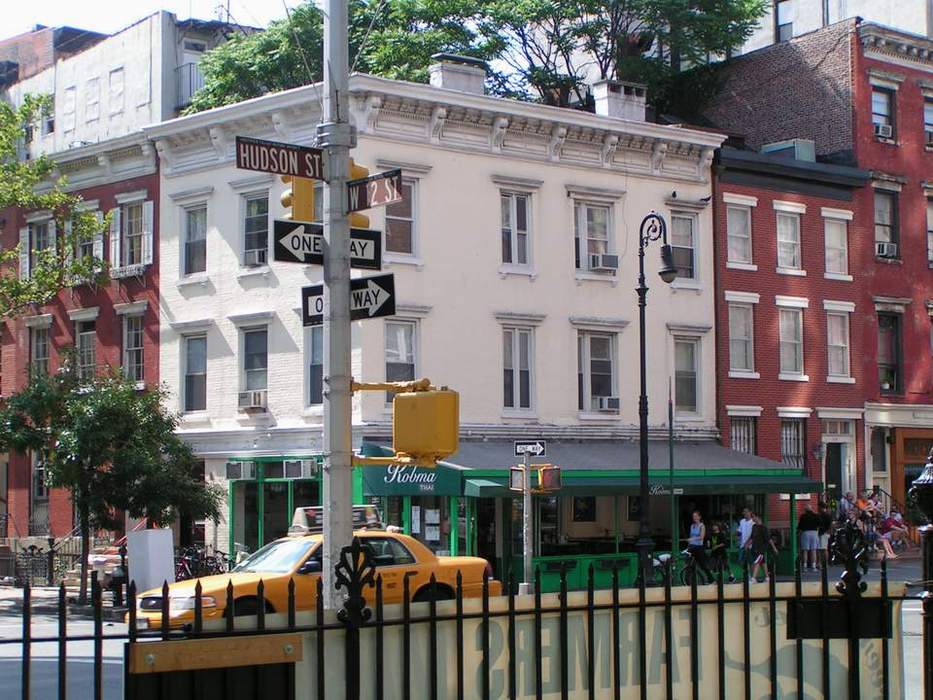


http://www.cyburbia.org/gallery/data/6514/jane_jacobs_neighborhood_00.jpg

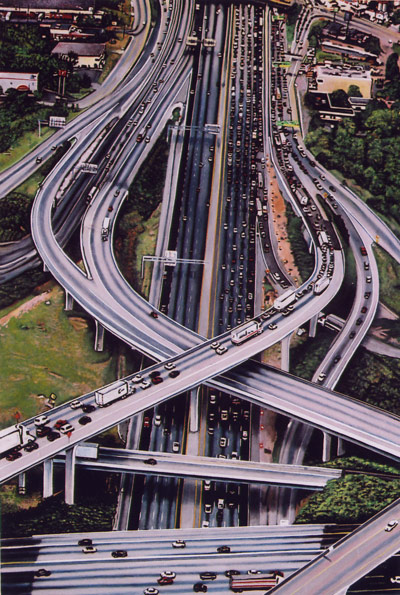
And here is the city as logically defined by the assembly line, what we have successfully replaced complexity, vitality, and interconnectivity with in many cases, Dallas included:
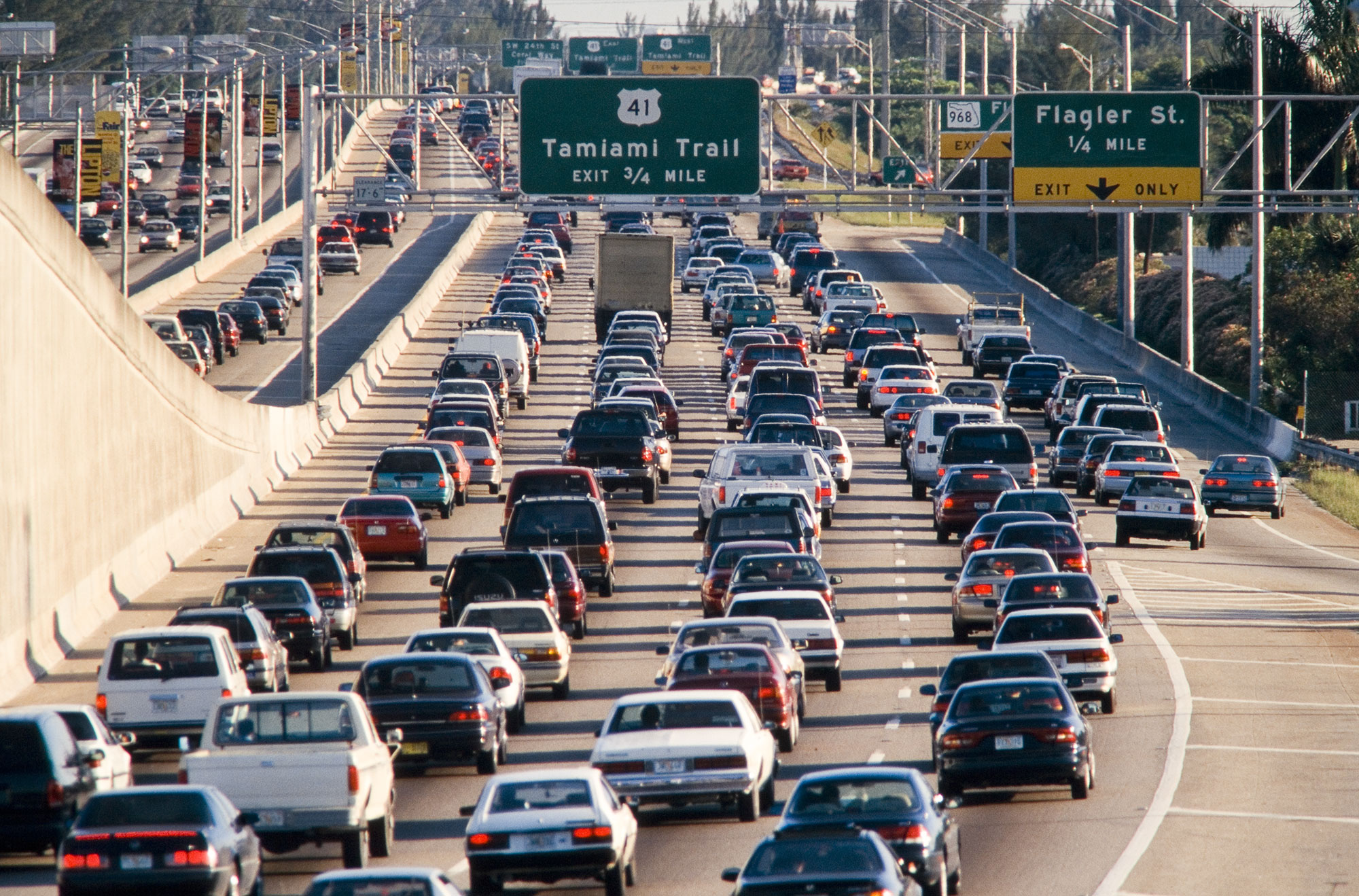
http://suburbanprepper.files.wordpress.com/2009/08/27862-hi-traffic1.jpg

Up on the conveyor belt, every morning, noon, and night:
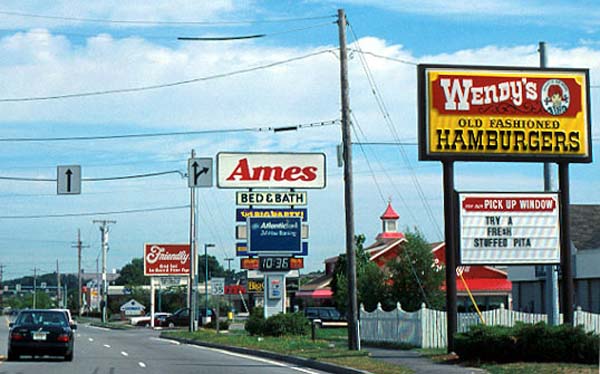
http://iwassaying.net/wp-content/uploads/2009/11/highway.jpg

http://www.dkolb.org/sprawlingplaces/images/fullsize/spr.strip.pei.jpg

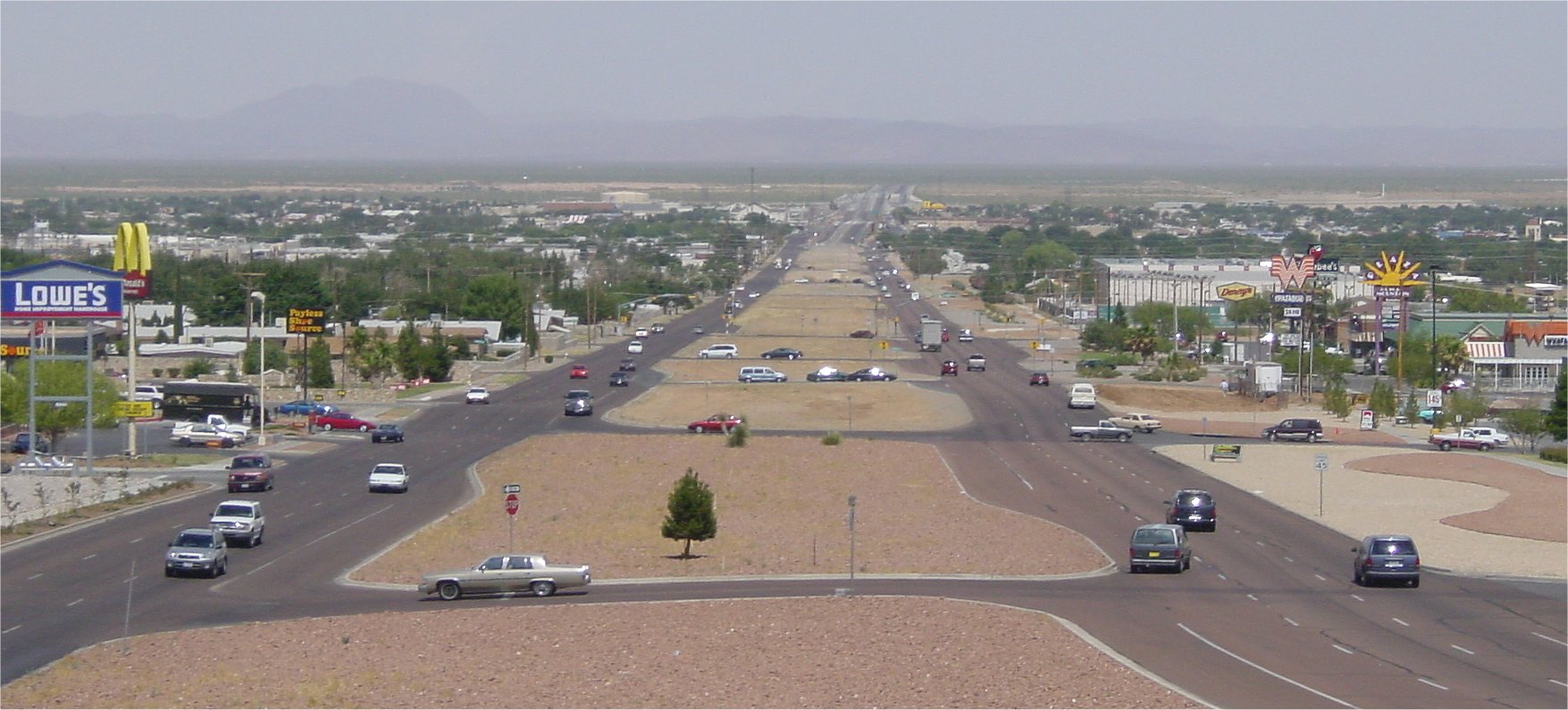
And this one is in Texas. Gotta make that median nice and wide so we can expand lanes. And fill'er with rocks cuz ain't nobody gonna go in there.
http://www.texasfreeway.com/elpaso/photos/lp375/images/lp375_looking_e_from_us54_31-may-2001_hres.jpg


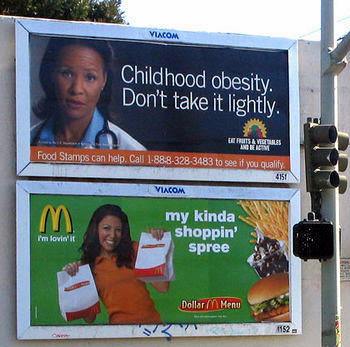
http://onemansblog.com/wp-content/uploads/2007/09/Billboard_McDonalds_Obesity.jpg

And since we included the link to top 100 "green" firms, let's be sure not to leave those who draw up the deserts of the mind and body.


Enjoy your cancer. At least it will lead to growth in the health care industry...so we have that going for us. Yay GDP!

Tuesday, February 23, 2010

Is Dallas Synthetic?

Russ Sikes, local businessman, and president of the local chapter of the Congress of New Urbanism (CNU-NTX) writes when the spirit moves him unlike myself who witheringly taps away at the keyboard like I've had a heavy dose of mental fiber. Each time he does, it is timely and appropriate. In this latest iteration of knowledge-dropping, he manages to craft a love note skillfully masquerading as an excoriation of DFW citizenry.

In "Dallas: Syn City", he asks, "is Dallas a "synthetic city?" I want to react to the general query along with this key statement:
“Sustainability” is said to be key to our future survival, and as Herman Daly explains, true sustainability requires shifting our consumption from finite stocks of resources to self-renewing flows in our midst. This conversion will necessarily involve various synthetic processes. Chief among them is photosynthesis, which makes virtually all other life possible, and provides not only our food, but increasingly our fuel too. Since nearly all of our energy derives ultimately from the sun, some form of photosynthetic bio-mimicry or novel synthetic processes are sure to provide the fulcrum on which a sustainable future rests.
This alludes to what we will find to be profitable in the next wave of growth, the "new economy," or at least the next economy until we must reinvent it again. The irony is that the profitability will be found in the very things we deemed to be the thief of profitability: waste. That is right, waste = food. It is natures way.

The city (meant generally as "all or any city") is a metabolic creature. Nutrients go into cities which are the physical emodiment of local economies in the form of human capital, natural resources, etc. it is processed by skill or talent which then produces goods and services deemed of use. These processes all have waste.

Natural systems are all highly evolved closed-loop systems in which all waste is food for other interconnected processes. The city as we have constructed it is an open loop by virtue of neo-classical economic ideologies and policies that support and in fact encourage business actions that "externalize" waste.

The equivalent of this might be if human and animal waste didn't fertilize plant life that then produces oxygen, food, or both. Our cities are cavemen smearing each other and drawing on the walls with R. Kelly's doo doo butter. That doo doo butter being the externalized costs of pollution, waste, etc. that are eventual costs that we will all have to deal with eventually.

Smart businesses and cities will monetize their waste and begin to think of the economies of cities as metabolic loops. This will most definitely require a close examination of all/any materials flowing through these loops to determine their potential in the new economy. This is all cradle-to-cradle 101 and it is contains infinitely more profit potential than the economy we are shedding.

As for what is derided as "synthetic," in my opinion, are those retreating remnants having surpassed their useful livelihood. These are the dead leaves, damp and dirty, lying on the ground waiting to be swept into piles and jumped into; all things we essentially relate to North Dallas, fairly or unfairly.

It is the conspicuous consumption spread across the landscape in the form of what we know as wasteful auto-oriented sprawl; a form of gambling in essence. Turns out the financial mechanisms behind it rigged the game, to avoid the losses: the returns had to be faster than the testing mechanism to properly assess the real value. That way the lenders could get out before the floor dropped out, i.e., test of time revealed the true value behind the forever growth mythology fueling the housing market boom. (All the more reason to valuate real estate based on long-term, and more consistent returns.)

This is, of course, not to say there weren't successes. All eras of expansion are marked by overshoot, a spreading out period to test apples to apples, in order to find what areas will endure. The whole point of the expansive growth was to find those places. The marked recklessness, however is what creates for such drastic swoons: the further the expansion, the more intense the contraction, the rougher the recession, which is simply an economic term for a evolutionary biological concept - repurposing.

We have the places that we will now begin the period of contraction to (re)organize around, ie densify. These are both old (found to be useful in previous gambles of expansion) and new (found in the most recent round of expansion).

These are the areas that we plug back in, closing the "economic" nutrient loops as we realize or remember the value in them. They are the areas we often define as "authentic," including places ripe for reinvigoration: Lakewood, Deep Ellum, Near East Dallas/Ross Ave, North Oak Cliff, etc. etc. (I could go on and on, but those are the freshest in my mind after the streetcar post.)

Unfortunately, many are ill-equipped to identify the more permanent elements from the recent high tide of expansion. Some erroneously lump those that will prevail in the long-term with all that will fail as one large regretful flood of wastefulness (haven't we learned that in all waste is potential for profit?). Others incorrectly presume everything we've built in the latest go 'round of boom/bust expansion as permanent inexorables of modern life. These are the Bruegmann and Kotkin's of the world.

What is "synthetic" is that which has lost or is losing its purpose in the new city phenotype, fallen leaves from trees. And, we all serve our biological purpose rightfully deriding its various permutations. That which we define as "authentic," provides the "green shoots" of the new city as it re-adapts, yet again. These are the fruits of the loom? boom and bust, carrying seeds as lessons.

How much will we learn? And,

can you decipher which is which?

Tuesday, January 12, 2010

Gehry the Dinosaur and Why Landscape Architects Make for Better Cities

The city is a social object that dialogues with a society not with specialists." Françoise Choay
Recently, I have had the Independent's interview of Frank Gehry sent to me several times, each with the attention grabbing headline of, "Gehry says Planning is Dead." OMG! When was the funeral.
Look, I went to city planning school at Harvard and I discovered that you never got to change a fucking thing or do anything. Urban planning is dead in the US."
For a while, I struggled with finding a suitable tone to take when discussing this, beyond "dumb dumb, poopy head." In what was somehow simply a throw away line, also happened to be one that was very telling into this man's worldview.

Frank, planning isn't dead. Your conception of it is.

Gehry is a child of a different generation. His formative years were spent in the same world that is now unwinding, a world of intentionally reduced complexity; of imagined control. Following the lead of industrialism and Le Corbusier's cheerleading of building as a machine, this idea was then projected more broadly, if to channel George Costanza, "why limit myself to a building if i can design an entire city."

http://www.debbieschlussel.com/archives/costanzanaked.jpg

Unfortunately, this mindset is that of an adolescent, Corbu, Gehry, and George Costanza. I bet you never thought you would see that comparison. The mega project is what is dead. What happened is that assembly line turned urban planning produced brittle monocultures that become diseased, whether they be plantings or cities.

Gehry is off his Atlantic Yards project. I see little hope in his Grand Avenue project in LA. I can see why he would be bitter. It isn't your fault, Frank. Those projects just happened five years too late or they would've been built.

Now, it is a wiki world, one that I think is a step in the right direction, where the citizenry molds their city with the guiding hands of planners and architects. The key is letting go of some control. The future of city development (in the near term anyway - and excluding any major public efforts like new highways (or removing them) or the various forms of public transit) will be more incremental. The role of urban designers will be to provide patterns consisting of the regularities of positive urban elements for smaller-scaled developments, to overcome thousands of years of collective amnesia.

In many ways, a building is like a cell in an organism. It has to provide shelter for its inner workings, so that the cell can, in turn, provide its function and participate in the overall whole. However, where architects get into trouble is projecting their field of study and sculpture citywide.

There is a time and a place for an iconic, sculptural element. But not everywhere.

This is where the background study of biology and ecology comes into play, where landscape architects are stronger and where economists are discovering gold. Nature still flies far more efficiently and produces stronger material in the digestion system of spiders than two hundred years of industrial process and innovation.

The 20th century was one defined by specialists. It is why Biomimicry is an emerging field of study, as well as any other that bridges the gap between two seemingly discriminate fields. Complexity and cross-pollination between fields will define the 21st century.

Landscape architects don't see the forest for the trees to use a cheap cliche; understanding that complexity produces values greater than the sum of the parts. Their background in biological sciences gives them, at the least, a more intuitive understanding of cities, and I would recommend to all architects and urban designers/planners to catch up on their reading.

Skylines are interesting but they are merely a postcard. Think of cities and the street level and you'll be on your way to a better city.