The New Republic has been picking up steam lately in output with regards to issues of this blog's interest. The newest is the absurdly titled,
Will Facebook Kill Off the Automobile?
Even worse, I suppose, is the actual title in the web address, suggesting we BLAME Facebook. This paints a pretty clear picture of the conscience of the nation, or at least, the national media's lack of understanding of THE most prescient issue of the day and media's inherent nature behind the social curve: it is not so much cars, but our frenzied if not corrupt overshoot supporting the automobile industry and its resultant (if not catalytic) infrastructure.
See this article on a bridge twice its necessary capacity. Induced demand anyone? This is what the cult of engineers would deem "improvements," which really improve nothing but their companies balance sheet. Peddling harmful product on a willing or unwary population; growing wealthy. Not unlike drug dealers me thinks.
Back to the article, which is really just providing superficial commentary on this report from Earth Policy which discusses the idea of "peak car." This really shouldn't be that complicated of an idea given all of the discussion regarding peak oil and the surplus of hundreds of thousands of brand new cars sitting at ports along our coasts. While TNR overreacts to the assertion that Facebook in particular is "the problem," facebook is simply emblematic of social media, which in and of itself is just a subculture within the movement back towards...well...each other, a more social way of living and being.
This was always the error of 90s doomsayers suggesting the internet would turn us into a generation of automatons. In fact, the opposite has occured. The younger generations utilize the power of the web 2.0 to increase social contact electronically as well as in person, while baby boomers are stuck in traffic jams communicating via toots, honks, and hand gestures of varying intent and hostility.
Who is the automaton now?
To tie this back together, I'm reminded of an interview with ethno-botanist /slash/ cultural anthropologist /slash/ cool freakin' guy, Wade Davis of the National Geographic, as he discussed the manner in which various drugs affected and in turn were accepted into cultures. I realized that cars were similar to the picture he painted about drugs in society, in that when they are newly introduced, they create a period of dislocation in that culture.
![[277_cartoon_oil_addict_large.gif]](../../_D5kx0bUGx_c/SCyY43Wxr0I/AAAAAAAAAC0/CYKWN41jsJ8/s1600/277_cartoon_oil_addict_large.gif)
After a certain amount of time, eventually culture overcomes the overshoot created by any new substance, which could be seen as cultural experimentation or knowledge seeking, which is necessary for the culture to come to terms with it as it eventually becomes a matter of choice. The specific example he cites (my transcription):
I can honestly tell you that I've been on the edge of the drug culture, certainly in the 70s and late 60s and our museum at Harvard was the center for narcotic, toxic, and hallucinagetic drugs. And, in all that time, I've never met anyone who's choice to use or not use illicit drugs had anything to do with their legal status.
If draconian laws could keep people from using illicit drugs and solve the problem, which is created by people buying the drugs and then fueling the cash economy of the criminal element, if we could stop pepole by invoking powerful laws, then the draconian laws would've already done it. But they're not doing it because people make their decisions based on drug use on their own criteria. 90% of Americans have tried illicit drugs, about 5 million are regular users, but the interesting part is that 85 million Americans have been exposed to illicit drugs but don't use them anymore.
The old adage is that there are not good or bad drugs, just good or bad ways of using drugs, and one of those ways is abstinence, which 85 million Americans have chosen to do, not because their legal status, because if it was their illegality they wouldn't have used them in the first place. But rather their own personal relationship with the drugs to no longer use them.
Now substitute cars or highways in that passage for drugs and you begin to see my point. Cars hit European cities just as hard, particularly between the 60s and 80s, choking many of the cities in traffic and pollution. European cities have proven more resilient than American cities in coping with the new substance that was automobile use. I'm guessing this had little to do with the actual construction of the cities at the time, because post WWII many European cities were essentially clean slates, while Detroit was the Paris of North America.
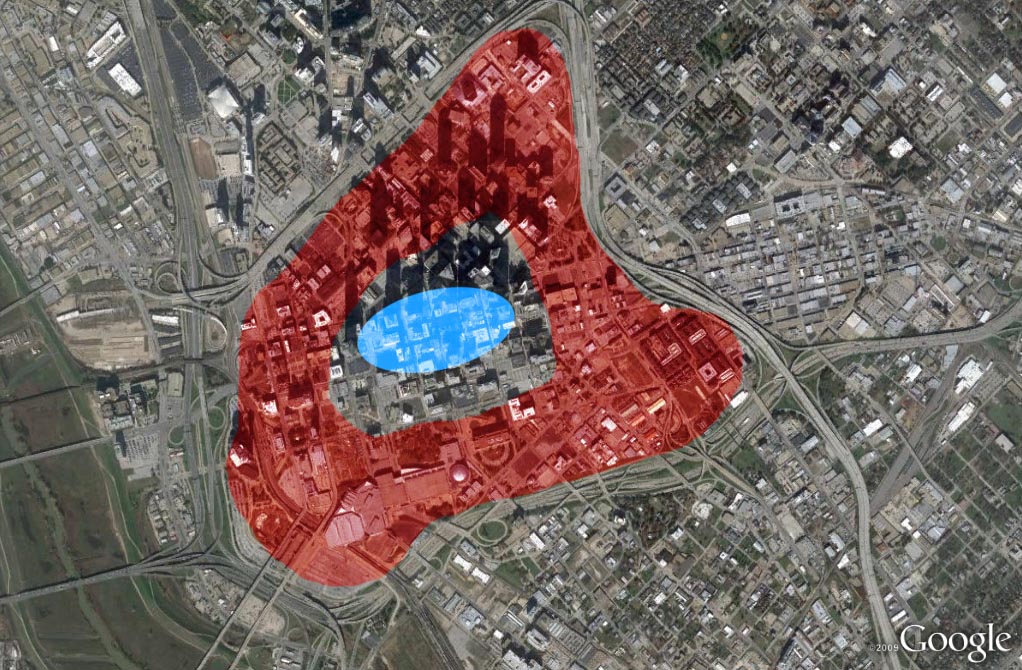
Also, for locals in the DFW area, do yourself a favor and pick up the book Dallas: Rediscovered if you want a heart attack. This city destroyed so many beautiful buildings in the name of verticality, "mobility" (read: highways), and the requisite parking for those skyscrapers.
My how times have changed.
I would actually argue that European cities resilience comes more from two things. First, the age of the cities and the cultures that inhabited them. In many ways, they've seen and adapted to many, many, many more influences over millennia than American cities that are little more than one hundred or two hundred years old.
Second, and perhaps more controversially, I would suggest that there might be greater reticence towards "Corporatism," which in many ways offered the dynamite and the spark for World War II. Germany pulled out of its crippling post first World War uber-depression, with equal measures of nationalism and industrialism: building highways, cars, planes, tanks, etc. Sound familiar?
This is what I call bizarro Keynesianism; the lure of quick returns. Spending on bombs rather than schools. Short term spending rather than long-term gains. This is our challenge of the current recession (potentially eventual depression). Will we build more highways despite our horrific overshoot? Or will we wisen up and allow demographics to trump short-term business interests of the status quo?
Do we really want to take one step forward and two steps back? Having been on I-30 near Rockwall the other day, and seeing the absolute abomination of taxpayer dollars towards another mega- rollercoaster-like highway interchange
death trap, I'm not sure anybody in Texas is really ready to make the right choice or step in front of the bulldozer
tank and demand a stop to new highway construction in favor of people, and main street, and education, and crime reduction, and livability.
See
John Norquist, former mayor of Milwaukee and himself a highway to boulevard vanquisher, suggests the smart money would be on Main Street.
And then compare that to TxDOT thinking about taxing VMTs, which seems logical, but like Texas' use of toll roads, it is for all the wrong reasons: ie more road and highway construction. Seem backwards to you? Measures to reduce dependence on cars and roads, only to add more roads and cars? Yes, you'd be right. It's as backwards as a palindrome (note: not a reference to a certain former governor).
“We need to think differently about how we fund transportation,” Texas Transportation Commission Chairwoman Deirdre Delisi said at a Texas Taxpayers and Research Association forum in November.
No, ma'am. With all due respect, you, as CHAIR, need to think differently about transportation. Next time you are on the highway, think about how much it costs for me to walk across the street for a cup of coffee, or lunch, or to the library, or to the park, all within two blocks of where I live. Unfortunately, and here is the real issue, there is so little supply of high quality urbanism and so much pent up demand that can't be achieved specifically because of local, state, and federal transportation policies, particularly the highways.
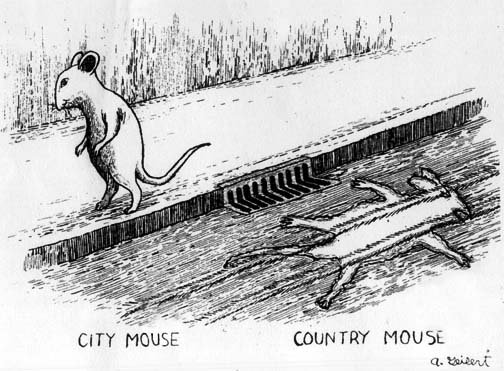
Congratulations, you've achieved engineering valhalla. No congestion in downtown...because noone (besides me) lives there any longer as your policies have achieved the unintended goal of creating unlivable environments except for rats, cockroaches, pigeons, homeless, and a handful of wackos like me.
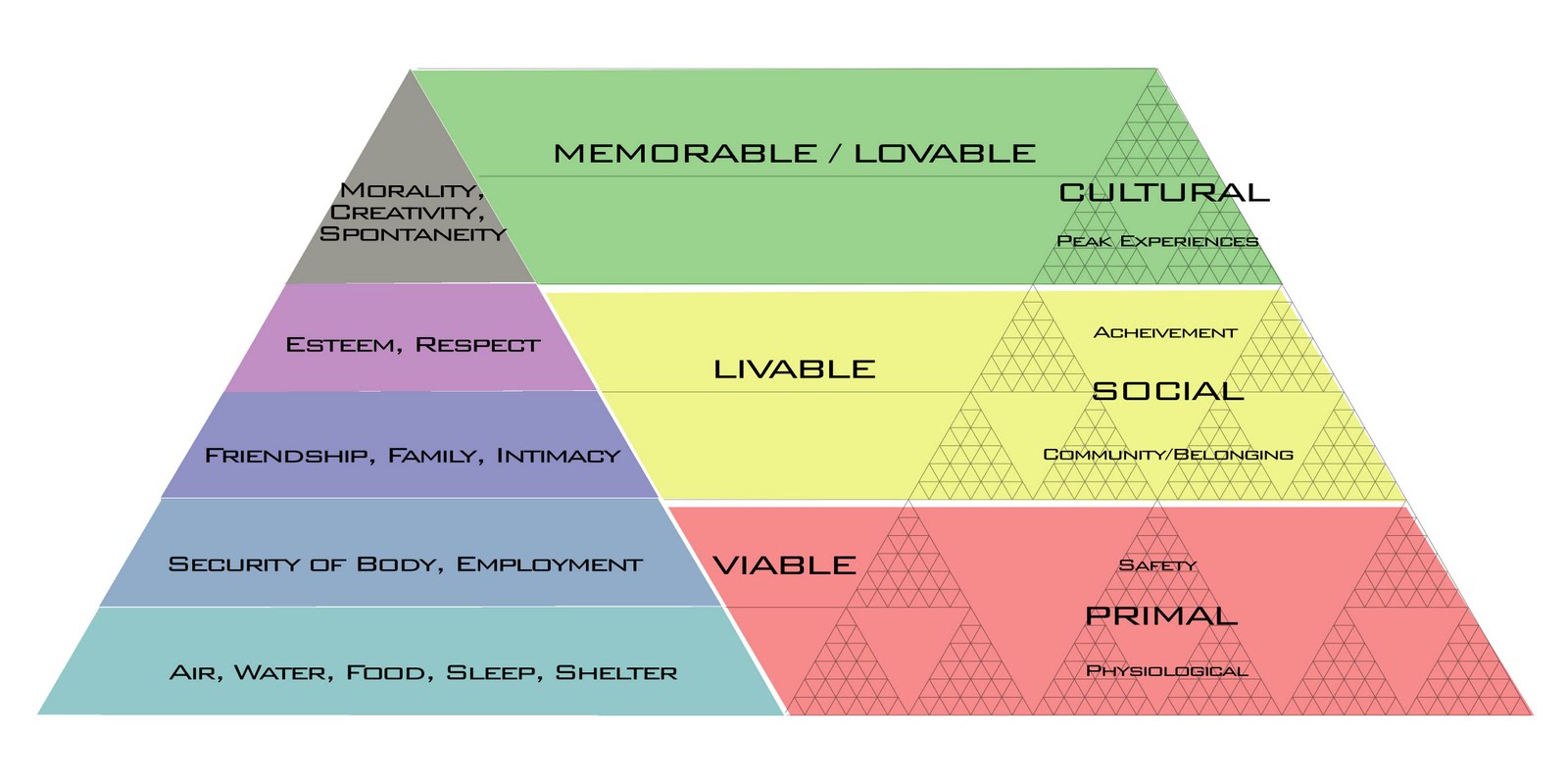
I'm not suggesting that we all go car-free (that would undermine the point of free choice, no?) or that we try pedestrian only precincts (the US has tried that and failed rather miserably - even malls). Rather, this polemic is to suggest that we implement dovetailing policies that dramatically shift bulging DOT budgets towards local livability investments which includes alternative mobility, while systematically and incrementally transitioning highways out of the core, a conversion to boulevards, arterials to complete streets, and walkable/livable downtown streets. This is the best investment we can make as a community.
![[274874.jpg]](../../_D5kx0bUGx_c/SEcp-07RiZI/AAAAAAAAALs/T7BWXhPYvuE/s1600/274874.jpg)
(Not Copenhagen)
Copenhagen is obviously the primary example used by today's pedestrian and bicycle advocates. But it only got to where it is today (as the most livable and valuable city in the world) because of its own collective automobile induced overshoot. Furthermore, the status quo, being the local business owners fought tooth and tail against removing cars from their streets. We see who turned out to be correct there.
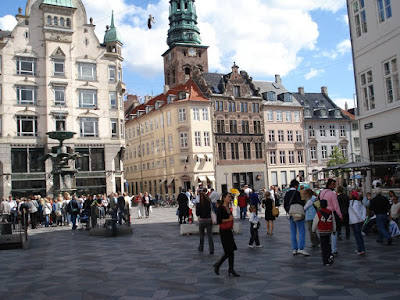
(is Copenhagen)













 Posts
Posts