Showing posts with label Placemaking. Show all posts

Tuesday, May 18, 2010

Hot or Not of Place: Addison Circle

Remember the instructions. We are looking for the subjective, the emotive. How does the place make you feel? We want to then compare findings of various places around the City with the objective, which I will use LEED-ND as a template.

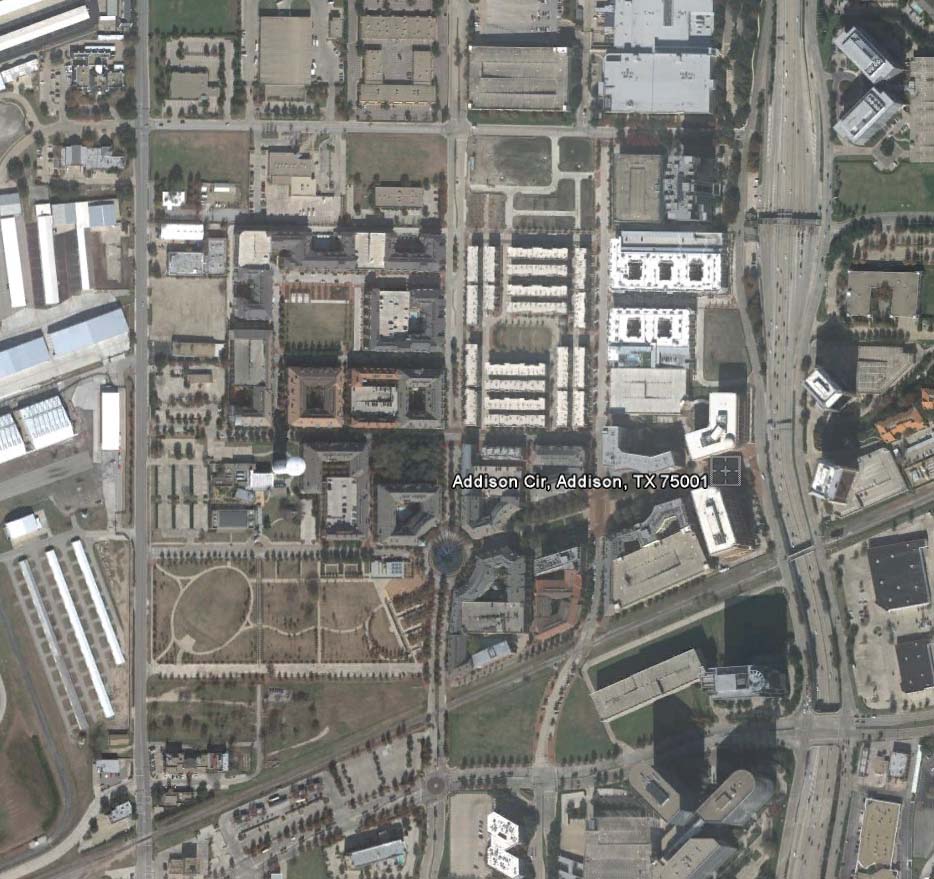
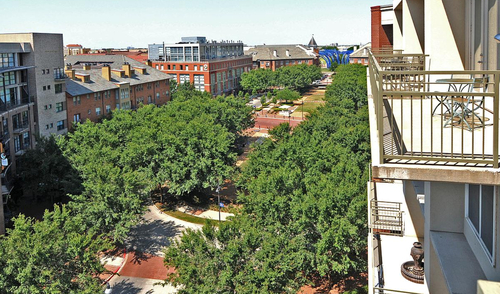
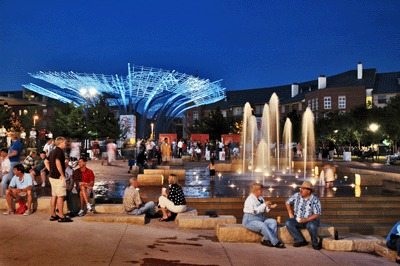
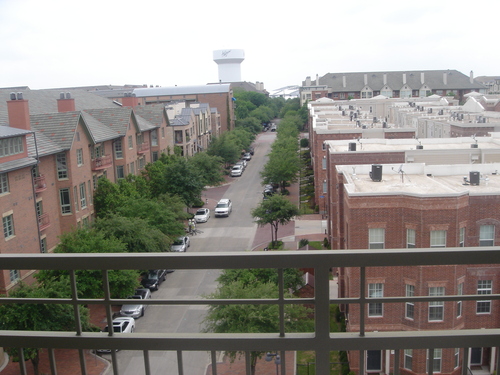
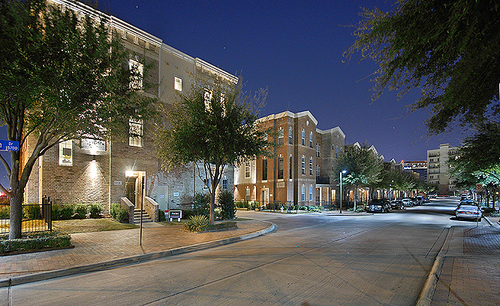
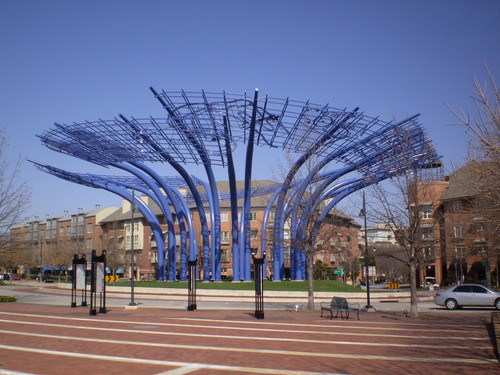
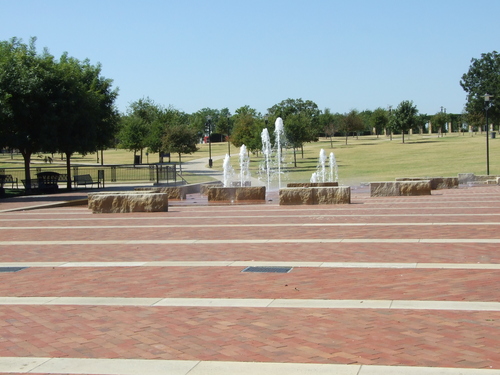
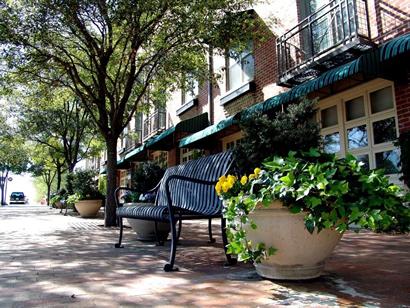
As background, Addison Circle is a development began in the late '90s in Addison, Texas by a City looking for a new "center of gravity," a place to hold their many yearly festivals. These include: Kaboomtown, Tastes of Addison, Oktoberfest, and others. In order to support those festivities, they decided to build a neighborhood to enjoy and take advantage of the open spaces necessary for hosting festivities. Having banned conventional garden-style apartments, the following imagery shows the end result.

What do you think? Give it a rating and what was done right? What could be better?


How Do You Rate This Development


NOT
1

2

3

4

5

6

7

8

9

10
HOT


Results


Another view from Aventura Condominiums


http://www.bslaweb.org/webart/AwardWinners2004/Addison-4.gif


View from the Aventura Condominium in Addison Circle

New Townhomes

Blueprints At Addison Circle

Untitled

Addison Texas Quorum Circle

Monday, July 6, 2009

Make No Little Plans

As Chicago prepares to party like it's 1909, celebrating the 100th anniversary of the Burnham Plan of Chicago, the WSJ covers it here:
The plan advises: “The city which brings about the best conditions of life becomes the most prosperous.” London’s citizens, it warns, who rejected the 1666 plan proposed by the great Christopher Wren, put their own “perverse self-interests” first and cost the city “millions upon millions in money to repair in part the errors which might have been avoided so easily, besides years of inconvenience and loss due to congestion of ­traffic.”

Some of us even have Burnham awards... cough cough.
Take note Dallas, a City of equal ambition but lacking any direction, forces tugging it every which way. Now quoting from John Norquist's Wealth of Cities:

"...if urban proximity and its efficiencies end because government policy spreads population and markets randomly over the landscape, then the wealth produced in cities dissipates."

Business and improved quality of life in cities are not mutually exclusive. In fact, as cities are the only entity NOT created by political act, as they are evolved from mere aggregations of people facing similar hardships looking for safety and eventually became bubbling cauldrons of cultural foment.

So in this way, they transcend boundaries and are organic constructs. Cities are products of economic activity and as I quoted Mumford here,
"The purpose of transportation is to bring people and goods to places where they are needed, and to concentrate the greatest variety of goods and people within that limited area, in order to widen the possibility of choice without making it necessary to travel. A good transportation system minimizes unnecessary transportation; and in any event, it offers change of speed and mode to fit a diversity of human purposes."

As Norquist goes on to say, this ease of transport, of goods reaching markets, of synergies formed by proximity, create frictionless markets. The idea behind highways was to aid in this movement however, highways, in actuality and ironically, have dispersed us to the point where markets (and our cities) have broken down, becoming so fractured with barely a pulse.

Productivity and synergy are lost as we actually infused increased "friction" between markets that include the cost of construction and maintenance of these highways, the distance between producers and markets, the cost of personal automobility and the energy to get between two places (read: fluctuating and unpredictability of gas prices), and "externalized" costs that somebody has to pay for eventually including pollution, decline of real estate prices, obesity, healthcare and health impacts of collisions, etc.

Highways started as a means of linking cities and aiding in intercity commerce. But the monster has grown beyond its cage into a construction for the sake of construction industry, lacking purpose, a snake swallowing its own tail. They are important in linking city perimeter to city perimeter, but never should have been constructed within city limits, allowing for highway friendly business and logistics uses towards the edge of the city which are often associated with blight, ie nobody wants to be near them.

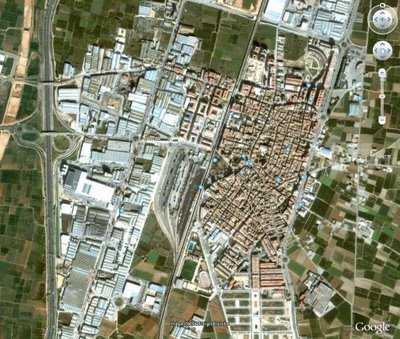
See my post on Valencia, Spain and the image of a suburb of Valencia shown below:


Moving from West to East (or Left to right), you see highway, industrial/shipping/freight uses, then the train station for passenger and freight, then the remainder of the town full of little blue dots. These dots in a previous iteration of Google Earth indicated images uploaded into google earth. I classify these also as indicators of health because they are indicative of places people love enough to photograph and share with the rest of the world. (Also, note that the highways and industrial uses encroach very little into the actual city of Valencia.)

See the affect the inner loop has on the City of Dallas. Nothing wants to be near the freeways. Note: the only successful piece of urbanism in downtown Dallas is the four-block stretch of Main Street fully buffered by a cocoon of the city from the impact of the freeway.

We should start tearing these out as I suggest similar to the ringstrasse in Vienna. It's good for business.
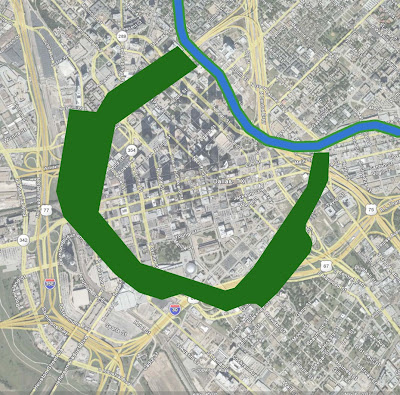

(Ringstrasse overlaid onto Dallas)
While this is no small plan, it is not something that can be done overnight. As Jan Gehl suggests, these things must be done incrementally. It has taken Copenhagen 45 years of slowly removing cars from the streets and returning them to the people. Now the city is filled with that most precious of urban health indicators, babies.

Step 1 should be about reducing the immediate affect of the highways by taking out all clover leafs in the downtown area, as Vancouver has begun to do here. Thus, making the highways here context-sensitive, meaning responsive and sensitive to their immediate surroundings. There are no one-size fits all solutions as TxDOT will thrust their standards upon cities.

Removing clover leafs and replacing the off-ramp system with more city-friendly "urbanized" streets that hug the highways like frontage roads diminishes the negative impact of the high speed ramping by forcing slower traffic onto the frontage roads. These frontage roads should look and act like urban streets with parking, sidewalks, street trees, etc. Furthmore, by eliminating the space eating cloverleafs, this effort begins to open up land for development that the City in cooperation with the state can turn over as part of a redevelopment RFP for areas adjacent to highways.

Tuesday, April 14, 2009

"The Era of Bling is Coming to a Close"

From Christian Science Monitor:
Cooke & Co. was the Bear Stearns of its time, a pillar of national finance. If it could fail, anyone could, and the US stock market collapsed that awful autumn. The price of real estate, railroads, and other hard assets crashed, too. Banks fell like wheat before a reaper. Deprived of credit, Main Street commerce suffered. Unemployment reached 25 percent in big cities. The Panic of 1873 eventually led to 18,000 business bankruptcies. National production shrank for six years. Yet a new and stronger US economy emerged from the wreckage.
I have to say though, that I disagree with #10 - The Bust of the Boom Towns. As long as we are accepting "growth" as the axiom our society, economy, and standard of success is measured by, the Boom Towns still have the most work to do. Reason 1, why I am here in Texas.

Yes, they boomed. But that economy of growth was a false one in cities such as DFW, PHX, and Vegas. 99% of what was constructed was worthless. In the cities of the Northeast, not much growth is expected, if at all. What growth will occur will be simply putting people back to work with minor deviations in what they are actually doing.

Here, we have the most work ahead of us in terms of overall reorganization of both people AND economies. Much of the economic growth was in Real Estate and it played out on the land with exponential quantitative spatial growth vastly outpacing population growth.

If this City is smart they will get on the ball and set up a streamlined zoning, entitlement, and approval process for mixed-use, mid- to high-density development AT LEAST in set areas, such as Leinberger suggesting that Dallas needs ten 100-acre high density overlays. If they set up these overlays now, the planning work can get started and developers will be ready to build in ten months or two years, whenever the lending purse strings loosen again (or if again means never, then we need to find a new way to finance these things).

We know the market is there and the demand is there. As I wrote here, Millennials are the largest demographic group (aka "market") in American history and they are redefining the world around them through their shear mass, vitality, and collective directed vigor.

It will be a race for Sun Belt cities to not only be "cool" again to compete for talent in an ultra-competitive and mobile knowledge/creative economy (where real economic growth is created thru startups and innovation), but also in order to be relevant. If not for the Real Estate industry fixing its mistakes, I'm not sure what other markets are out there to pull the Sun Belt cities out of a certain prolonged recession.

Monday, April 13, 2009


GOOD Mag on Streets of the Future. And that future is complete.

But, where is the on-street parking? And why the one-way roads? Not to sound like a street-design fundamentalist myself, but the storefront businesses AND the pedestrians need that on-street parking. We also know (via studies + empirical evidence) that one-way roads kill business, not to mention make it difficult to get around in cities.

All roads need to go everywhere...and not everywhere. Everything in moderation, even moderation.

HT: CoolTown Studios.

Tuesday, March 10, 2009

End of the Auto

...and all of those commercials where everybody is so happy driving their new hummer around. Not so coincidentally my own mother was just hit at a light by some maniac going 60 mph. Fortunately, she was ok. But, is this what life is? Sitting around in metal boxes, playing bumper cars, if only to have some human to human contact.

Harvey Wasserman on the end of the era of the automobile:
But the larger transition is epic and global, based on a simple structural reality: the passenger car is obsolete. Auto sales have plummeted not merely because of a bad economy, but because the technology no longer makes sense.

Franklin Roosevelt took GM over in 1943-5 to make the hardware to beat the Nazis. Barack Obama should now do the same to beat climate chaos.

Make streetcars, not passenger cars.

Hybrids are too little, too late, with problems of their own. Solar-powered electric cars will help phase out the gas guzzlers.

But in the long run, the automobile itself needs to be dismantled and re-cycled, not retooled or rebuilt.
The fact of the matter is that Car companies are broke because they can't run their business profitably, cities are broke because they over extended infrastructure and the costs to support car culture, people spend roughly 20% of their income to operate and maintain this machinery to get us around, and urban development is crippled by the cost of constructing parking. All barriers to progress.

And all of this BEFORE energy costs really start to cripple this energy-absurdly intense economy. Just wait to some real disruptions in the energy markets. How about we just rid ourselves of these burdens now???

Time Machine with Guy Pearce was a pretty shitty movie, but to this day I still have with me the scene from the near future in NYC where everyone is moving around via bicycle.

More from Wasserman:
We need to dig up roads, not build more. We need rails and coaches, bio-diesel buses and self-propelled trolleys, Solartopian super-trains and in-town people movers, not to mention windmills, solar panels, wave generators and geothermal piping.

In America's corporate-conceived “love affair with the automobile,” our first spouse---mass transit---was murdered. Now the unsustainable obsolescence of the private passenger car is collapsing a global financial system built on the illusion of its constant growth.

If the automobile and its attendant freeways continue to metastasize in India, China and Africa as they did in the 20th Century United States, we are doomed.

Wednesday, March 4, 2009

Newsweek on the Times Square Plan

Linky. And perhaps the best quote I have ever read from a mainstream journalist:
In general terms, traffic is caused by too much demand (from vehicles) meeting too little supply (roads). One solution is to increase supply by building more roads. But that's expensive, and demand from drivers tends to quickly overwhelm the new supply; today engineers acknowledge that building new roads usually makes traffic worse.
Hallelujah. Except, that is traffic engineers NOT in the sun belt. Ya know, because we're like five years behind the times. You'd think the spread of information available on the internet would have solved that problem.
Instead, economists have suggested reducing demand by raising the costs of driving in congested areas. The best-known example is the "congestion pricing" plan London implemented in 2003. Drivers now pay about $11 a day to drive in the central city. According to one study, the program has reduced traffic by 16 percent.

I am against congestion pricing. There are other ways to reduce demand. One is to simply make it more difficult to drive around everywhere. It HAS to be more convenient to utilize alternate forms of transportation, i.e. train, bus, bike, and foot.

Monday, February 23, 2009

Quote for the Day

A critic such as Frederick Ackerman in 1925 could dryly note that "a community with a stable population is now referred to as a dead one." Interestingly, this was in a paper titled "Our Stake in Urban Congestion," noting that contemporary proposals to "solve" urban congestion by building elevated and limited access highways would kill the golden goose, which is based on the ability to tax the increases in land value and specialized transactions that cities create.

Wednesday, February 18, 2009

Dovetailing Conversations

Unintentionally, I had a conversation with a reporter, a client, and ahem, myself I suppose while reading this take at HuffPuff: Can Obama get us to the Long View?

When do we start looking at life cycle costs? How can we get past looking at a day on Wall Street like reading our daily horoscope? How can we stop externalizing costs? How do we balance the need for budgeting up front costs with expected or even guaranteed ROIs?

Are these inevitable? Or merely stumbling blocks as we throw out the Rube Goldberg political and cultural apparati of the Baby Boom generation for the Bullet Train of Millennial progress.
----------------------

By the way, I was able to catch Dan Rather Reports on HDNet. It is clearly the best news program on television right now and has found a permanent place on my DVR rotation.
----------------------
Side note 2: I also recently watched the Behind the Scenes feature on the Wall-E dvd b/c I'm the type of nerd that watches movies with the director's commentary on. Whenever you sit and think just how competent these movie makers might be when viewing the end product - thinking "wow, this is something that I just CAN NOT do," and you get to see some of the work in progress, you no longer feel so inadequate. Holy crap the initial story was utter shite compared to where it finished. More like a bad episode of an otherwise mediocre show, Futurama.

Especially when they mention that if it was the end result of one artist working around the clock, it would take that person 400 years to finish the movie. And the finished product is the better for that collective effort, once again undermining Ayn Rand's notion of the solitary genius.

This is exactly the same reason that I discuss Placemaking as places being greater than merely the sum of the parts. A building is a postcard, a snap shot. A real place is drama.