Showing posts with label This is Your Brain on a Highway. Show all posts

Friday, September 3, 2010

Neil Pierce Asks if it is Time to Accelerate Freeway Tear-downs

The answer, of course, is yes.
But it’s more of a spur than an essential part of the interstate system. And its consequences have been grim. Old Claiborne Avenue, with its generous, oak-shaded median, a walkable neighborhood center with a history of picnics, Mardi Gras parades and black marching bands, literally disappeared under the broad new route that backers claimed would carry traffic and prosperity into downtown New Orleans.

The number of businesses along the freeway’s path literally collapsed — from 132 in 1960 to 35 in 2000. Poverty and decay reigned, the stark expressway section creating a hostile no-man’s land around it.

Today the Claiborne expressway “is an aging interstate… nearing the end of its useful life and beginning to deteriorate,” requiring frequent maintenance and “possibly reconstruction to carry traffic safely,” according to the exhaustive new report advocating its demolition, issued jointly by CNU and the local Claiborne Corridor Improvement Association.

It would make no sense, the report suggests, to spend the $50 million the Federal Highway Administration’s national bridge inventory says might be needed just to repair or replace the Claiborne expressway’s seriously decayed interchange ramps.

In Milwaukee, where Jon Norquist — then mayor, now CNU president — led the successful effort to dismantle the Park East Freeway, the bill for teardown and putting a surface street system in place was just $30 million, compared to $80 million to rebuild the freeway.

In fact, teardowns, at least on unessential interstate links, may start looking more attractive nationally as the U.S. Department of Transportation struggles to come up with sufficient maintenance budgets to keep up the elevated freeways passing their effective 50-year lifespan point.

Funny. These are all the same arguments I've been making to strip out the intracity freeways in Dallas. It's the economy stupid. Highways, while necessary in linking regional and interstate economies are actually destructive locally. This is why in most sane and/or European cities highways are considered a LULU or Locally Undesirable Land Use, meaning they come nowhere near residential areas, remaining on the peripheral edge of the entire city where junctions lead to boulevards which may then enter the actual, functional fabric of the city and local, interconnected economies.

Highway adjacencies = underperforming properties.

Tearing out freeways are 1) cheaper than maintaining them, 2) removes fiscal burden from crippled state and DOT budgets, and 3) leads to qualitative improvement of local real estate. It only makes sense that a sociofugal design element such as freeways also flings investment far away from it, leading to decay all along it. Attract people, attract investment. This is a simple formula. It is a shame the dialogue has been so poisoned by the stupid and/or corrupt. The comfort of the familiar, a trap it is.

Thursday, June 24, 2010

Cycling Reconnects w/ Nature, Lifts the Spirit, and Exercises Your Brain

Via Mind Hacks comes this conclusion from an 1890 journal for mental health on the appeal of cycling:
For most of us the exquisite loveliness and delight of a fine summer's day have a special charm. The very life is luxury. The air is full of sound and sunshine, of the song of birds, and the murmur of insects; the meadows gleam with golden buttercups, we almost fancy we can see the grass grow and the buds open; the bees hum for very joy; there are a thou sand scents, above all, perhaps, that of new-mown hay.

There are doubtless many patients before whom "all the glories of heaven and earth may pass in daily succession without touching their hearts or elevating their minds," but, in time, it is possible even these would, by means of cycling, have their love of Nature, which had been frozen or crushed out, restored. Thus all Nature, which is full of beauties, would not only be a never-failing source of pleasure and interest, but lift them above the petty troubles and sorrows of their daily life.
Riding a bike home the other day, it struck me just how alert one has to be on a bike. While you can effectively shut your brain off and drive on auto-pilot as car traffic patterns have been engineered for the lowest common denominator, day dream whilst walking down the block, or complete work on mass transit as some other faculty provides the effort, on a bike one must maintain a constant state of awareness. This also reminds of the dangerous irony of very poor drivers operating very deadly machinery populating our roadways while one must be near expert to navigate the roads by bike, the simpler, safer, and cheaper method.

While it is nice to let the mind turn off every once in a while, like any muscle it provides a nice reward to exercise our strongest one. A good pain.

Reconnect with the place where you live.

Wednesday, May 5, 2010

The Battle of City vs. Country

Right now the City of Montreal is undergoing the kind of discordance that I expect more cities on this continent will likely be facing either already or in the future. The infrastructurist has the summation of the battle looming between overlapping government entities representing the competing values of different constituent groups with two eh similar eh sort of different visions but with two totally different goals.


In this case, the City, Montreal, seeks to reduce the size of a freeway in need of reconstruction in order to create room for new neighborhood development lining a new tramway system. The Province of Quebec, says "pas si vite! That plan is too expensive, let's just build it wider and add more capacity." The City is looking out for its City, the "state" aka province is looking out for, uh, those that I suppose would be commuting into the City.

On the surface, it is the simple debate of adding more supply to ease traffic vs. reducing demand through the reduction of ease of driving while introducing new modes of transportation. What is missing is the differing effect that highways have on city vs. country. In Montreal's case, there really isn't as much to meet the eye as the "battle" suggests. But, the heart of the issue is much more important when we think about Dallas, where the transportation system is designed precisely for "the country" aka the suburbs to get in and out of the City as quickly and easily as possible.

One might say, well that is a good thing, that means commerce. I would say, that those are effectively intracity trips given that the boundaries in the metroplex are arbitrary lines within one economy. So let's look at the ramifications of such transportation policies.

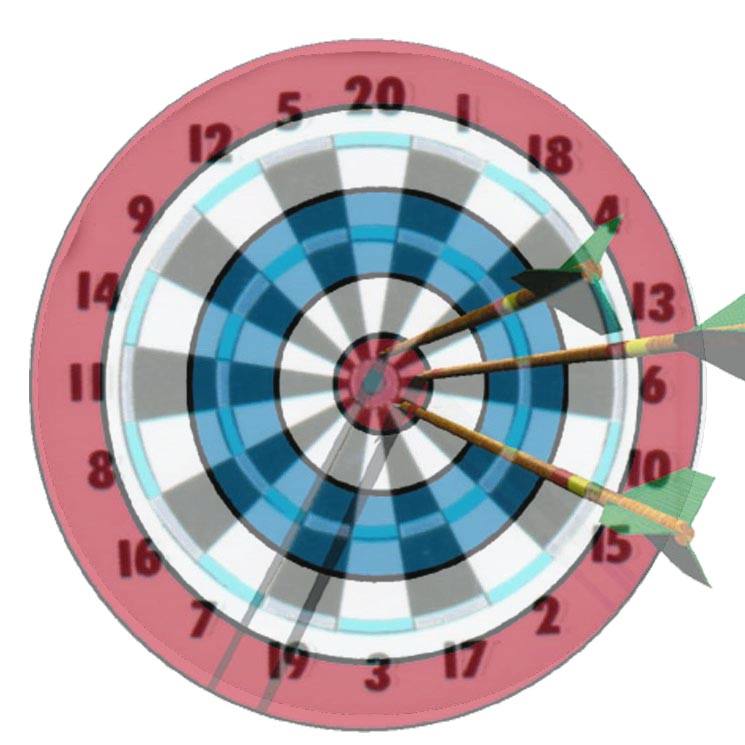
To help us think about this issue, let's think of the city as a bull's eye, where the highest value is closest to the center.
http://lazerbrody.typepad.com/photos/uncategorized/2007/04/16/bullseye.jpg

The value is highest because there is the most interaction, the most people. In Montreal's case, it is exactly why people visit Montreal in the first place. Culture, fun, people, amenities, etc. All brought to you at the crossroads of a metropolitan economy, aka a functional downtown. That value is represented loosely by building heights, aka density which is the delivery of supply to meet demand in certain areas.

To add some complexity, the City is actually probably a little bit closer to a bullseye with a dart board overlaid to represent "favored quarters" as Leinberger calls them or the singular direction the upper classes fled cities over the last century, along with the various stages of 20th century building patterns in tow.


The spokes on the dart board are important because they act like the geographically responsive network of roads and natural radial pattern of cities. In the country, aka 'burbs, highway and arterials work as collectors because of the low density makes no other form of transportation viable and because the low density allows for people to effectively get away from the undesirable qualities of freeways.

However, if you take those spokes into the cities and attempt to make them respond to the similar transportation pattern of only cars, then the roads have to get bigger as they get to the center of the "dartboard." The spokes of a dartboard do not get wider towards the center, but in cities, and particularly Dallas, they do. If you widen those spokes at the center, you no longer have room for the bull's eye.

The spokes close to the "bull's eye" either have to accommodate other forms of transportation, or get smaller and allow for more people place to accommodate the demand to be there.


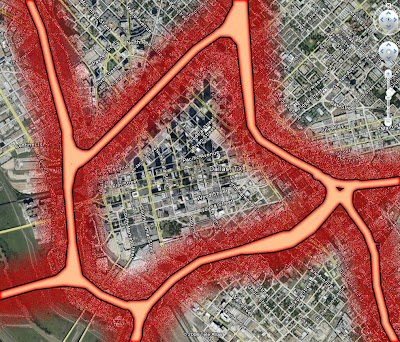
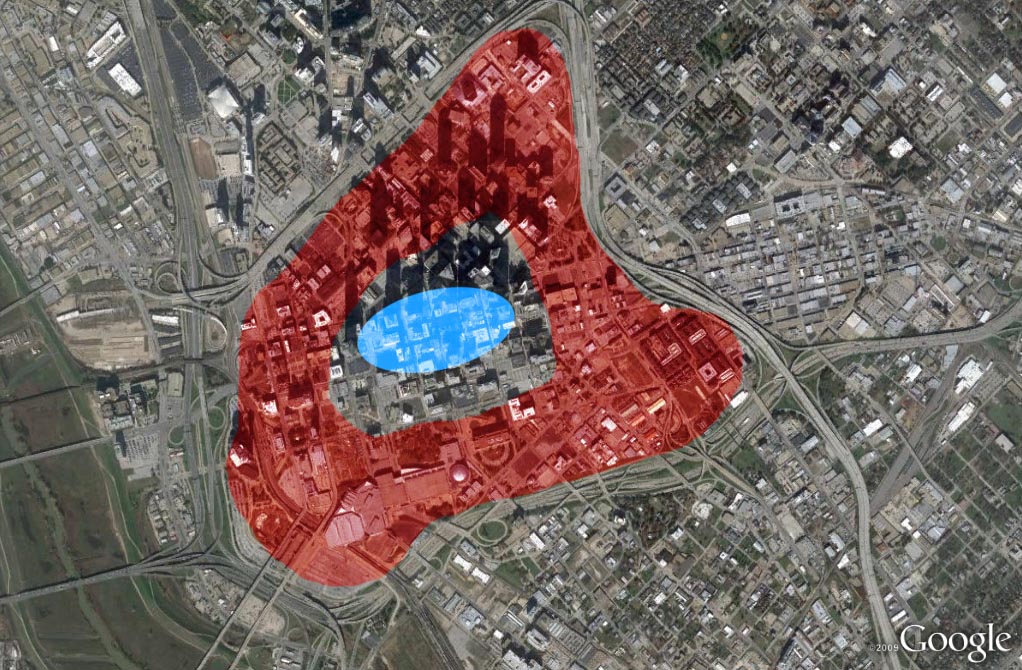
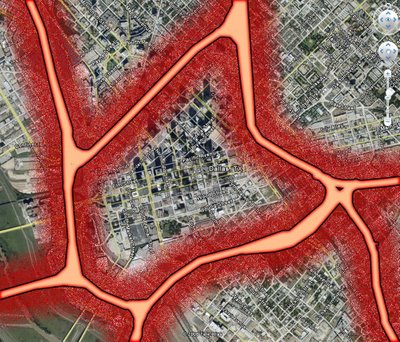
See downtown Dallas, where the majority of downtown bears the brunt of the tourniquet of car only transportation policy, aka serving the countryside, but not the city. The red area absorbs the negative pressure, which is revealed through the numerous surface parking lots, vacant buildings, and otherwise non-performing structures in terms of tax-base. The blue is the beating pulse of a healthy three- to five-block area of downtown.

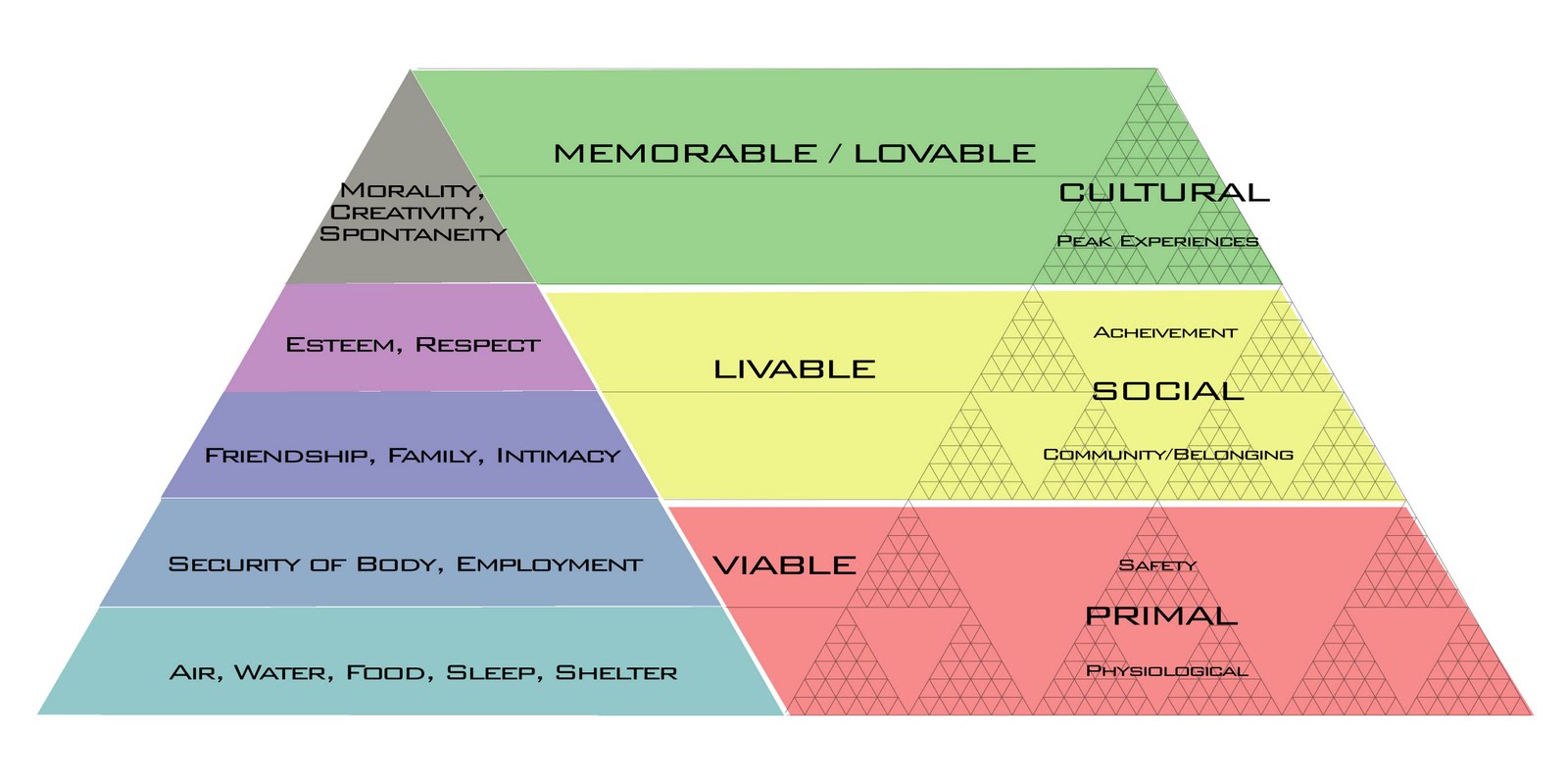
As you get closer to the cores of cities, you have more people, more desire, more demand, the roads should get smaller in a more densely interconnected pattern, not larger. This allows for more supply, more choice, more responsiveness to traffic delays, construction, accidents, etc, a smarter neural network of cities. It is more rigid, more resilient, more attractive without the barriers that highways pose preventing the city from ever achieving that demand, aka what we might call city-actualization, if we are to continue the Maslow Hierarchy of needs metaphor.


Because cars and their infrastructure take up much more space than the various other forms of transportation that DO work and cities AND function better with greater density, we end up undermining the very reason people want to be in downtowns in the first place.

See the example of 34th St in Manhattan, where a recent survey showed that more people move by foot than any other form of transit, followed by mass transit, and least of which cars, which between the vehicle and the infrastructure take up the most space. The City has decided to remove cars altogether from the street in order to accommodate, ghasp, more traffic. Why? Cost (and sanity) of course:
To build New York City to a scale that everyone who rides the morning subway into Manhattan’s central business district could now travel (alone, as most do) by car, for example, would require, as was found by one back-of-the-envelope estimation, an additional 76 Brooklyn Bridges.
While we certainly aren't anywhere near that point yet, this does argue for the shrinking of highways in some locations, the altogether removal in others, and certainly not the widening or adding of additional capacity.

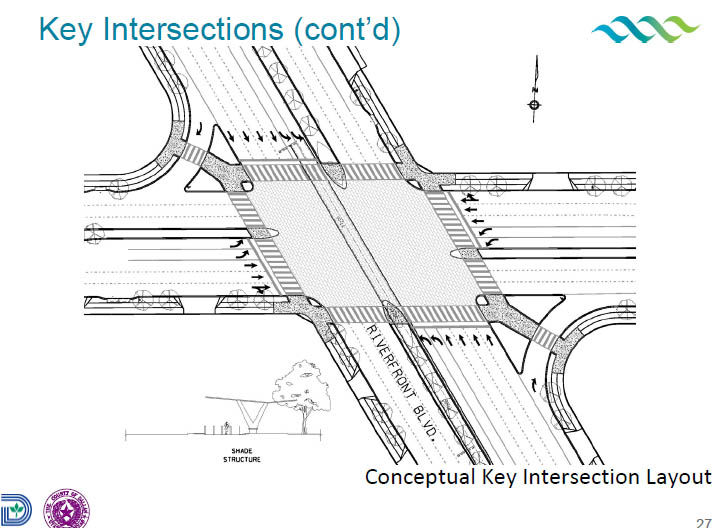
All cities in order to function better economically, socially, and environmentally need to make it more difficult to drive the closer they get to their centers (or multitude of centers for polycentric centies) and easier to get around via various other forms of less consumptive transportation. This means everything at every scale, from more crosswalks, to reduced lanes, to less cloverleaves, less protected left turn lanes, less "flying" right turns, tighter turning radii, etc.

There are solutions appropriate for the country (or State or Province) and their are solutions for the City, but they ARE NOT the same.

Monday, April 19, 2010

Industrial Boulevard


Every invisible hand is attached to the invisible arm of government. ~paraphrased from a quote by Ted Goranson in an interview by Alex Marshall in the book How Cities Work.

Over the weekend, the Unfair Park blog by the Dallas Observer has a link to a City Council presentation updating plans to make Industrial Boulevard Complete, by apparently not "completing" it at all. Here is blog buddy Jason Roberts of Bike Friendly Oak Cliff's response:
It’s a 6 lanes + 2 turn lanes street with glorified sidewalks being developed as “cycle tracks” for shared bicycle and pedestrian use. In other words, its form is:

Pedestrian/Bicycle, Car, Car, Car, Car, Car, Car, Car, Car, Bicycle/Pedestrian

There are multiple reasons to develop a complete street including lessening CO2 emissions, allowing for/enabling multiple transit options, enlivening an area with pedestrians, and greater economic development potential. Problems with our current streetscapes are that there is far too much weight given to one mode of transit which lessens the likelihood of use for any other. What are we trying to enable? Pedestrianization of an area, or automotive through-way? When it’s far easier to drive than it is to walk or bicycle, why attempt another mode? And who exactly would want to walk, or dine, or bicycle beside a 6 lane arterial?
The following is how I respond:
I concur with Jason's assessment. Streets such as these are 1) sorry attempts at compromise to appease the rabble, and 2) barriers to local economic activity despite its purpose as "connector." They are centrifugal rather than centripetal, meaning the public realm has to be safe, attractive, and amenable to cross-shopping, pedestrians crossing streets, buildings "communicating" with the buildings across the street, etc. in order to draw people to focal points of activity.

(ed: added for this posting) Commerce needs concentration and it always has. Road design like this prevents concentration and promotes dispersal which undermines social space, economic activity, and urban integration.

Given how fragmented the area is by the River swath, the highways, the rail lines, AND Industrial Blvd, maintaining a certain capacity of traffic ignores the relationship between transportation and development and the public right-of-way's dual role as link and place. It will hinder any and all attempts to "upgrade" the developments in and around this area.

If we want to qualitatively improve the development in this area, somebody has to have the gumption to say that vehicular capacity is one of the hindrances and it should be reduced in order to make private investment even viable.

If the street network isn't made more livable, then in order to attract any investment it has to be subsidized. Rather than subsidize development, subsidize livability and watch the private investment flock to it.

The area needs space. It is incredibly constrained. Why not make Industrial the attraction, by reducing traffic flow lanes, recapturing the Right-of-way and rolling that extra land into development sites. That way you incentivize development by improving the livability, safety, and possibility of Industrial rather than spending on pig lipstick and then doubling down on the subsidy that it would take to invite private developers to the area.

To paraphrase a quote that I once heard a friend use, "that kind of compromise is like a car-boat. It's not a good car and it's not a good boat."

And because I'm OCD about finishing thoughts, I add-on:
Reticence to the "complete street" movement is understandable. It comes from the conventional wisdom established over 80 to 90 years of urban and transportation planning. Unfortunately, that conventional wisdom AND the planning behind it were all incorrect and have been failures.

Economic activity requires concentration. This is why the most expensive time slots for advertising are when the most people are watching. The most expensive real estate is where the most people are. The shopping mall was a natural reaction to big roads undermining the convergence or concentration of people. But, the shopping mall is largely being undone by the same issue, its disconnection from the rest of the urban fabric.

Roads are important delivery systems for concentration. However, if the road isn't "tamed" to be more pedestrian friendly, then it undermines concentration. It becomes an agent of dispersal rather than concentration. Residential then disperses because the preponderance of unsafe, undesirable, inhumane roads. Then retail has no choice but to follow the pattern of dispersal, reducing cross-shopping, concentration, and vitality.

Also, if the road isn't "tamed" then any "urban" development nearby have to effectively turn their back on the road. The cutting edge in urban planning is showing that this too is not effectively allowing properties to reach their highest and best use or value. Studies reveal that for every deviation from a main stem or axis (the turning off of an arterial) shows a correlated reduction in real estate value.
(Some even suggest that every slight turn of a street may as well, but this can also be compensated by improved place and character of winding streets.)

This is why before assembly line, industrialization, and theoretical planning, et al began undermining thousands of years of adapted city evolution, that real estate value and density clustered along the "High" Street or "Main" Street.

On the other hand, the current design of our streets also reduces adjacent value. Developers, whether for residential, retail, or mixed-use want to be near the concentration that arterials provide, but also want to be nowhere near them.

20th century transportation policies have put the "economy of place" at odds with the "movement economy" undermining economic activity, efficiency, and value.

Thursday, April 8, 2010

On Choice, Highways, and Pulling People from the Dark Age


From The Genius of the Beast by Howard Bloom in a chapter entitled Choice Production, one of my favorite recent subjects. In it he discusses the ending of the Dark Ages via intercity trade reemerging in "fairs" or markets of European cities and the role that vestigial Roman "continent-spanning trade hookups" aka roads played in pulling the continent out of the Dark Age, or what he argues was a malady of the mind and coercive policies/directives that enforced a disconnected world of censorship turning all minds into black holes rather than burning stars:
Traveling merchants gave you the chance to buy a glass vase from Byzantium or a steel knife from Spain. Like any good thing, choice in overdose can be a poison. But in moderate amounts, choice gives you a sense of control. And a sense of control ups the power of your immune system, boosts alertness in your brain, and stimulates new brain cells to grow.
Today, I would (and have) argued that we at the same time have both too much and too limited choice for markets of choice and commerce to properly function. This also applies to transportation, as I wrote here:
Currently in many cities, American ones in particular (and especially in Dallas), all roads lead to highways. Highways are literally the one place where all ages from 16-80 (and younger for passengers), all incomes, all backgrounds, converge and interact. Except that interaction is hardly a compassionate or courteous one. We forget all of our cultural mores for acceptable behavior when somebody is cutting us off to make the exit. Gotta get to work to push that paper on time!

I gave up driving (mostly) and my car (for good) because it was a miserable experience personally. But, that isn't a lifestyle choice that is appropriate or possible for many.
In Genius of the Beast, Bloom extolls the virtues of the Roman interconnected "highway" system they constructed to link their empire. In Roman times, it was used to efficiently ship troops to the frontier and goods back to Rome. As Bloom suggests, it became the backbone of a people pulling themselves out of the Dark Ages.

Keep in mind, this isn't to apologize for the destructive over-building of highways American cities have brought upon themselves (with the kindly urges (cash/standards) of the Federal Government).

Rather, I would argue that it is critical to have connections between things at appropriate scales. Intercity trade requires a highway, airports and railroad connections to ship goods/people in the appropriate manner. All of which arrive to the edge of a city and then find a more fine-grained manner in which to enter the actual city.

In fact, looking at history, the central feature of daily life would be something that I might call a super-magnet, in that not only does it draw people to it, but it literally bends and morphs the shape of the city around it. Rising out of the middle ages, it was the convergence point at central "fair" or marketplace where interpersonal transactions took place. In other eras, it might be the central cathedral, or even others a forum or monument to various iconography depending upon the weltanshauung of the day.

The super magnet of today, the dominant organizing element of our lives, and relatedly, our cities, are highways. But, how meaningful is that existence? As I wrote:
Cars promised freedom. But is that freedom real or imaginary? There is typically only one way to the store or to school or to work. The only real freedom we have is the choice between the perceived faster lane and the lane we currently occupy. Does that help or is that just another extra couple of million that we spent on what was thought to be a luxury, more lanes, more flow, hooray!
This is why we look at European cities as exemplars in how they maintain logistical hubs at the periphery of cities where industrial uses can agglomerate around, all of which, the logistics, the infrastructure, the industrial uses, are all considered LULUs or locally undesirable land uses. The older cities have had more response time and greater resilience instilled through centuries of adaptations, overshoots, actions/reactions, booms and busts.

On the other hand, while highways have their purpose, Intracity mobility/commerce/interconnectivity, like intercity connectivity, similarly requires maximum mobility by way of a variety of choices, none of which should act as barriers. With regard to intracity trade (and by trade I mean all things that can we demand traded: ideas, goods, services, genes - yes, genes. This is why we are in cities in the first place, to find a mate correct?), highways are disconnective agents instilling greater inefficiency into the system. This is why it is no surprise that economist' studies are beginning to show that highways internal to cities are sinkholes for both money and people. That's a brain drain.

Intracity connections should be made as efficiently as possible. In Lewis Mumford's words (and I know I cite this quote often):
"The purpose of transportation is to bring people and goods to places where they are needed, and to concentrate the greatest variety of goods and people within that limited area, in order to widen the possibility of choice without making it necessary to travel. A good transportation system minimizes unnecessary transportation; and in any event, it offers change of speed and mode to fit a diversity of human purposes."
It can take any form and it will still occur. The question then becomes do we want it to be wasteful, inefficient, and actually a barrier to commerce and trade like the highway and mall system?

The other day I mentioned that many a Chamber of Commerce do not understand economic development. This is why. They are dinosaurs of a mind that all highway building is a new connection, new means of trade. This is incorrect. They have a very specific and appropriate application, but beyond that are an enemy of commerce.

Highways between cities (and in this case I am defining cities as the economic entity, ie the Metroplex is one entity that has metastasized beyond arbitrary political boundaries) are necessary, ie 45 between DFW and Greater Houston for the facilitation of and participation in the global web of trade and the idea combustion of progress.

But within cities, within the outer loops, we should be focusing on place-based transportation (which means multi-modal and people first) and neighborhood centers to facilitate increased fine-grained interconnectivity and trade. Even though Witold Rybczynski recently argued that centralized planning has failed (and that is true), but it failed because of over-reliance on highways, applied in inappropriate places.

Rybczynski is simply being reactionary here. We still need centralized planning to UNDO all of the mistakes centralized planning created. Government entities will be the only ones able to tear down intracity freeways and it will take cooperation of all levels of government to do so. Our cities will all be the better for it. This I promise you.

Thursday, April 1, 2010

Thirsty Thursday Linkages

Even though much of urbanism is too complex for current math and understanding, the studies are headed in the right direction. Via Hub and Spokes, a new Brown University Economics study shows that for every freeway a city loses 18% of their population:
I think that zoning and densification are important. But there's no way to make people or firms locate in a densely packed manner without providing the transportation infrastructure to allow them to do it. So you have to have some sort of policy at the metropolitan area-level. And what you can get is local communities imposing costs on everybody else by doing something like imposing big exclusionary zoning right next to the urban core. And that's clearly not economically efficient for the region as a whole- they're obviously trying to protect their housing values. So I think that it's important for regional government to be proactive and realistic with transportation planning.
The key is removing all the barriers that prevent the dense places from showing their real value, the synergy and vibrancy of urbanism. The biggest barrier of which, are the inner city freeways.

And while I think some of his conclusions in the interview are silly, like this one:
Now most households are dual-worker households, which wasn't true back in 1950. Highways have allowed two people living in the same house to commute to different areas each day, so I think there's been a welfare gain from that.
We are one step closer to proving that while highways are important in linking one metropolitan area to another or one economy to another, they are destructive within that city and to its economy. If you build it they will leave. There is nothing better Dallas can for the local economy and downtown than incrementally tearing out the freeways within 635.

It's amazing to me how stupidly we have constructed cities both from a livability and in terms of economic efficiency and functionality. The two are interrelated.
----------------------------------------
In a related note, Phoenix always ranking high on the stupid scale, has arrived at this gem:
The Arizona Department of Transportation and Maricopa Association of Governments are planning $4 billion in work to add capacity to Interstates 10 and 17, add a reliever freeway and improve interchanges in the urban core.

The work, to be paid for from regional Proposition 400 tax money, would introduce new designs to keep traffic flowing freely by segregating short- and long-distance travelers and reducing the need for traffic to weave between lanes. The effort marks a major shift toward reinvesting in the older and most congested parts of the system.

[Bangs head on desk. Leaves it there to type blindly for the rest of this sentence.]

Wow, major shift there. One that should really see some systemic change.

[Pities Phoenix residents.]

[Remembers he deals with the same nonsense.]

[Head returns to desk. This time softly and sullenly.]

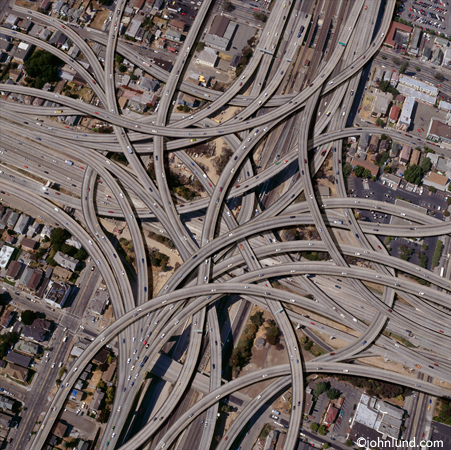
Build more highways, raise more taxes, not have money for maintenance, raise more taxes, drive land value down, have more migration outwards away from this give away to highway lobby "investment," have to build more highways to accommodate sprawling population, raise more taxes, not have money for maintenance, raise more taxes...

Cause:
http://www.johnlund.com/images/JL-interchange__2FG.jpg

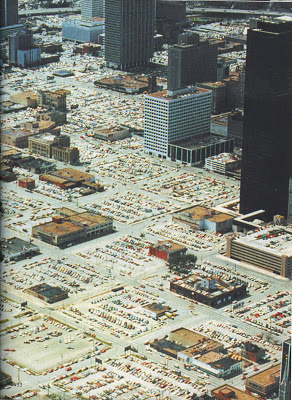
Effect:
http://2.bp.blogspot.com/_D5kx0bUGx_c/SDGdqXWxsCI/AAAAAAAAAEk/Y1eckZyKDeU/s400/houston.jpg
----------------------------------------
Again however, another study to prove the above is a colossal waste of time and money (unless you are on the receiving end), is this study showing that reducing demand is the best way out of traffic congestion. And ya know what? It GENERATES REVENUE. [Looks sidewise at Phoenix.]

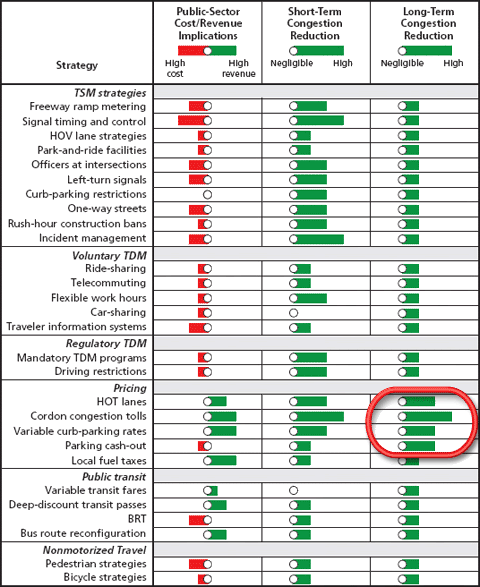
Earlier this year, the RAND Corporation, a nonprofit think tank, put out a report on how to get traffic moving faster. They considered lots of the standard solutions -- improving signal timing, clearing accidents quickly, encouraging telecommuting, and so forth -- and found that many of them could, in fact, provide some temporary congestion relief.

But here's the rub: RAND found that over the long haul, these kinds of solutions simply don't have much effect on congestion. They can briefly get traffic moving faster, but just about every improvement in travel time results in ... more people taking to the road! Over the long haul, apparently, most congestion relief efforts sow the seeds of their own destruction.
Funny how that works. From the actual report:
Longer term increases in the demand for automotive travel resulting from population growth and economic expansion can further undermine a strategy's effectiveness. This is why we often see, for instance, that flow improves for a short while when new lanes are added to a freeway but usually returns to former levels of congestion within just a few years.
chart
That red oval highlights the only solutions that the study's authors believe have any significant potential to fight congestion over the long term. Sadly, RAND also found that the road pricing solutions -- the top two -- face huge political and practical obstacles.
Of course, nobody wants to pay for what they have previously been getting for free. Unfortunately, you have no choice. There are no free lunches and it is time to pay the piper for the monopolization of transportation and corrupt city building methods of the 20th century.

And the longer we wait, the more expensive it is going to be. This, I promise you.


----------------------------------------------
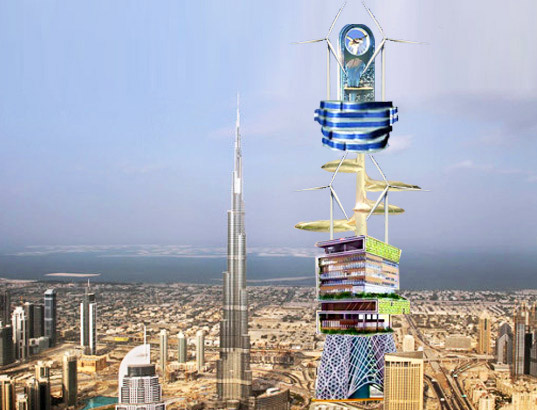
And, finally it takes April Fool's apparently for people to understand greenwashing, architectural absurdity, and real estate overshoot (again, all interrelated and fueled by the pedaling of BS marketing and fake money unlimited budgets):


It reminds of this time line, I recently created:


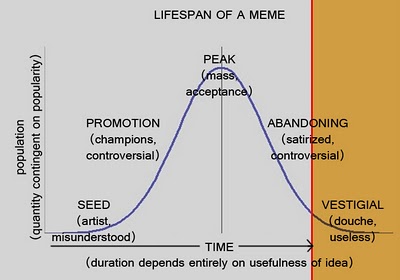
So is it safe to say that we've finally gotten to the Abandoning Stage or the Vestigial considering I compare Dubai and its architecture to the cast of Jersey Shore?

While this onion-like post from Inhabitat is brilliant. It took approximately two April Fool's articles for me to long for tomorrow.
----------------------------------
Lastly, and only because I just had this emailed to me, comes an article from CNN suggesting that the 21st century will be a "new urban" one. The general point is that it isn't about always being bigger. I would add, that while it might not mean bigger, it is about finding the "better." It is a similar difference between new money and old money. The kitsch and the sophistocated. Why a 4,000 sq. ft house in McKinney costs the same as a 1,800 sq. ft house in Hollywood Heights and why the latter will retain value and the former might as well be in Detroit.

Friday, March 12, 2010

Highway Guest Post Part II

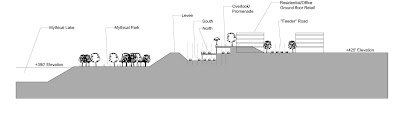
So I screwed up in my graphical representation of Toby's highway reroute plan. I should have showed all of the area around Reunion/Industrial as repositioned development opportunity zones. He has since admonished me and provided the section for the highway along the east/north?...uh, downtown side of the Trinity:

Click to embiggen:

He adds:
The +425' elevation is the grade elevation of Union Station taken all the way past Reunion to the new Highways. As discussed, the lanes on either the North or South Travel lanes that are to the right of the support columns could be "through" lanes that have a variable toll depending on traffic conditions. The other lanes have access to interchanges that get you to I-30 or I-35 as they branch off. The "feeder" road could be a repurposed Industrial Blvd that acts as a feeder to the new highway and gets you access into downtown.
I think at this point, we could also add a pedestrian crossing to the overlook to the Trinity. If we're going to still have highways between downtown and the Trinity, this might be the only way to allow for a realistic connection.

Thursday, March 11, 2010

Guest Post: A New Proposal for Downtown Highways

http://www.johnlund.com/images/JL-interchange__2FG.jpg

Anybody who has read this blog for any period of time, knows that I have advocated the completely insane idea of highway removal, particularly to alleviate the choke hold the highways apply to a suffocated downtown. Some American cities have already done it or are in progress of doing it (See: Milwaukee, San Francisco, Portland, and Oklahoma City) and others are contemplating it (See: Baltimore, Seattle, New Orleans, et al).

The purpose is to ameliorate the negative effects freeways have on adjacent and nearby property, while allowing for the qualitative improvement (ie economic development) of that same property in order to build the kind of density that can support infrastructure. Under the guise of highway construction as "job creation" (which is only temporary), we have managed to build more infrastructure with very low density. You would have to have imaginary Dubai funny money to sustain that equation.

I see two choices: either admit that we can't afford the world we have built or completely wreck the globe in another world war and loan the world the capital to rebuild. Oh right, it's the American cities of today that look like they were ravaged by WW2. And you think I'm joking that we could use a "homeland Marshall Plan."

The fundamental purpose of highways is inter-city commerce/trade/and travel, not intra-city. They are not, and can not be designed to a level to NOT obstruct the fine-grained inner-workings of micro-economies, which is why cities typically try to keep highways to the periphery. They never come into contact with the city whatsoever without being tamed by an interchange and converted into a boulevard as it enters the city.

Based on highway design, the negative impact occurs to varying degrees with at-grade being the worst, above-grade "hovering" freeways being second worst, and sunken freeway (or buried) next worse. None exactly are good, and all of the efforts from the Big Dig to the Woodall Rogers Deck Park are extraordinary costs just for mitigation; to get minimal return when the biggest return on investment of all, is to either not have it in the first place or remove it.

I have argued that downtown Dallas is effectively functionally an approximated ten-block area that works precisely because of the highway loop. Main Street needs a quarter-mile buffer and a halo of high-rise towers to pretend that they aren't there.

http://3.bp.blogspot.com/_D5kx0bUGx_c/SaSCIKBUADI/AAAAAAAABOY/_baGRFFJg30/s400/downtown.jpg
Conceptual effect.

[3+-+w+roads.jpg]
Real effect.

Furthermore, it is not only possible, but probable that the highest and best use of all that land currently dedicated as 35,000+ surface parking spaces in DTD is just that parking, or the delivery mechanism for workers to jobs.

http://2.bp.blogspot.com/_D5kx0bUGx_c/SDGdqXWxsCI/AAAAAAAAAEk/Y1eckZyKDeU/s400/houston.jpg

However, with that said, I also strongly advocate for incrementalism. Complex systems do not adapt well to rapid change. Which is why I suggest little victories like removing clover leaf exits in favor of more context-sensitive and spatially efficient design solutions.

Another incremental solution, somewhere between step 1 and step 50 is a solution emailed to me by friend, local architect, and globetrotter:


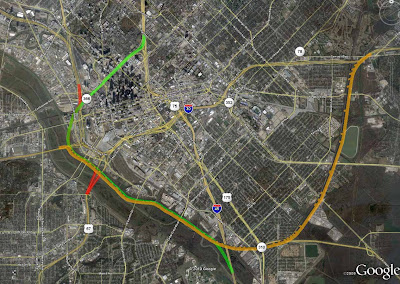
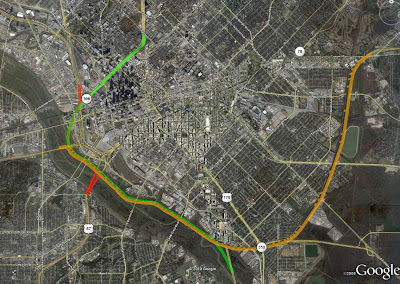
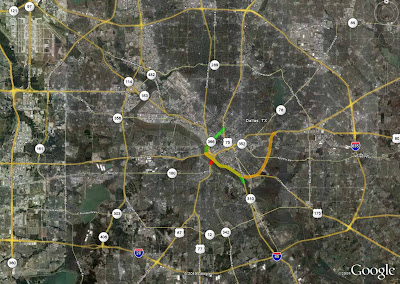
After you posted about taking out the elevated freeway loop around downtown I started looking at Google Earth to see if there were ways to route the Interstates to eliminate the need for the loop. This is what I came up with.

Since they are already going to tear up I-30 from the
US80 split to add more lanes, I figured why not just change the path, so that it no longer slices apart East Dallas neighborhoods? So, this takes is along an existing Rail path (Union Pacific, I believe), following the Whiterock lake run-off until it eventually merges with I-45/US175 and follows the Trinity Levees until it all merges with the I-35/Woodall Rodgers interchange.

Basically eliminate the Eastern edge
of the loop and the parts of I-30 that scar East Dallas the most. I-45 would be Re-Routed along the Trinity Levees as well, concurrent with I-30. The Western edge of the Mix-Master including I-35 would also get pushed to the Trinity Levees as well. In effect, the proposed route for the Trinity "parkway" becomes the new Mix-Master.

I figured this
could be a decked freeway with a nice pedestrian promenade on top that has great views of the Great Trinity Park (if that ever happens). Are you familiar with the Brooklyn-Queens Expressway as it passes Brooklyn Heights? This is very similar. The traffic lanes are stacked with a Promenade above. Great views of Lower Manhattan, and you barely realize there are hundreds/Thousands of cars zooming below you. Anyway, this is 50 year plan stuff as you have mentioned, but this could piece East Dallas back together and link downtown with Deep Ellum and Deep Ellum with Fair park etc.


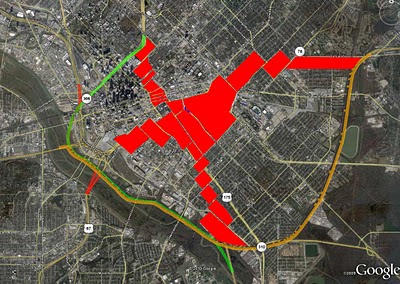
So with that said, I decided to look at what Toby had drawn and apply some graphics. The above shows the amount of property that would be directly affected from a re-routing or removal, repositioning it for qualitative improvement, aka intensification. Furthermore, that doesn't even begin to take into account what kind of effect it would have on Tennyson and Fair Park, by bringing them back into the proverbial tent.


Then we overlay those areas in new development.

Like any idea worth talking about, this has some pros and cons. I'm sure there will be more, but these are off the top of my head in the five minutes I have between now and running out the door.

PROS:

As he points out, the timing is good. I-30 is being redone. I know the designs are already well down the road, but if you are driving off a cliff do you stop and check directions to make sure you are headed the right way?

This removes highways from the neighborhoods they have wrecked, essentially enlarging downtown even more so than what Fort Worth did with I-30. Kudos to them for doing so.

It repositions the most challenged areas near downtown, those physically isolated by freeways, railroad and floodways. Fair park is allowed to be part of the city again.

CONS:

It funnels an awful lot of traffic to just one choke point where 45, 35, and 75 would essentially come together. This portion of the road would only further entrench the disconnect between downtown and the elusive dream that is the Trinity. Perhaps this choke point becomes a toll?

At this point, you might as well, just allow the outer 635/20 loop to handle the bypass traffic and downgrade the highways through the City to boulevards. You don't want bypasses because you still want that lifeblood flowing through the city. You just don't want it whizzing past at 75 mph.

I do know that I need to spend more time thinking about this. What do you think?

Thursday, January 7, 2010

Sociality (not Facebook) is what will Not Kill but Wound the Auto


The New Republic has been picking up steam lately in output with regards to issues of this blog's interest. The newest is the absurdly titled, Will Facebook Kill Off the Automobile?

Even worse, I suppose, is the actual title in the web address, suggesting we BLAME Facebook. This paints a pretty clear picture of the conscience of the nation, or at least, the national media's lack of understanding of THE most prescient issue of the day and media's inherent nature behind the social curve: it is not so much cars, but our frenzied if not corrupt overshoot supporting the automobile industry and its resultant (if not catalytic) infrastructure.
See this article on a bridge twice its necessary capacity. Induced demand anyone? This is what the cult of engineers would deem "improvements," which really improve nothing but their companies balance sheet. Peddling harmful product on a willing or unwary population; growing wealthy. Not unlike drug dealers me thinks.
Back to the article, which is really just providing superficial commentary on this report from Earth Policy which discusses the idea of "peak car." This really shouldn't be that complicated of an idea given all of the discussion regarding peak oil and the surplus of hundreds of thousands of brand new cars sitting at ports along our coasts. While TNR overreacts to the assertion that Facebook in particular is "the problem," facebook is simply emblematic of social media, which in and of itself is just a subculture within the movement back towards...well...each other, a more social way of living and being.

This was always the error of 90s doomsayers suggesting the internet would turn us into a generation of automatons. In fact, the opposite has occured. The younger generations utilize the power of the web 2.0 to increase social contact electronically as well as in person, while baby boomers are stuck in traffic jams communicating via toots, honks, and hand gestures of varying intent and hostility.

Who is the automaton now?

To tie this back together, I'm reminded of an interview with ethno-botanist /slash/ cultural anthropologist /slash/ cool freakin' guy, Wade Davis of the National Geographic, as he discussed the manner in which various drugs affected and in turn were accepted into cultures. I realized that cars were similar to the picture he painted about drugs in society, in that when they are newly introduced, they create a period of dislocation in that culture.

[277_cartoon_oil_addict_large.gif]

After a certain amount of time, eventually culture overcomes the overshoot created by any new substance, which could be seen as cultural experimentation or knowledge seeking, which is necessary for the culture to come to terms with it as it eventually becomes a matter of choice. The specific example he cites (my transcription):
I can honestly tell you that I've been on the edge of the drug culture, certainly in the 70s and late 60s and our museum at Harvard was the center for narcotic, toxic, and hallucinagetic drugs. And, in all that time, I've never met anyone who's choice to use or not use illicit drugs had anything to do with their legal status.

If draconian laws could keep people from using illicit drugs and solve the problem, which is created by people buying the drugs and then fueling the cash economy of the criminal element, if we could stop pepole by invoking powerful laws, then the draconian laws would've already done it. But they're not doing it because people make their decisions based on drug use on their own criteria. 90% of Americans have tried illicit drugs, about 5 million are regular users, but the interesting part is that 85 million Americans have been exposed to illicit drugs but don't use them anymore.

The old adage is that there are not good or bad drugs, just good or bad ways of using drugs, and one of those ways is abstinence, which 85 million Americans have chosen to do, not because their legal status, because if it was their illegality they wouldn't have used them in the first place. But rather their own personal relationship with the drugs to no longer use them.
Now substitute cars or highways in that passage for drugs and you begin to see my point. Cars hit European cities just as hard, particularly between the 60s and 80s, choking many of the cities in traffic and pollution. European cities have proven more resilient than American cities in coping with the new substance that was automobile use. I'm guessing this had little to do with the actual construction of the cities at the time, because post WWII many European cities were essentially clean slates, while Detroit was the Paris of North America.

Also, for locals in the DFW area, do yourself a favor and pick up the book Dallas: Rediscovered if you want a heart attack. This city destroyed so many beautiful buildings in the name of verticality, "mobility" (read: highways), and the requisite parking for those skyscrapers.

My how times have changed.

I would actually argue that European cities resilience comes more from two things. First, the age of the cities and the cultures that inhabited them. In many ways, they've seen and adapted to many, many, many more influences over millennia than American cities that are little more than one hundred or two hundred years old.

Second, and perhaps more controversially, I would suggest that there might be greater reticence towards "Corporatism," which in many ways offered the dynamite and the spark for World War II. Germany pulled out of its crippling post first World War uber-depression, with equal measures of nationalism and industrialism: building highways, cars, planes, tanks, etc. Sound familiar?

This is what I call bizarro Keynesianism; the lure of quick returns. Spending on bombs rather than schools. Short term spending rather than long-term gains. This is our challenge of the current recession (potentially eventual depression). Will we build more highways despite our horrific overshoot? Or will we wisen up and allow demographics to trump short-term business interests of the status quo?

Do we really want to take one step forward and two steps back? Having been on I-30 near Rockwall the other day, and seeing the absolute abomination of taxpayer dollars towards another mega- rollercoaster-like highway interchange death trap, I'm not sure anybody in Texas is really ready to make the right choice or step in front of the bulldozer tank and demand a stop to new highway construction in favor of people, and main street, and education, and crime reduction, and livability.

See John Norquist, former mayor of Milwaukee and himself a highway to boulevard vanquisher, suggests the smart money would be on Main Street.

And then compare that to TxDOT thinking about taxing VMTs, which seems logical, but like Texas' use of toll roads, it is for all the wrong reasons: ie more road and highway construction. Seem backwards to you? Measures to reduce dependence on cars and roads, only to add more roads and cars? Yes, you'd be right. It's as backwards as a palindrome (note: not a reference to a certain former governor).
“We need to think differently about how we fund transportation,” Texas Transportation Commission Chairwoman Deirdre Delisi said at a Texas Taxpayers and Research Association forum in November.
No, ma'am. With all due respect, you, as CHAIR, need to think differently about transportation. Next time you are on the highway, think about how much it costs for me to walk across the street for a cup of coffee, or lunch, or to the library, or to the park, all within two blocks of where I live. Unfortunately, and here is the real issue, there is so little supply of high quality urbanism and so much pent up demand that can't be achieved specifically because of local, state, and federal transportation policies, particularly the highways.

Congratulations, you've achieved engineering valhalla. No congestion in downtown...because noone (besides me) lives there any longer as your policies have achieved the unintended goal of creating unlivable environments except for rats, cockroaches, pigeons, homeless, and a handful of wackos like me.

I'm not suggesting that we all go car-free (that would undermine the point of free choice, no?) or that we try pedestrian only precincts (the US has tried that and failed rather miserably - even malls). Rather, this polemic is to suggest that we implement dovetailing policies that dramatically shift bulging DOT budgets towards local livability investments which includes alternative mobility, while systematically and incrementally transitioning highways out of the core, a conversion to boulevards, arterials to complete streets, and walkable/livable downtown streets. This is the best investment we can make as a community.

[274874.jpg]
(Not Copenhagen)

Copenhagen is obviously the primary example used by today's pedestrian and bicycle advocates. But it only got to where it is today (as the most livable and valuable city in the world) because of its own collective automobile induced overshoot. Furthermore, the status quo, being the local business owners fought tooth and tail against removing cars from their streets. We see who turned out to be correct there.
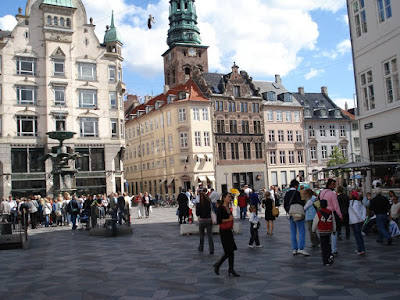

(is Copenhagen)