




Showing posts with label bike lanes. Show all posts

Monday, January 16, 2012

We Can Do a Lot of Things, But We Can't Do That

If you hadn't heard, a bicyclist riding on the Jefferson Street viaduct was struck by a car riding from Oak Cliff to downtown this Saturday. The collision broke his neck. As the news report rightly points out, this is one of the streets suggested for initial restriping of bike lanes. Dallas has no on-street bike lanes at present. Meanwhile, cities around the country are adding them left and right.

It should also be noted that there isn't one safe connection across the Trinity River for pedestrians and/or cyclists at present. Jefferson and Houston Street viaducts, the two primary connections to/fro Oak Cliff are literal nightmares. I've ridden them several times. Yet the irony is that there is so little vehicle traffic to warrant the excess vehicular travel lanes on them. Google Earth Pro tells me that previous traffic studies suggest an average of about 8,000 vehicles per day on each. They're both 4 lanes. 8 lanes in total. The sidewalk for bicyclists and pedestrians abruptly stops. Meanwhile, Main Street in downtown moves 9,000 vehicles per day. It is one lane in each direction.

The Lance Armstrongs as I call them, those that think just some good edjumucation is in order to get ridership and safety up, want riders to co-exist with vehicles on the travel lanes. Cars routinely drive 55 mph on those two bridges. Can you pedal that fast? Can a child? Cars drive as fast as the road design allows them. They haven't a clue as this post points out, which is why they've been saying the same thing with no results for decades. They appeal only to the 1%. Not that 1%, but the 1% identified by Roger Geller that is "strong and fearless."

It is the 60% of the population which is the untapped market that is "interested but concerned." I.e. not batshit crazy enough to try and compete for roadway space with drivers conditioned by a highly competitive traffic environment to drive aggressively. I was in conversation with a woman at one of Chef Nicole's underground dinners a few nights ago. She lamented why does everybody in Dallas have a giant SUV?

The answer, beyond the various tax breaks and artificially deflated gasoline prices for hyper-inflated internal combustion vehicles, is precisely that competition. Every other driver on the road is your enemy? Why? Because the optimum condition of a road is no other drivers. This is the failed logic of the transportation planner/engineer. They're in your way. They cut you off. They slow you down. They tailgate you. It is competitively advantageous to desire a bigger vehicle. In contrast, in European cities, it is competitively advantageous to have a smaller vehicle because space is at a premium, both parking and drive lanes.

Meanwhile, in a safer pedestrian-oriented environment, each other "commuter," whilst on foot, improves the overall experience. And as I tweeted the other day, city form is commonly based on the primary transportation technology of the day. However, foot power is the only transportation technology that transcends time. Therefore, the only truly timeless cities, durable cities, that will surely last long past peak oil (unless we all kill ourselves and each other on the roads first) is the pedestrian-oriented city.

Fortunately, Dallas Torres survived the crash. Or unfortunately? Did I really just say that? In other words, he won't be a martyr for change, since that is apparently what it takes to get the city to do its primary job: ensure public safety. If the city disagrees, thinking that public safety should take a backseat to economic development, there is also the fact that investment and spending along the Magnolia Avenue bike lane in Fort Worth is up over 500%. In one year. The actions of the city make it appear that they don't understand economic development and don't care about public safety. They do however think paying $10 million to Calatrava for a redesign of a physical connection THAT ALREADY EXISTS is a good investment. Maybe he'll just pull a design off the shelf again.

If words like these offend, perhaps they should offend. While the city looks for excuses not to make any changes, will it take a death to begin making changes?


Perhaps we need to give a call to the Bobs to ask, "what exactly do you do here?"

Monday, October 4, 2010

Guerilla Urbanism Spreads to Fort Worth

You may have caught some of my cryptic tweets from last week suggesting Fort Worth was experiencing symptoms of a virus. That virus is the Better Block, or citizen frustration and need for community, safe streets, and enjoyable neighborhoods, expressed as Do-It-Yourself Urbanism. Kevin of FortWorthology sends word that their version of the Better Block was predictably successful with similar emergent phenomena (along with many many photos throughout the evening):
The effects of the project were immediate and dramatic. People gathered on South Main in unheard of numbers. There were no traffic congestion problems or disasters - cars could still travel nicely, but they did so at a much, much slower rate. This relaxed the street, giving people on the sides a comfortable feel that made them want to hang out and browse the art, food, and shops. Bicycles rolled freely and safely along the nice wide bike lanes. Kids played where once nothing but pavement existed.
Before.

After.

Go to the link to see pictures from throughout the day, as the neighborhood came out in force to enjoy the day/evening and the presence of each other.

Wednesday, June 23, 2010

One Billion Bikes

"I cycle to work. I cycle from work. I cycle to University. I cycle pretty much everywhere." Dressed stylishly while casually acknowledging cycling use without shame. And without helmet or fear of personal safety, I might add as well.

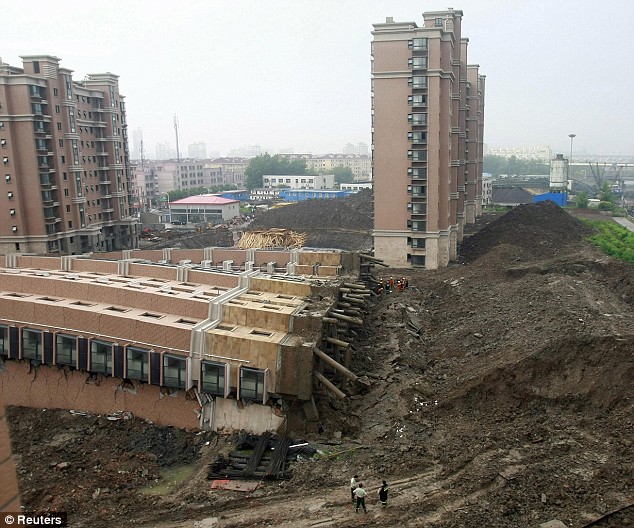
And not in China. Because they're busy widening roads and going "green" by widening highways and forcibly moving peasants from their agrarian lifestyles into well-constructed filing cabinets like this one:

http://i.dailymail.co.uk/i/pix/2009/06/28/article-0-05815B1E000005DC-497_634x528.jpg

Oopsy Daisy. Perhaps some oversight and the nasty time for professional accreditation is worthwhile after all.

No, I'm talking about this. Ignore the dreadful cameo to begin the video if you please...unless you like gargantuan d-bags that look uncomfortable using their cheated to gain fame to promote whatever:


These bikes are powered by one billion power bars, and Oh Gawd the amount of air that fill those tires... They're taking all our good air!!!!!1111!!!

Thursday, June 10, 2010

Bishop Ave Complete Street Meeting

The City is unveiling a complete street design for Bishop Ave tonight. I was asked about it in the comments and decided it would be best to pull them out for a post of their own. Warning: Some may not like hearing the truth:
The diplomatic answer would be converting any street to a complete street is a step in the right direction.

The real answer is that Bishop is .75 miles from end to end. Who is going to ride on it? Cyclists need places to go and we need to have the courage to implement complete streets on real streets that matter.

Is a Bishop complete street going to help a commuter get to their job downtown? Or to the eventual improvements on the Trinity? It needs to happen on Davis. That is the spine of Oak Cliff.

Why not stick with Tyler and the Better Block?????

That made real, fundamental change to how the street behaved. If I can Jaywalk across Bishop or Main any time of day, those are streets that aren't in need of "diets" or urgent need for improvement.

To me this is kind of like trying to improve Main Street. A street that is already working, taking a +1 street to a +2 street isn't as impactful as taking a -1 street to a +1 street if you follow me. This is why downtown shouldn't put money into Main (the cherry on top) until it focuses on the problematic streets (Elm, Commerce, Griffin, etc.).

The idea of convergence is to not segregate modes of travel in order to establish hierarchy of places, spaces, streets, density, and use.

Our streets are public places. They have to be designed to attract people not repel them. We can't be afraid to "complete" our actual arterials so our city is no longer "inside out" where density and vitality is away from the actual movement of the city, the traffic (ped, bike, car, bus, etc).

I fear that implementation on Bishop might lead us down a path where bike lanes and complete streets only occur on minor streets. If that is the case then this is a waste of time and we won't impact the city's form, shape, and dynamics in any meaningful way and we're just playing in the sandbox.

Now, if the Bishop plan is considered the phase 1 for eventually expanding to Davis and Jefferson, then ok but I would rather see it on a street that goes somewhere and it can be phased to extend over time for a greater segment of the same street and draw from a larger area.