





*Not his real organization, but is there really a difference?
On the other hand, if I have won enough credibility with you dear reader over time, you may be willing to accept my reactionary response to Wendell Cox. That being that he is a shill for the road lobby. Now this is also based in fact, as the directors of the group this presentation was given to The American Highway Users Alliance have documented tax returns representing the interests of Ford, GM, and Toyota. Users is right, but it isn't highways getting used it is all of us, the taxpayers.
Now if I haven't yet earned credibility then in this post I'll go through his presentation point by point to debunk and discredit everything he says.
First thing to know about Cox is that he is the kind of guy who claims he's for "choice" as long as all subsidy goes towards roads and cars and not to any other form of transportation whatsoever. Free marketeer, this guy.
Next, is the graphics. Pretty, in depth, nor subtle, these presentations are crafted by people lacking the least bit of intuitive sense of semiotics. All it takes is the opening picture to elucidate this point. "Boy, that sher is a purdy highway and cityscape... it's all washed out in gray and brown hues of the air, just the way I like to breathe it through my mouth hole."
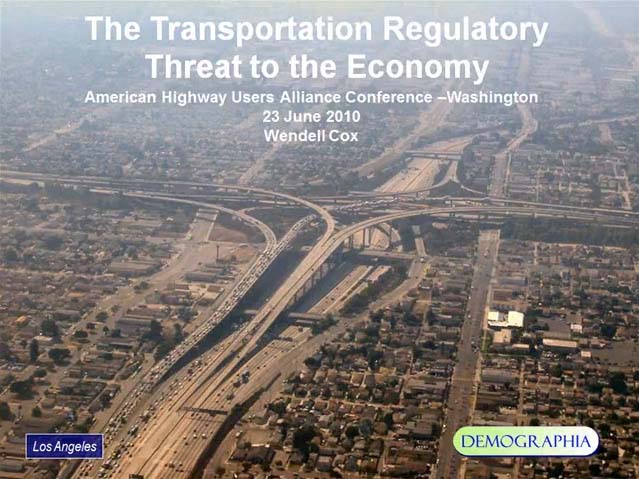
My favorite part is that, well I would present the exact same picture as a "what not to do." Not only because it looks ridiculous and out of scale, but even if the point is that "highways create mobility," I'm seeing several lanes thoroughly clogged and several others completely unused. Neither, in the ideal scenario of which Cox poses to present. The rest of the presentation sprouts from there with similar shallowness of thought, understanding, and rhetoric that never leaves behind an amateurish capability to handle data, statistics, or reality.
Next, you pick up the voice intonation and the sense that this entire room is filled with crotchety, old white dudes who know only one model for reality. In other words, exactly the kind of guys that would populate such a thing as the American Highway Users Alliance or the kind of organization compelled to embolden "highway USERS" in their websites meta-tags (html geek'd) as some sort of populist cover in the event anyone gets the crazy idea from their rhetoric and positions that they might ya know, not actually represent the common person.
The nice answer to the question of who exactly these guys are is that they represent the financial interests of industries tied to the teet of the federal government, which once again reminds of the Klosterman quote about all technology eventually is bad. This is it. The technology is the car. We overbuilt comparative to its actual usefulness and it is proving difficult to extract it from our lives, not because of need or want, but because of the painful transition of certain jobs. Particularly, the jobs of these guys.
The other side of AHUA is a group posing as libertarian that proudly opposes tolls (not libertarian) and seeks maximum subsidies for highways (not libertarian). Those subsidies mind you, come from the pockets of the average everyday man for whom they masquerade as crusaders. Poor Peter gets robbed once again to fatten the wallet of already wealthy Paul. In other words, they perfectly represent the 20th century economy; the dead skin we, the rest of the country, are busily and painfully trying to molt in favor of a new and improved, repurposed economic phenotype.
I like my hypocrisy marinated overnight with deep, rich notes if for no other reason than an aroma so rich I can taste it whilst pulling up to the valet to park the car that I don't have. How about you?
If I'm to give AHUA and Cox credit, they understand that if they ensure never-ending road construction, this inevitably disperses population so that no other form of transportation works except for private automobile. Then we're held captive to building such infrastructure, supplying inefficient bus service to the working poor, who are also scattered, and subjugated to fluctuations in oil prices based on the whims of foreign cartels. This is painting them in a good light.
They also support domestic drilling any and everywhere as the solution to dealing with foreign dictators and oil markets. Any problems with that recently? I feel like taking a cruise on the Gulf of Mexico and flicking burnt cigarettes that I don't smoke off the bow of a boat with these guys tied to the hull.
Despite its advocacy for the common man and "million of americans and businesses," AHUA has a whopping 145 twitter followers. Grass roots indeed. Fundamentally, this points to the crisis of republican governance (not the party, the form), that this group can be so influential in determination of policy directions and public spending with no popular support to speak of.
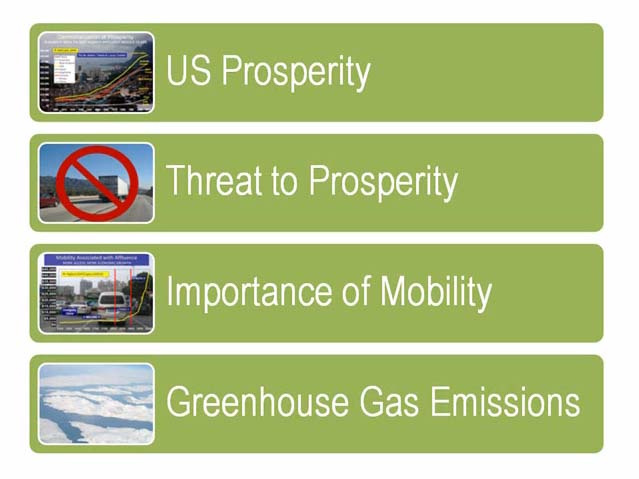
You know it leads to a bad presentation when these bullets say nothing about the actual points of discussion. In fact, I could put together a presentation with the same bullets and say the exact opposite...which, is exactly what I'm going to do here.
Also, notice the re red outline accompanied by words like "threat." These are appeals to the reptilian brain, the most basic, primal, and reactionary. It ignores logic and reasoning and skips straight to instilling fear. Why? Either their actual arguments lack merit or this is literally the way they think. Neither explanation really matters.
Within the presentation, Cox's fundamental point is that of mobility. What they either cleverly and deceitfully do (or ignorantly don't understand) is that transportation policy and funding shifted solely to cars undermines real mobility. Distance, propinquity, and diversity of choice are all elements in the equation of mobility. If someone has to drive to ten different locations scattered across suburbia, find parking in order to accomplish ten different errands and I can handle them within five blocks, who is more mobile? Which is more efficient? Which is more cost effective?
Furthermore, accessibility is another element of mobility. They expect everybody to drive and everybody to own a car. Behind closed doors, I imagine them half-jokingly suggest removing drivers test and age limitations for licensure over cigars and aged brandy. The truth is that the handicapped, elderly, those who can't or don't want to afford cars, and children under 16 have reduced freedom of mobility, and burden others because of it in car-centric environments.
Another pseudo-libertarian, Randall O'Toole suggested a good solution to disaster preparedness in the event of another hurricane Katrina is for the federal government to buy all residents of NOLA cars to evacuate when adequate rail service could have moved thousands every few minutes and avoided the logjam. And O'Toole is actually considered the more serious one!
They are "libertarians" that wanted to subsidize car ownership. This should tell you how committed they are to their principles. This is also the same logic they apply to all other solutions, regrettably.
The rest of the presentation is full of super-duper trustworthy appearing statistics and tables. All of which are little more than broad sweeping generalizations providing no declarative proof of causality between cars/highways and prosperity even though each is passed off as such. Frankly, I think the impoverished state of municipal budgets spread too thinly to the breaking point provides proof that any correlation is one of timing if not outright temporary hallucination.
Post-WW2 prosperity had far more to do with loans to rebuilding nations after WW2, not having to deal with the wake of armies in the millions colliding on our continent and the subsequent rebuilding, and growth fueled by cheap oil following the Nazi version of economic development which was to funnel tax money to highway construction and
I'll give them credit for one thing. They understand the hyper-rational Descartian world where statistics of any kind are roundly accepted without question. In fact, they count on it.
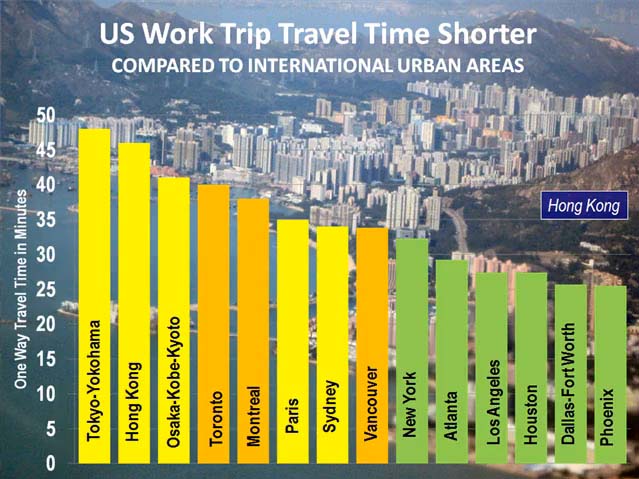
For example: don't ask questions. From this you are to assume that because commutes in PHX and DFW are super short in comparison to the other cities listed that PHX, DFW, and Houston are the cities dreams are made of. OMG, look at NYC. It's almost unamerican! Kill it!
Of course, none of these are sourced. Furthermore, each is an empty statistic taken in a bubble with no context. There is nothing to be said of 1) quality of that trip, 2) productivity of that trip, and 3) externalities of each trip.
For example, if it takes you an hour to commute in Osaka, Paris, or NY but that trip is spent on a comfortable train ride where you can sip an espresso, read the paper, and read/respond to emails, bookended by short, safe, pleasant walks, while millions of others are making similar journeys that don't pollute, kill tens of thousands on the commute (as highways do), and aren't choked up routinely by said accidents creating traffic jams undermining mobility and time savings, which is really better? Cox claims one way is better strictly by the most simple of metrics.
One point I've made over and over again is the fallibility of neo-classical economics which attempts to objectively assess values and work strictly within a system where everything is priced by the market. But, if you ignore the majority of the elements in the equation, those things that either can't be priced aka invaluable or you ignore them, you are being either disingenuous or outright stupid.

How many schools or textbooks could be afforded with the cost of this? Or, what could you buy or save with what wouldn't have had to be taxed out of your paycheck?
Threat to Prosperity: "There are some who wish to slow if not stop completely the expansion of highways which would increase traffic congestion."
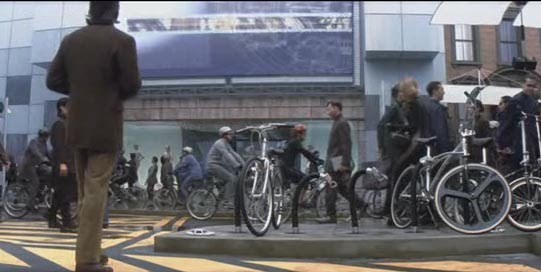
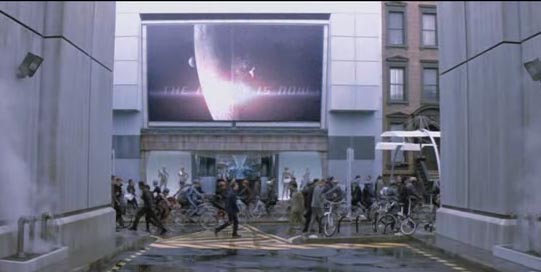
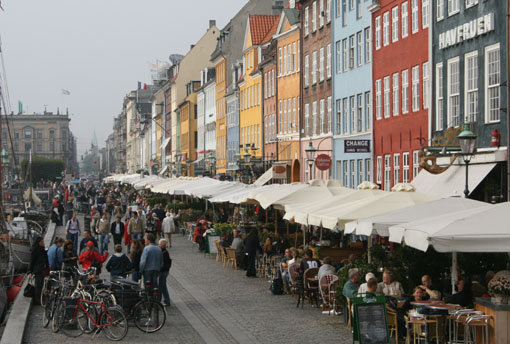
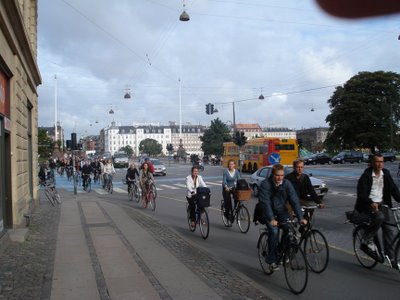
In a way he is right. If we stopped building more highways (which we can't afford or maintain by the way), we would create congestion. Except it would be pedestrian congestion and bicycle congestion, the kind that doesn't have negative externalities like with the automobile version of congestion where you are trapped in a suffocated metal box, with noxious fumes all around you, on a field of concrete and can't go anywhere because you're blocked in by your mortal enemies, every single other person on the road.
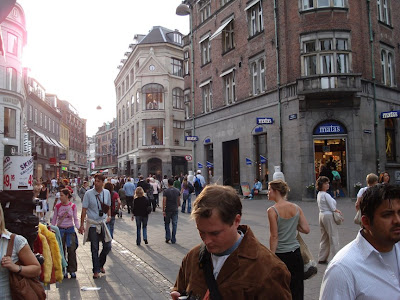
Positive Congestion
The good kind of congestion only has positive externalities, such as healthy populous that is less of a burden on a healthcare system, increased commerce based on foot traffic, better localization and synergies of real estate clustering, less money spent per capita on infrastructure construction and maintenance, less money shipped overseas in support of our oil habit, and the other people providing that congestion aren't your enemy in a competitive situation, but a cooperative one where the presence of each of you makes the other more safe and their experience more enjoyable. Nobody goes to the highway to people watch.
Legitimate studies, unlike those that Cox uses, show that increased road and highway capacity only temporarily reduces congestion, but ultimately worsens all of the negative outcomes as listed above.
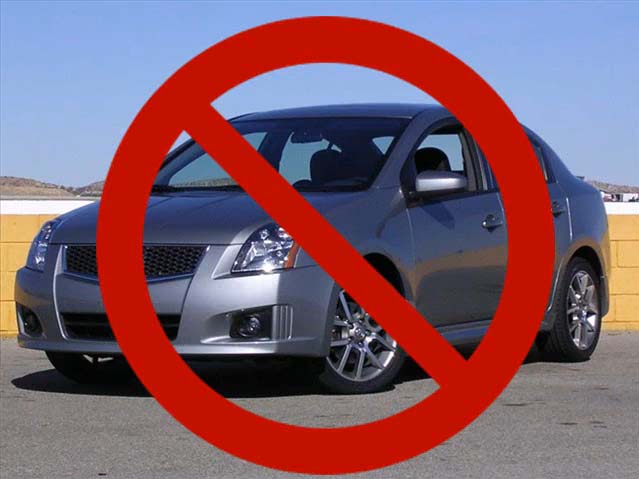
He also likes to play up the big red ghostbusters circle with a line through it, suggesting that we are trying to ban things or control the way people live. It's like they craft these presentations for children...or at least those with the minds of children. In the spirit that we project our own thought processes onto others, it doesn't speak highly for people that treat others as if they have the mind of children does it?
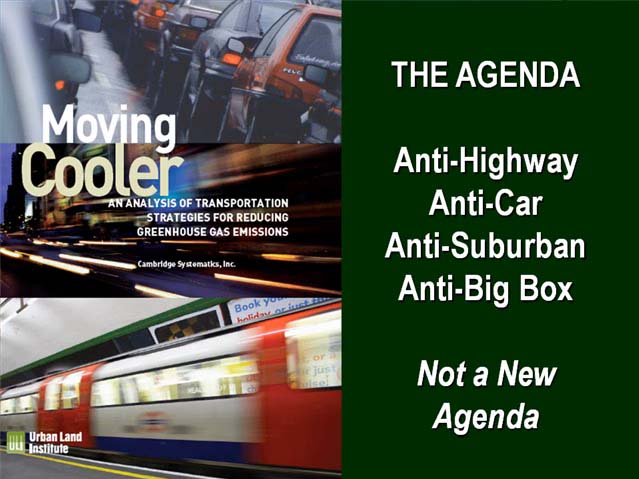
"Contempt for the American Way of Life..."
This also is not a new playbook really. They're anti-american hippy commies!!!! Tired. Yes, the Urban Land Institute, made up predominantly of conservative, buttoned-up real estate developers is really a radical left-wing socialist front group. Next ULI meeting I'm checking for little red books in breast pockets and Che Guevara t-shirts under those black and gray suits.
Actually, any legitimate city planner is perfectly happy to allow any of those things as long as they pay their full cost in a properly competitive environment. We wish to end subsidies which create an unfair competitive balance, particularly to those products and industries with significant negative external byproducts, such as car traffic congestion, obesity, asthma, pollution, runoff/flooding, etc.
These subsidies began in the early 20th century as a response to the squalor industrial cities had become. The are not appropriate for what cities are today and they don't respond to the way cities exist in the prideful hearts and minds of their inhabitants. We want to care for our cities. We want to showcase them. We want them to be great.
Frankly, the rest of this is retreads of similar cherry-picked data that I find it a waste of time to go point by point once the fundamental logic is undermined, obviously every single point is as well. O'Toole, Cox, etc.? They are all dinosaurs fearing extinction. Unfortunately for them, time is cruel to those without useful ideas.
They're hanging around only as the apparatus of the industries entrenched by massive federal subsidy. They like to play pretend libertarian, but they are really only fighting to maintain the free hand outs for their industry. Cox, O'Toole, et al are more than happy to unscrupulously sell their integrity for a cut of that cash money.
They are afraid of change and are backed into a corner by the kind of dramatic sweeping change that only happens because of the calcification of their industries. Evolution happens in two ways: radical and gradual. Gradual is painless. Radical occurs only through collapse. The world they've entrenched crumbled rather than accept and encourage gradual, free- and fair-market adaptation...
And that sudden repurposing shift is proving traumatic to their industries. We would be so kind as to let them die in peace.



![[IMG_1523.JPG]](../../_D5kx0bUGx_c/SFrct4PDoYI/AAAAAAAAATc/JS9cXQtUA9E/s1600/IMG_1523.JPG)


 Posts
Posts