I'm going to use this space to respond to various aspects of the series the Dallas Morning News is running on sprawl. I don't know exactly where it will lead since I haven't yet read parts 2 or 3, but after reading part 1, there were so many inaccuracies and lazy assumptions that rebuttal is necessary.
Note: All of this is behind the DMN's paywall. I will not do a full fisking, which would require cross-posting the entirety of their content. So I will limit what I post to the most critical strikes and gutters.
And to be frank, I'm having other people feed me this content since the DMN doesn't seem to have an itunes inspired pay per column idea and I can't convince the capitalist in me to spend above and beyond what I perceive to be the value of the content. This series does nothing to dissuade that opinion.
Apologies beforehand if anything herein hurts anybody's feelings, but I care about two things: the city I live in and the profession I work in. So yes, I get angry. Without proper understanding of the issues and dynamics at hand, both of those two things are badly weakened.
If the DMN wishes, I will replace quotations with paraphrases, but some information and debate needs to be in the public realm.
At current growth rates, the North Texas suburbs will reach the Red River someday.
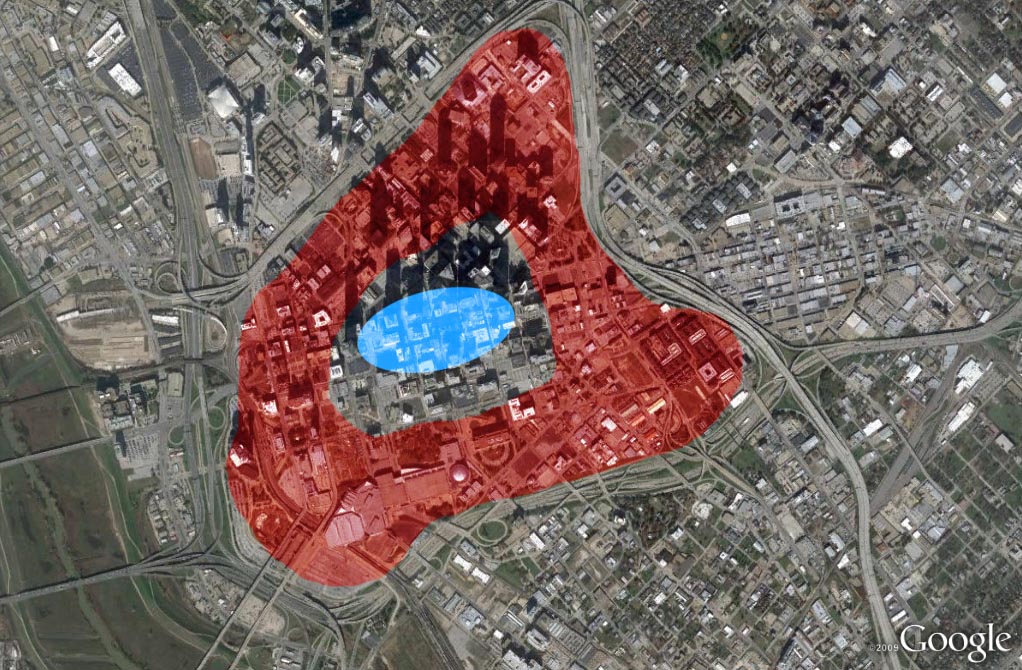
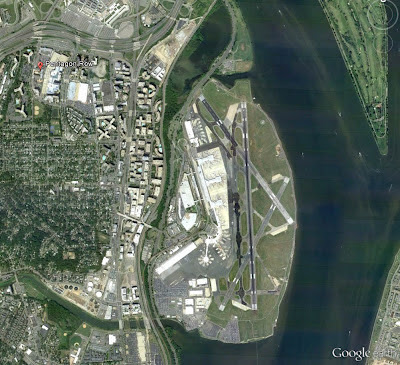
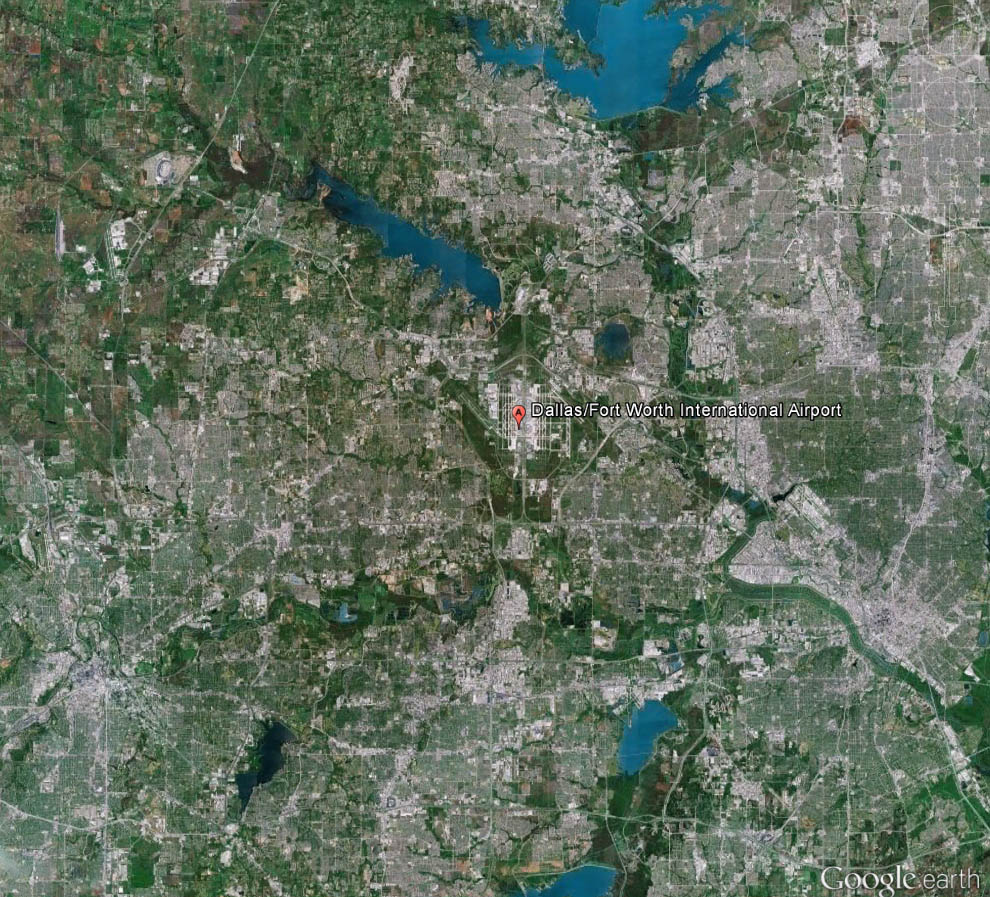
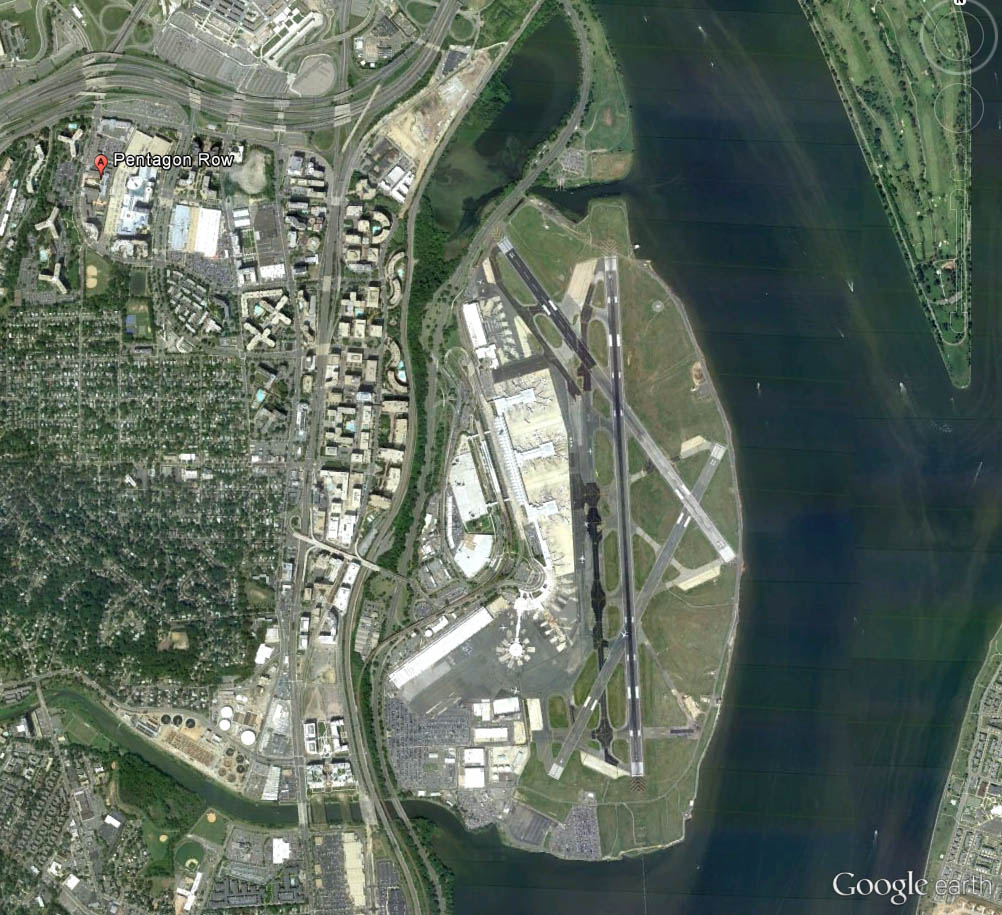
I see their going for rhetorical bombast in their lede. It won't. One, you can't make the same mistake economists make far too often. Trendlines don't extend to infinity. Only timelines do. Cities are inherently restricted by transportation technology and the time humans are willing to spend making the connections necessary in their daily lives. This is why cities throughout history are an hour wide (and here I'm referring to cities in the sense that they are the physical manifestation of interconnected local economies, ie the amorphous, contiguous body you see in satellite imagery). So unless teleportation technology is invented or the planet's carrying capacity somehow manages to increase exponentially this will not happen. And as for the assumption that the internet is like teleportation technology allowing us to further disperse, I counter that here. The internet facilitates and caters to clustering moreso than it does dispersal.
Cheap land, good schools and other strengths have fueled an era of suburban development in North Texas, spurring unprecedented job growth, prosperity and a high quality of life.
Incorrect, lazy conventional wisdom. As I joked this morning on twitter, it is amazing it took civilization to find the valhalla of great schools that existed out in the wilderness for millennia. Had we only discovered them earlier, it would be unicorns for all. Yes, schools draw famillies. But, first the families drew the schools out there and provided the tax base for them. Similarly, the young, engaged families that moved into North Oak Cliff over the past five years have transformed the local elementary school.
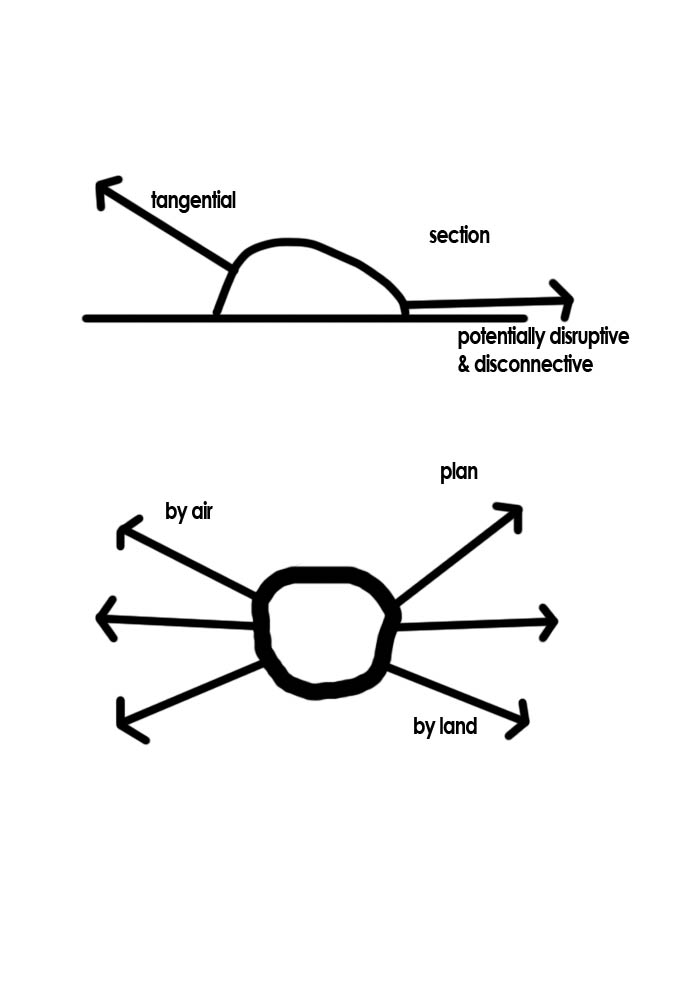
Furthermore, land was/is cheap outside the city because it was not viable for anything but agriculture or wilderness. It was only when transportation technology and infrastructure was created that repositioned this land as viable for improvement. The highways also downgraded the value of all the land near them. They linked disparate places but disconnect local ones. The math on that is that one connection was made, but dozens upon dozens were lost. Sum degree of integration diminishes and therefore accommodation (built uses) also diminish. Look at any overvalued highway frontage property and its inevitable life cycle from office building or hotel or whatever until its death rattle as a gas station or triple X shop.
The drawback of course is that much of this was cannibalistic and merely growth for growth's sake. How many people moved specifically because of that growth boom and the various related industries? And without that, we go the way of the rust belt. Ultimately cities are about desirability and opportunity. The opportunity is instilled by network interconnectivity. The driving force of the suburban "growth" will be the demise of both the brief blip of growth which cannot exist without purpose, opportunity, or a magical solution to cheaply transport us from place to place.
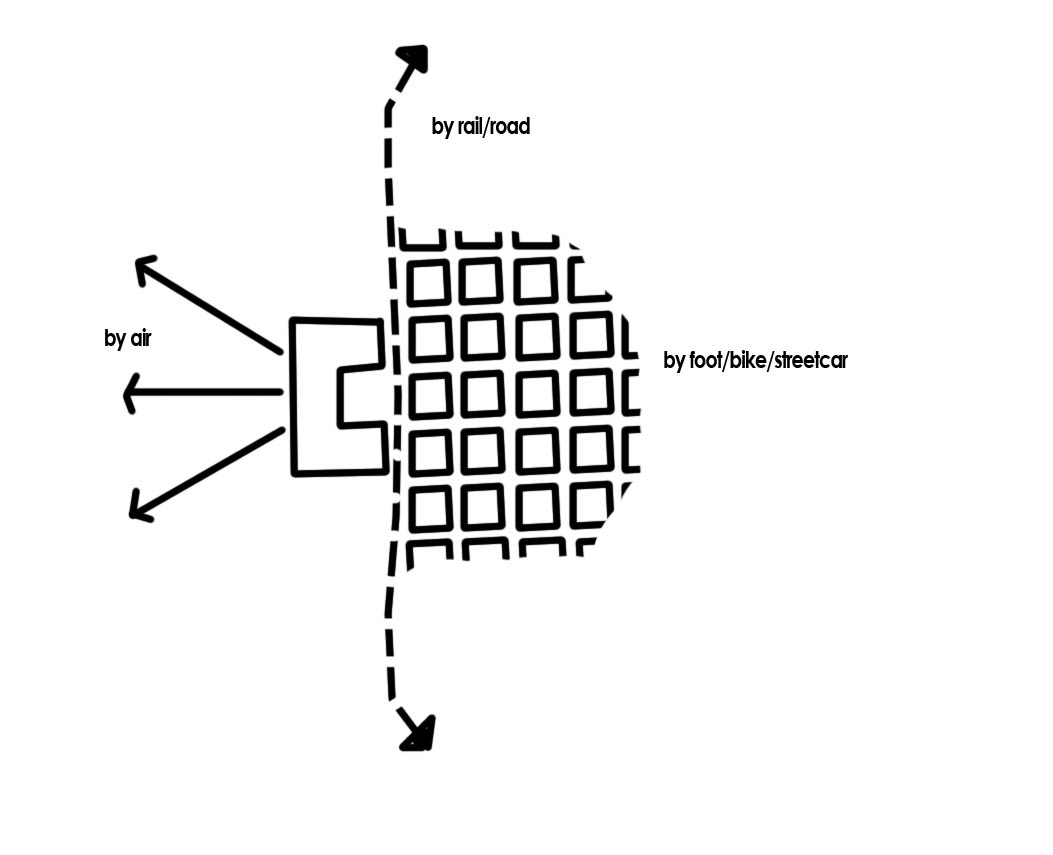
"Other strengths." Like what? Name them. Here seems like a good place to point out the difference between sprawl and a legitimate suburb that is attached to a "host city" but is not parasitic, like Torrent, Spain outside of Valencia. It is also more family-oriented, but also provides a range of market-oriented housing types and built-in mobility, as provided through proximity and legitimate transportation choice. There are also jobs, a quarantined but nearby industrial sector (really the only use (Locally Undesirable Land Uses or LULUs) that ought to be "zoned", a legitimate downtown, connected to Valencia by rail, and local food production/agriculture immediately abutting development providing stability and food security while we have about 3 days worth of food at any one time.
Imagine if there are significant disruptions to global food supply and shipping? Imagine how expensive food will become as fuel costs rise. The only way cities survive, let alone grow, is if they are adaptable and durable. Sprawling sun belt cities provide neither.
The pro-growth culture is so strong that planners foresee a day when development reaches out 100 miles from Dallas. Yet given the long-term costs behind such a layout, some community leaders believe that unchecked growth is unsustainable.
These "planners" are smoking something, lest they be wholly incompetent. This idea is so deliriously malinformed, I can't take it seriously, but have to because it threatens to discredit my profession. Me. Infastructure of sprawl is badly failing because by its very nature decentralizes, reducing tax base while increasing tax burden. This does not, nor will it ever add up, particularly in a world of increasing pressure on finite resources. But go on thinking forever growth is possible. Whatever sell you want to make to keep bringing in federal transportation dollars for massive projects providing the seeds of our own destruction.
Yes, Detroit can happen here. It is like we are following Lewis Mumford's playbook toward Necropolis to a T. Perhaps our industry is more diversified, but is housing?! Is transportation?! Detroit, at root, died because we ran out of a need for cars as hundreds of thousands sit idle at ports, both foreign and domestic. So what happens to a city built for cars and cars alone?
It is critical that we distinguish quantitative growth from qualitative. We can still "grow" the economy without expanding, nay, fracturing the fragile bonds of the economy. In fact, the ONLY way we can grow is to grow back inward and recluster. And no, that can't be coerced via Urban Growth Boundaries. That should be dismissed out of hand as politically unfeasible. Nor is it particularly desirable. However, we can build in nudges to make infill more desirable. We have to. Because right now, all policies (be those taxing, zoning, transportation planning, funding, and design) steer us to sprawl. To forever growth. And since forever growth is a contradiction in terms, toward our own demise.
Commute times are rising. Air quality has declined. Water supplies are strained. And as subdivisions continue to sprout up on the Texas prairie, older communities closer to downtown Dallas have struggled to turn around aging neighborhoods and declining school enrollments and replace outmoded infrastructure.
First portion is all true. As for the second part, SOME central areas have struggled. On the other hand, I give you uptown Dallas, which added $2 billion with a B in tax base and investment. I give you North Oak Cliff, where the cool kids hang out. And then there are countless other places like Deep Ellum, Greenville, Knox-Henderson, etc etc. which are trying against all odds (infrastructural burden and isolation) to come back. The deck is stacked against them. Sprawl is NOT the market's choice, but the inevitability of badly misguided policies intended to provide relief from the dystopia wrought by industrialization that continue to this day (despite there no longer being much industrialization to speak of).
The Dallas-Fort Worth area has more people, about 6.5 million, than all of Texas did during World War II. More than half of that total now live beyond the city limits of Dallas and Fort Worth.
Aside: I just deleted several graphs of DMN content. Did the DMN focus group (verb) that people will only read one staccato-like one sentence machine-gun paragraphs? My senses are dulled by the onslaught of textual MTV.
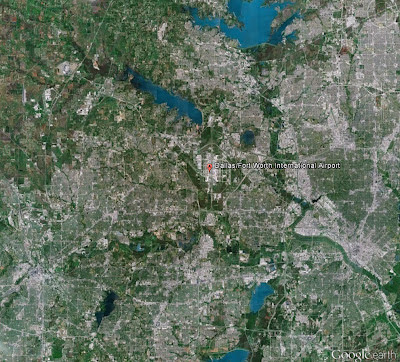
And the region is slated to almost double in population between 2000 and 2030, according to the North Central Texas Council of Governments. Most of that growth has been on the edges. The region now measures roughly three times the size of Rhode Island.
We'll see if that growth ever occurs. And is that desirable? Do we want to be like Mumbasa? I'm not against population growth in DFW, but who would willingly want to jump into a city at McDonald's and WalMart wages to pay off the debt of our own infrastructural burden? "We can't afford to live like we've been. Move here!"
Collin County, the nation’s fastest-growing from 2000 to 2007, is the epicenter. The county’s population has tripled in size since 1990 and is now comparable to that of San Francisco or Detroit. Frisco’s population, which was a mere 6,000 in 1990, stands at about 120,000.
Weird juxtaposition. Intentional? If so, I'm impressed by the subtlety if it exists. By 2030, where will Collin County be? Where will San Fran? Where will Detroit. Three separate places with three different dynamics. Only one of which currently appeals to the human need, facilitating social and economic exchange with minimal "movement tax" of time, distance, and infrastructure. San Francisco has 66 neighborhood commercial centers where 5,000-7,000 people live within a quarter-mile, walking distance. San Francisco removed a highway (albeit a damaged one in the Loma Prieta earthquake). San Francisco has some of the most valuable real estate in the world. And as long as we're talking about market forces, price = demand = desirability, much of which stems from opportunity inherent within a legitimately networked city.
The search for good schools, cheaper housing, more space and easy road access has driven the migration. The consolidation of smaller suburban school districts after World War II helped propel the surge.
Horsesh!t. All of it. "Cheaper housing." Nothing is more expensive than cheap. The resale value of said houses at the edge are plummeting, fast approaching zero as we realize there is an inherent locational cost factor previously ignored in housing. Something called, "transportation." It only seems cheap on first blush. Economics are so much easier when you can ignore externalities too. Damn the torpedoes.
Prices have begun correcting around the country for the imaginary influx of capital injected into the housing market, inflating the bubble. That is one part of it. Many places around the globe suffered through this housing bubble. But many also built internally, providing quality construction that can be passed on through generations, retaining value. We built bird nests out of sticks and spit that will blow away with the next stiff breeze of reality and changing generational preferences. The second part of the price correction yet to be fully felt is the locational one.
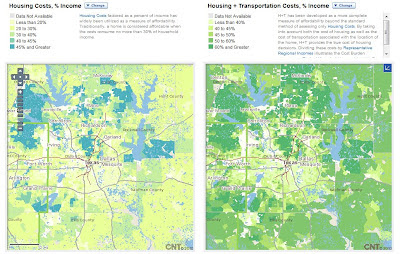
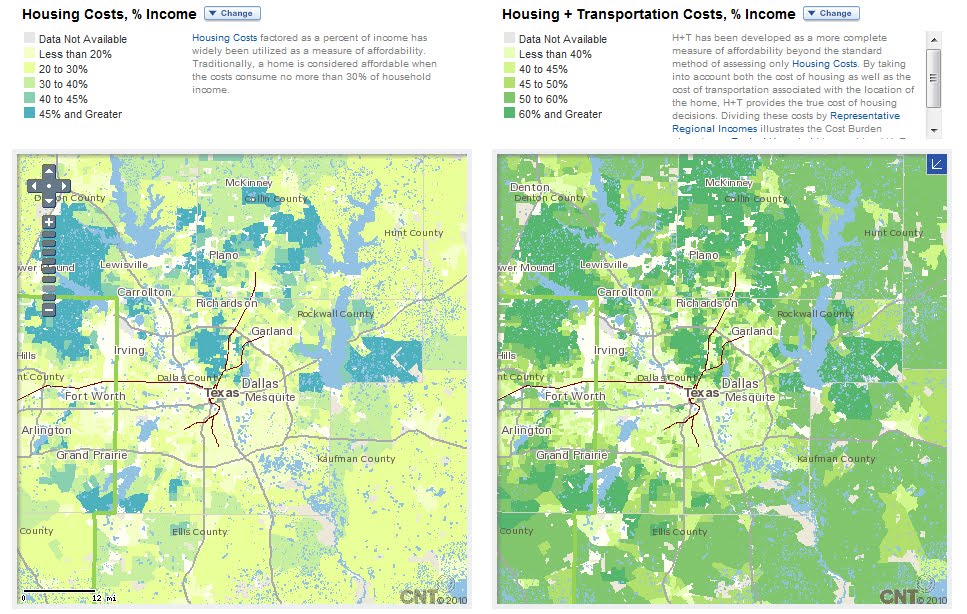
Hot Damn! Look how expensive housing gets when you factor in transportation. If you can't see or enlarge this graphic, darkest green is over 60% of pre-tax household income. Meaning after taxes, housing costs, and transportation, many people have nothing left to save or invest. Sweet system we're setting up. We couldn't sack this city any better if Attila were in charge.
Sherie Hammett, a mother of three who lives in a large Plano home, is one of many North Texans attracted to cozy suburbia for those reasons.
She said she sometimes drives up to 100 miles a day running errands. She keeps clean clothes and a small refrigerator stocked with water in the back of her Chevy Suburban.
“It’s the quality of life,” Hammett said. “It’s the safety of knowing your kids can be out front. You get a little bit of everything up here: The schools are good, you can get the space and still have money for others things.”
Lulz. This is the bit where we convince ourselves we love our captor. Nobody ever self-diagnoses Stockholm Syndrome. Extra money to spend on things like driving 100 miles per day. Life cycle of a highway section is only a few decades. This wasn't a down payment, but layaway. Bills are coming due.
Here is also a good point to show the data that sprawl is the least healthy, least safe place to live, particularly for kids. Diabetes and obesity are directly linked to sprawl. Oh, and the leading cause of death for teenagers? Car crashes. So if this woman is driving 100 miles per day, should we call Child Protective Services? (rhetorical)
We're rational people and Ms. Hammett made a rational decision, because it is better than the alternative, anything near the cities. Our policies don't allow us to build safe, desirable, attractive, walkable urban neighborhoods, which would proliferate if given half the chance.
Yet perhaps more than any other factor, the rise of big job centers amplified the pace and scale of development here.
Derp. Jobs follow housing, employment bases. People create demand
“He had the resources to do whatever it was he wanted to do,” said Robinson, who is now 72 and lives in Plano. “To build a city from scratch was just an incredible opportunity. It was just cow fields at the time.”
Little did Robinson and his boss think Legacy might jump-start an entirely new ring of suburbs. Combined, Legacy and Richardson’s nearby telecommunications corridor have almost as much office space as nine Empire State Buildings and are home to about 100,000 workers.
The corporate office campuses are failing badly. They needed a walkable core, hence Legacy Town Center. Not many places can pull off a Legacy Town Center. Not many places/people have the resources, land, will, and foresight to pull it off. Legacy Town Center will remain, much like Torrent, Spain exists. Everything around it has a far more uncertain future. Other sprawling municipalities will find the going much more difficult to recluster and will have to think differently while learning from Legacy's lessons both good and bad, while acknowledging they likely won't 1) have an EDS at its height nor 2) the 90's and 00's building/housing climate.
A commute from a subdivision in Prosper to downtown Dallas takes about 45 minutes without traffic. The drive from Prosper to Frisco is about 10 minutes.
If my aunt was my uncle she'd be my uncle. "Without Traffic." Let that one simmer a bit.
The funny thing about so many modernist policies is they establish some impossible ideal and frame that as reality. Free markets also function perfectly when no people are involved. Communism too. Pick your -ism.
These "corridors" funnel people toward certain roads thereby inducing traffic. There is very little route choice. Furthermore, since the hideously inhumane roads we build are sociofugal, meaning they decentralize and disperse us, meaning more and more Vehicle Miles Travelled for everybody. More cost for individuals, more infrastructure costs for cities, more taxes (eventually) on all of us. Have a nice day!
These are facts and they are indisputable. As proven by two recent studies. One by a Brown U. economist which showed every intra-city highway led to 18% population reduction (dispersal). And another showed that with every doubling of per capita lane miles, VMTs increased on a related 1:1 proportion. Double lane miles (with the intent of reducing traffic), people just end up driving more and further. And the bigger roads just fill up again with induced traffic. Mission: FAILED.
Dallas and Fort Worth have some of the highest lane-miles per capita in the country, trailing just Kansas City. This is badly misguided government spending at its worst. You'd think at a time like now, we'd choose pragmatism over profligacy.
The fundamental flaw in modernist road planning, building, and design is that it works best, optimally, when only one user is on the road. Everybody and everything else is an obstacle. This is why you (okay, I) get so subconciously angry whilst driving. Everyone else is the enemy. Someone to be bested.
Now, let's think about the real purpose of roads, of networks. And that is to facilitate social and economic exchange generating as much positive return on our investment as possible, with minimal "taxes" like congestion, delays, operations and maintenance of vehicles, etc etc.
If these roads work best when no one is on them, they are failing economically. When they are crowded, they cause traffic delays, congestions, wrecks, etc. and are failing socially.
Because property tax revenue is the lifeblood of local communities, cities are desperate to raise new cash through development. It is often the only option, as many Texas voters are averse to tax-rate increases.
Good thing our policies reduce tax base while increasing tax burden so your tax dollars go less and less far (snark). Walkability is a tax cut, people.
“Anyone who supports an increase in taxes is not a very good person and should not be re-elected,” jokedMichael Morris, transportation director for the Council of Governments. “So cities have to get their revenue from more development. … It’s hard for them to turn down any type of development.”
So let's plan, design, and fund transportation networks that ensure that development's life cycle will be as short as possible (snark). Integrated networks create opportunity, drive demand, ensure long-term utility and durability of an area, which manifests itself in development. Upward growth and maximization of land rather than outward growth.
Plano’s tax base has leveled off in recent years. So leaders have funneled millions in grants and tax abatements annually to encourage businesses to relocate, expand or just stay put. Collin County commissioners last year talked about granting tax breaks to almost every new business that opens its doors, an unprecedented measure. The county eventually settled on a scaled-down abatement.
You reap what you sow. Like there will always be another strip center, new and further down the road to cannibalize, there will always be another city willing to bet the farm on smokestack chasing. Meanwhile, other cities are experiencing an influx of talent and entrepreneurs, starting businesses, meeting demand, seizing opportunity, merely because they WANT to be somewhere. This lasts. Appealing to emotion is durable. Appealing to wallets is temporary. Necropolis.
“Texas has always been a very strong property rights and pro-growth state,” said Dave Gattis, historian for the Texas chapter of the American Planning Association. “It’s growth at any cost.”
The mindset of cancer cells.
Texas zoning laws have seen few changes since the 1920s, when a landmark U.S. Supreme Court case, Euclid vs. Ambler, laid the foundations for modern zoning practices.
Cut n pasted responses to industrialization.
Since then, most Texas cities have adopted rules that guide everything from setbacks and landscaping to the number of parking spaces required. Many also have drafted informal long-term visions for their communities.
Arbitrary, pointless, and often destructive themselves.
In many ways, the loose regulations complement this state’s long-standing culture of self-rule. Since the days of Sam Houston, Texas landowners have built as they have seen fit.
Which is why there was no sprawl until many of the restrictive policies and regulations were enacted, thus creating a singular homogenous product of sprawl. If the DMN is suggesting Texas libertarianism is the cause of sprawl, they couldn't be more off-base, ignorant, and misleading. Shameful.
The flip side is the perpetuation of a system that, from top to bottom, not only enables sprawl but encourages it.
“If there were no regulations at all, then people would be moving as far away as possible — assuming they could get public services,” said Gattis, who also serves as deputy city manager for Benbrook, a Fort Worth suburb. “There would be no protection of open space, no density. It would all be sprawl.”
See my last statement, this is wrong. 100% incorrect. Otherwise, they would be living in Montana or Alaska. Social and economic exchange, meeting our needs and wants is only possible around other people.
“You used to be able to tell the difference between McKinney, Allen, Plano, Richardson, Dallas. There was cropland between each one,” she said. “It’s all covered up in concrete now.”
And we're still running with the premise that this is market forces, that this is desirable, DMN? Hmmm? If you beat it into my head one more time I might start to believe it.
-------------------------------------------------------
Parts 2 and 3 to follow later this week as time permits.









 Posts
Posts