I am a professional Urban Planner and Designer. I treat this as my thought laboratory exploring how bionomics relate to self-organizing, emergent urbanism.
As a professional urban designer and partner of the Planning and Design Firm Space Between Design Studio, I am a trained urbanist who specializes in creating walkable urban developments and analyzing existing places to find the barriers preventing livable, walkable urbanism. I can be reached at patrick [at] spacebtw.com
The win is all in the long form column by D editor Tim Rogers about the solar radiation, reflection, and heat gain spilling off the shimmering glass Museum Tower (who knew glass towers would be a bad idea in a hot sunny climate?!) and into the Nasher Sculpture center. I want to quote so much of it, but go and read it yourself. It's the must read of the week.
A few of the key points:
16 of the 100+ units have been sold. Though I'm sure the sales people will somehow work this into being 85% under contract. Every building ever is 85% full according to leasing, real estate people. A mathematical anomaly.
On a cloudy, 78-degree day in March the solar gain via reflective glass from the tower on the Museum raised ambient temperatures in the lawn to 103 degrees. Yikes. Can't wait until another month long 110-degree August rolls around.
The Museum Tower report either wittingly or unwittingly (neither is flattering) plugged the wrong type of glass into their model.
The Dallas police and fire pension has only spent $100,000 on the project yet is on the hook if it goes belly up. Somebody piece together those dots for me. This is a weird deal in every aspect.
Oh, and there is still a cloverleaf highway exit ramp circumnavigating the property. Cul-de-sac in the sky. And you wonder why there are only 16 buyers.
About two years ago I wrote about what a crazy investment Museum Tower was for the Police and Fire Pension Fund. If I were a cop or fire fighter, I'd be thinking about protest and overthrow of the board (which apparently includes 4 city council members(!)).
I hate being right about these things, kind of like when I predicted that the Hunt Hill Bridge would be a safety hazard/speed trap before it even opened due to the road being designed for highway speeds yet signed for 35 mph (! x 2 = !!). Hey, maybe DPD can recoup their losses by ticketing everybody on the Hunt Hill Bridge.
Last summer, I also tried pitching the column idea to D Magazine about why reflective glass towers were in fact a terrible idea for Dallas, wrecking the public realm. Except, we couldn't find the right/specific angle without good data. Tim's column has that data via the on-going fight between the Tower and the actual Museum, as quoted above.
This fight is so going to court. And I expect it will go to very high levels of court since there are undefined issues of property rights going at hand, combined with deep, entrenched pockets on both sides. In a way, this is sort of like the mostest Dallas thing ever. Like Belo building a park in front of a condo building then throwing up a 12-foot wall between them. We get the urbanism all wrong and everybody throws middle fingers up on all sides. Maybe we can just build another wall around all of the above? That seems to solve all of these problems, right? Right?
Perhaps someday, just maybe, we'll stop acting like little children and realize that urbanism is about actual value rather than some superficial novelty item to wrap bad financial investments up in.
Integration begets accommodation. Drive demand, get supply. This is the number 1 rule of city building. And it is inalienable, despite our best efforts.
Or something like that. Forgive me for either remembering or not quite accurately remembering lyrics from a long lost Skee-Lo song from my youth. You choose whichever makes you happy.
Dallas too wishes it was something else. A little taller. That'll do the trick. A little more recognizable. Gotta stand out in the crowd.
And to do so, Dallas this week has been a cavalcade from the preposterous (the I-30 bridge) to the absurd (the Ross Underpass), each making me spin in circles wondering whether a more democratic urban development process is in fact ideal. The primary purpose of this blog is to 1) explore issues that haven't been fully explored or explained, and 2) try to make sense of urban development so that the city is empowered and informed as to the what, why, and how of urbanism.
History has shown that progress comes through the democratization of power and knowledge, stripped from the hands of the gatekeepers. Occasionally, I have weak moments where I hear somebody/anybody blither on about fundamentally incorrect perceptions of cities and how the might/should/could be and think to myself, that maybe, just maybe, this thing should remain in the hands of the few.
Of course, then you wonder exactly who are those few and who (or what) empowers them. Are they appointed? Are the elected? Do they really know a damn about cities? Or do they pretend to? Many an architect acts the expert on cities, but really they are no more than expert polemicists and rhetoricians, often choosing to confuse and confound in order to position themselves as, gatekeepers of the incomprehensible. You can't understand what they're saying so that must make them smart.
Coincidentally, James Corner was in town lecturing last night...lecturing. You plebeians.
Especially the architects working in the Arts District who use their commission to poke fun of Dallas for hiring them, by designing a raccoon trap. Trapped in the mess of anti-city we've created for ourselves. They don't care about our city. By hiring them and judging what we've done for ourselves, we clearly don't care much about our city either. The result. Raccoon Trap.
This week we've outdone ourselves on two fronts: our inadequacies which are then only multiplied by our lack of comprehension about what and why we do anything to and for the city. Councilwoman Angela Hunt gets it and the joke that "world class" aspirations are:
But most residents I talk with aren’t really interested in being a “world-class city.” They just want a great city to call home. Unfortunately, as we heard today, many city leaders dismiss that as too prosaic. They figure even if we could fix all the potholes, mow all the parks, address all the code complaints, pick up all the stray animals — all of those things will just be forgotten in time. But an ornamental bridge, a convention center hotel, a big toll road — those are lasting monuments.
That perspective misses the point. The choice isn’t “either, or” — either we clink our champagne glasses as one unnecessary boondoggle after another drains our city coffers while our basic infrastructure falls apart or we myopically fill every pothole but live in a city bereft of beauty and grandeur.
We can have the best of both. We should do big projects. But not because they might finally be big enough to be seen from space or because they may (hopefully!) pique the interest of a writer at some obscure architecture journal. We should do big projects because they enhance the everyday lives of our residents.We should do big projects that are useful.
Your tax money is cheap. And spending other people's money is easy. Especially when the other 13 elected officials represent a generation where cars really did mean freedom in the James Dean sense and that new roads and construction really were forms of economic development.
I'm all for some measure of Keynesianism, whether as a form of R&D to direct the market or in the public's interest. Clean air, clean water, education, healthcare, cities that actually allow for choice in housing, transportation, access to and participation in the local economy, ya know, opportunity. Often bridges too are a public interest.
They meant new connections. New possibilities. Bridges often do deserve celebratory architectural treatments. There was a purpose to their symbolism. Bridges represented, quite literally, a barrier crossed. We also once celebrated public buildings, not because they were "socialist" or some nonsense that anybody who suggests as such could even explain, but because government buildings of, by, and for the people represented the barrier bested of keyholders and gatekeepers, aristocracy and monarchy.
We once built schools that we could be proud of because our public schools were the key to the American Dream, which was about choice and opportunity and upward mobility. Or we fought the revolution for picket fences and two-car garages. You decide. I know I recently saw George Washington driving a Dodge Charger, so it must be true.
As a Fort Worth Mayoral candidate recently suggested, "Texans love their cars and freedom," as if the two were so entwined as to be inextricable. You tell me how "free" you are at the gas pump, or at a red light, or stuck in traffic, or paying a toll, or paying for parking. All of which is less than the real price of those things, which is the fundamental reason none of it will last. All big lies come to an end.
The I-30 bridge and its replacement, which we're planning to spend $10 million just in re-design fees, is already there. There is NO NEW BRIDGE. No new connection. It doesn't fundamentally reposition any of the property in or near it. We might think it does, since it's pretty (or is it?) This is the problem when the subjective makes its way into the debate of urbanism. We can all be right! Isn't that fun!? It's like kindergarten.
Like kids and under-8 soccer, we too like shiny objects. The new, the different, the wild. The supposed intelligentsia, or at least the plutocracy (which means they must know, right?) looks to outsiders to tell us what our city needs. They don't give a shit, nor do they actually know.
When I read the comments in the Observer reacting to the bridge and other cornpone ideas, I'm reminding that we can crowdsource our cities. We are experts in our neighborhoods and that is precisely what we've forgotten. Our neighborhoods, when we'd rather focus on concocting new postcards.
We live in a cartoon world, of simulation and simulacra, so far removed from reality we can no longer tell truth from fiction. Right from wrong. Reality from fantasy.
Which brings me to the Ross Avenue underpass.
Do I really need to say more? I will anyway.
One of my favorite lines is, "give a fool a microphone...," which I suppose is adapted from Mark Twain's, "best to be thought stupid and remain quiet than to open your mouth and remove all doubt." I really don't blame the artists for these proposals. Only those that might allow them to get built.
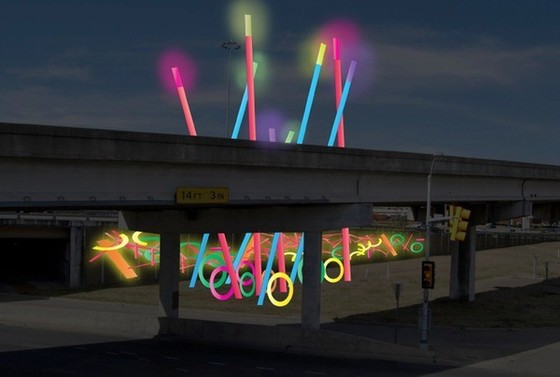
The designs only serve to highlight (no pun) how much trouble the city is in (yet we don't realize it). The Rust Belt collapsed because of a homogeny of industry and economies in a post-industrial world. Place is what matters now. The Sun Belt is defined by a homogeny of place. To overcome the generic, we reactively put a spectrum of lights on it and call it different, completely forgetting that authentic places are a direct outgrowth of the self-organized clustering of the people within the neighborhoods.
In said cartoon world, it is cheaper and easier to stick an air freshener in a rotting pig carcass and hold our collective nose than get rid of the pig carcass, or apparently even acknowledge that the real problem is that the pig carcass is even there. It is cheaper to apply adornment to the highway than to get rid of the highway, even though it is a taxpayer liability as long as it exists. To get rid of it is just too expensive, even though it would open up acres and acres of new property while improving the property value all around.
There is no math in cartoon world. Just rainbows and bright lights.
I must admit, when I first saw these finalists (?!), I assumed it was a competition for elementary art students. Who else would think, "arts district....hmmm...get me the rainbow lights!"
I don't even care what the artists said in defense of their designs or that we have to be convinced that "these are internationally practicing artists. Not just local." As who-cares-and-doesn't-matter, suggested. As backhanded a comment about Dallas as one could script. Nothing here is good enough. You know who else is an internationally practicing artist? Justin Bieber.
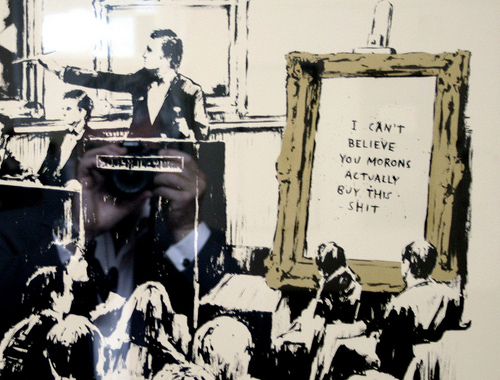
Apparently this person didn't see Exit Through the Gift Shop, the theatrical version of Banksy's still work:
Since popular opinion realizes these proposals are absurd, but what we might not realize is that prettying up underpasses does not and will never make pedestrians happily skip between divided districts. Even the most cross-connected highways still act as edges (see Portland's I-5 or even Boston's big dig, which after 20 billion, is still an edge condition). No amount of decorating, lighting, or redesigning changes this.
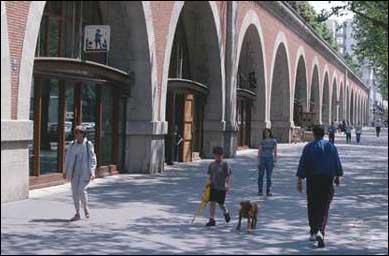
The only way to activate them is to fundamentally repurpose them. Change the use from void space to something possibly useful that needs cheap land, close to the city, and typically has trouble finding other acceptable locations. Things that have worked (depending on your definition of "worked") include: dog park (as between Deep Ellum and downtown), skate parks (which often can't find suitable locations because "those dang kids" be congregatin'), actually building under them such as many Parisian viaducts/aqueducts (immediately below), and similarly, as squatter towns (I'm still waiting on Wilonsky to track down some old news articles on the underpass squatter villages that existed pre-world cup.).
I can't emphasize enough that none of these solutions vastly improve the value of the land in or around them. More likely, they merely make do with leftover land. Therefore, even though we are downtown, we think all of the land near these over-passes must be worth downtown prices. The market disagrees as the majority of land around the downtown loop is parking, vacant, or subsidized as a non-tax generating facility. Then nothing happens because our idea of the land's potential is so distorted from the real value that the market will bear.
The market, I should add, is dictated by people. Density is directly related to desirability. Living or being near highways is roundly agreed to be undesirable. That isn't my opinion. That is the opinion of the market since all highway adjacent land is so overvalued and in the process of down-grading to its true value, gas stations, drive-thrus, and parking lots.
If we really wanted to bring this land up to the value it wants to be (and we need it to be, to be a "world class city"), we'd get rid of the highway entirely. But, we're not ready to be honest with ourselves yet are we?
What are world class cities anyway? San Francisco, New York, Paris...maybe...I don't know. Who knows what world class even means, but those cities are removing freeways. Vancouver? Never allowed freeways into their city. Instead, the "cities of aspirations," those claiming "world class" doo-dads and accoutrement have vicious class disparity. What might be world class, is only accessible to the very few. Is Dubai world class? It has the tallest building in the world so it must be. Who cares that it is empty.
Kind of like our city. But we don't build our city for our citizens do we? You'd think the City Council's constituents were all in cities outside of Dallas proper, including the Park Cities. Dallas is the engine that everyone else leaches off and the City Council is unwittingly complicit. You'd think we would take care of the region's economic engine. We are such car lovers aren't we?
So I'm left wondering...is this city, and are other cities in general, better off in the hands of the people? After all, as stated in a line from the British comedy Peep Show, "people voted for the Nazis and listen to Coldplay. You can't trust people." Or, is it better off in the hands of the few, who sneer if you don't like something, "you just don't get it."
When city building is defined solely by the subjective, we are at the mercy of those in charge. Be kind.
Is it enough to build these gigantic monuments to modernity (in an otherwise not-so-modern and remote place) and assume that the razzle-dazzle will lure the tourists? Dallas's experiment illustrates the flaws in developments that consider the needs of architecture at the expense of people. A culture district without the glue of wandering pedestrians (or an atmosphere of working artists; or let's face it, streets) may struggle to earn its keep.
One thing I'd like to add: when Kamin queries, "where are the coffee shops and bookstores?" I say, those things are responsive to neighborhoods, in retailer terms, rooftops. There is no neighborhood. Furthermore, those things respond to what Bill Hillier calls "pervasive centrality," and I coming to a similar conclusion thousands of miles away and decades in age/experience apart call "convergence," or being in the center of stuff, particularly a neighborhood.
The Arts District is "off to the side," currently "a roadside attraction," a "billboard along a freeway" that is more akin to a supersized string of fast food joints to pick up your daily dose of culture at the drive-thru. It is built of a mindset that "location, location, location" no longer applies, except that location is still the primary factor in built permanence. I make the point to walk through it as often as possible, not to admire beauty but to think what could've been and what still might be.
The cheerleading stage is over and the Test of Time of reality has begun to set in on the ideology of shopping spree pseudo-urbanism, "oooh, it worked for Bilbao! We'll take five of them." Now what?
Feel free to add your ideas in the comments. I've outlined some of mine here and I've got a couple graphics in the works to show how they might work.
Last night, I was fortunate enough to be asked by D Magazine to participate on a panel regarding the Arts District, and more specifically, how to improve it. Before I get into it, I also want to say it was great to meet the various blog readers that showed up. Really enjoyed meeting all of you and glad you could take part in the Q and A.
Along with Deedie Rose, board member of the AT&T Performing Arts Center, Charles Santos, TITAS artistic director, and Veletta Lill, former Dallas City Council member and current exec. director of the Dallas Arts District, I was the only urban planner and most likely the only one expected to hurl objective criticism the way of the Arts District.
Somewhat fearing that and consciously aware of not hogging all the airtime, I tried to walk a fine between criticism and suggestions, analysis of it as it exists and comparisons to other arts districts. Because of that, I felt like everything I said must be distilled into talking points and/or soundbites, which is the genesis of this post where I want to take the time to fully discuss the Arts Districts and the points I was trying to make without boring everybody with talk of artisan guilds in the medieval ages (I'll get there - so tune out if you don't want to hear/read it).
I have been known to be hard on the Arts District in the past, but consider it out of love. I love Dallas, living in Dallas, the opportunity it presents to mold it, and the ambition of its residents. So, as a Dallas resident, with a deep understanding of how cities work, evolve, and are shaped, I also want Dallas to be the best it can be, without joining the army.
I often personify cities allegorically to help translate what can come off as gibberish. Similarly, I am a big believer that radical honesty is the first necessary step in self-improvement. With that I want to first offer proper background and analysis of the Dallas Arts District (from hereon referred to as DAD - paternalistic/ironic/I like it) and ideas for its forward evolution.
First, the DAD is an entirely new animal as far as Arts Districts go. My guess is that most people conceptualize arts districts they are thinking of funky areas where artists agglomerate and transform into hip areas. That is not an incorrect assumption. In fact, that is pretty much how all arts districts have been formed, informally. Only later have some become formalized, with an official organization forming to brand, market, and program events. This stabilizes arts districts and allows them to fend off gentrification (typically).
This process can be traced (through written records) back to the artisan/trade/craftsmen guilds of the medieval ages, where similar professions clustered for competitive advantage. They did so to 1) organize, 2) share trade secrets and innovations in technique/material, 3) occasionally price fix, and 4) fend off newcomers. I'm not judging on any of those, it's just the way it was. They were humans and we still deal with similar impulses to this day. Funny lot, we are.
They also did so for marketing awareness. There was no google maps or iphones to look up where the nearest blacksmith was. But, there was a precinct where you could go and walk down the street and compare quality of craft, price, etc. And it was well known what streets/blocks/neighborhoods you would go to to find certain goods. When times were good, the guilds would build grand market halls or masonic temples, etc. harkening back to the quasi-religious roots. These became the centerpieces of their professional "arts" district, anchoring the character of the neighborhood for as long as the trade still found a market (you don't find many blacksmiths around these days).
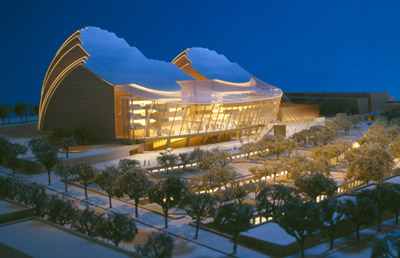
A modern version of this, might be the Kansas City arts district, the Crossroads. It evolved informally, eventually became an institution putting down roots, and now the city of Kansas City decided to put a "cherry" on top of this neighborhood with the new Kauffman Performing Arts Center.
I'll let you debate whether the design and/or scale fits with the area as that is not of relevance to the rest of my post/analysis.
The other form of an arts district is the more ephemeral. The one that rejects institutionalization, whether consciously or unconsciously. Like the previous version, artists cluster in areas ONLY because of where it is cheap, but facilitates clustering, i.e. the suburbs are cheap, but not in the least bit interesting. Too underscore this point, there is a vibrant art scene out in historic West Texas towns, cheap, historic, fabric facilitates clustering. I believe artists intuitively search for soul in where they locate.
New York City is my favorite example of this. Artists and other creative types are constantly packing up shop and moving to a new down-trodden area, often because they have either been priced out of an area or that it lost its soul due to the nerve gas of gentrification. Keep in mind, that when I refer to gentrification, I don't mind the rising prices as product of rising demand, but I do object to an area being over-run by chains, hence losing its soul.
Think about how many times a new area of New York becomes the hip spot. It's almost like clockwork, every five years. If you haven't visited NYC in five years, you're likely to go to SoHo or Meatpacking district thinking they're still the cool spots, only to find those that made it hip have moved on.
Look at DUMBO in Brooklyn now. A dreadful piece of property under two bridges. Creative types, digital artists, found cheap space, made it cool by focusing their creative energies like a magnifying glass to the sun on it, and reshaping the neighborhood. Artists/Creative types are our worker bees or explorer ants searching out new patches of honey to build nests upon.
I also think they reject areas the moment they lose their counter culture status, which presents a challenge when institutionalizing an area or putting down roots to a particular location. What do we lose when locating them in one spot, hindering their ability to qualitatively uplift various parts of the city and make them more livable, interesting every generation (or more frequently). More on this in a bit.
I discuss all of that so that I can point out that the Dallas Arts District was created more by a stroke of a pen than from the grassroots. It has been completely top down and as long as we recognize that, and the inherent strengths and weaknesses from the process, it is ok.
When you eschew the grassroots evolution of places, by imposing a "district" on an area rather than cultivating the positive evolution, you are essentially jumping the gun. You are immediately putting yourself in a position to subsidize it for a very long time. It's a premature baby that needs an incubator.
So we have to build all of the facilities more or less through charity on land donated by the city knowing full well the taxes generated on pricey downtown land will be minimal at best (compared to other downtown forms of development). Then we need a Dallas Arts District, under the very capable hands of Veletta Lill, to nurse the thing to life.
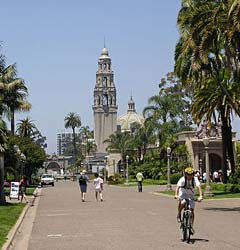
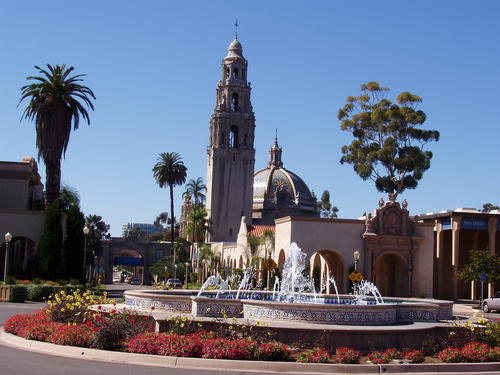
Since it essentially popped out of the ground overnight (in the lifespan of cities rather than people) rather than building organically, and as I stated last night, it is much closer to a World's Fair site than a true Arts District. This is why I compared it to Balboa Park in San Diego last night and also why we probably need to recalibrate our expectations of it.
Can it ever be a vibrant, funky neighborhood like Ray Street in San Diego? Highly doubtful. But it can be closer to a modern version of Balboa Park, which was not a World's Fair, but a Pan-American Fair. Might as well be the same thing for our discussion.
What we have to understand, is that the DAD is more like a World's Fair than what we understand to be arts districts, hearkening all the way back to artisan districts, because those were part of real neighborhoods. The "arts" component wasn't the primary use. The neighborhood residences still were, as in any real neighborhood. Arts, of various sorts, just so happened to be the preeminent "storefront" use, or secondary use, differentiating it from any other neighborhood and its character.
There is also a full ecology of restaurants, bars, and various other typical neighborhood service retail uses as an outgrowth of the demand of the proximate residential. The primary retail use, that of arts, just happens to provide the character of the neighborhood emblematic of the majority of the residents.
Like a World's Fair, there is very little actual neighborhood component. In fact, the DAD almost has it backwards if we're trying to describe it as a neighborhood. The residential claims priority, One Arts Plaza, as the tallest building and terminating the axis. To accentuate this inside out nature, its iconic location is contradicted with a very sterile, "blank canvas" sort of design. The "objects" become the fabric. The more is less, the less is more.
This means that all of those performing arts centers have effectively squelched out any available space to really link other uses directly into it, unless we start calling Ross as the primary spine of a "bigger" arts district, as Veletta alluded to when she started calling the vacant (surface parking) land south of Ross as "Arts District South." Until that land is incorporated, providing many of the other uses that comprise complete neighborhoods, we have a DAD with lots of punctuation points and little prose, i.e. no syntax. We're not making complete sentences, and perhaps not even sense.
Balboa Park, the primary arts/cultural component was built in 1915 in the middle of protected land that functions very much like San Diego's version of Central Park, rugged, natural terrain, with moments of formality and people space set within a dense grid of streets and blocks. The Arts and Cultural area is also set on a spine, like Flora is for the DAD, with ornate buildings flanking both sides. BP is designed in the Beaux Arts style whereas DAD is more modern (duh). Again, nothing wrong with that.
They are both more drive-to/by/thru destinations, but the DAD probably has more potential to better participate with its downtown. With that said, BP is very highly utilized with or without programming, just as a place to breathe, exercise, and be, a Central Park.
Where BP succeeds and DAD is lacking is in its outdoor spaces and organization. Beaux Arts designers paid specific attention to the hierarchies of spaces where modern designers tend to forget?/eschew?/ignore?/if not destroy outright in order to create a sense of disarray, disorder, disorientation, or confusion. Apparently fun house architecture is in these days. Sideways eyes at you Rem, REX, and Libeskind. Totally off subject, but if your intention is to disorient and make uncomfortable, you should lose your commission if not license. It works in holocaust museums, not in regular museums. See Denver Art Museum, also known as "DAM, we effed that one up."
The opening question asked last night was, "is the DAD too big?" Very open ended, which I responded that in terms of land area it is not, as most organic arts districts are considerably more vast. In relation to the human scale and how we understand, perceive and navigate space, it is both overwhelming and disorienting, if you understand space syntax, which intends to objectify this human perception of scale, space, and movement within space. Despite being organized around a central axis (Flora) with strong terminating presences (One Arts and DMA), there is a lack of order to Flora and its sub-spaces. In fact, the sub-spaces are for the most part imperceptable.
Given the size and scale of the facilities in DAD, I think there is a real opportunity to introduce a fine-grain component of both outdoor spaces, walks, pocket parks, that feel like real pocket parks, that are lined with usable space. My idea last night was a series of movable shipping containers, designed to be cool artist gallery/work space to create a real window shopping type of presence and more day/night activity when there are no ticketed performances. These would be intermingled with the food trucks to create a food court type of presence during typical meal hours/special events.
The beauty of these is that 1) they can be rearranged every few months or so, or during special events to provide a constantly evolving/changing/more interesting experience for visitors. Furthermore, these can be market-rated and initiated with micro-leases and very cheap rent until momentum builds and somebody wants to come along and sign a longer lease.
That is one potential idea to bring more order to the undifferentiated, undefined green space that dominates the DAD. Perhaps its biggest challenge though is bridging the gap between institutional and counter culture as alluded to earlier in this piece and as I did last night. Somebody asked how do get students there and the types of bands that students want to see to play there. I suggested that currently the Arts District acts as a hub or port, importing culture from afar and bringing it to Dallas, a good thing.
However, we have so much talent here, that it also provides an opportunity to showcase local talent and export some of it to the rest of the world, a grander stage. Local talent is and always will be more "Dallas" than any top down arts district, and frankly, we have to accept that. There may be plans to do so, but as one artist came up and told me afterwards, "I'm tired of plans." Me too, dude.
The question becomes, how do you make the institutional and possibly psychologically exclusive palatable to an industry that prefers the counter culture, the underground, that which is NOT accepted by the establishment, in many ways the raison d'etre for the arts?
I can talk forever about urban form and improved connections (and the physical and economic advantages of tearing out freeways), but if you can answer that question, then we will be that much further along answering the deeper psychological barriers to the success of the DAD.
...or how many co-opted French words can I fit into a title.
(Old image, but I wanted to show its location and every rendering seems to conveniently ignore its context in favor of the shimmery skin.)
There are two pieces of news in this article at the DMN: first, is that like Frankenstein, the Museum Tower is ALIVE. IT'S ALIVE! And that it is funded by the respective pensions of the Dallas Police and Fire departments. The second bit is that the House by Starck and Yoo is a whopping 10% sold and the Ritz is full to the kind of ambiguity you expect from leasing/sales agents at 1/3rd of the units.
------------------------------------------ Side note: my guess is that very few are first homes for the buyers either. Some by foolish investors, others bought as 3rd, 5th, or 12th homes by the uber-rich to have a pad in Dallas. The problem of all of the above is that those "residents" add very little to the street scene and livelihood of the urban experience. ------------------------------------------
Let's start from the beginning shall we? Dallas (and downtown in particular) needs investment and residents; density and tax base in proper relation to infrastructure so, ya know, we can afford our City once again. As Mike Davis of Dallas Progress points out via tweet, Museum Tower can mean up to $7 million in tax base for the City of Dallas. All good right?
While that is good from a City perspective, I immediately turn and look at it from an investors perspective through the filter of knowledge and understanding of cities. I see product delivery, more supply and no demand. What we don't need is silly mindless investment ignorant of context and urbanism that is doomed to lose money and potentially scare away investment in downtown long into the future.
Investment in Downtown Dallas already missed the market once aiming for uptown level returns fueled by two things: a demand for walkable urbanism and an overheated housing/lending market. Barriers inherent in downtown Dallas required a lower level market (at least a mix), but land costs drove the market back up to the high end.
A few months back, sitting around a desk with some fellow financial and urban minds, we discussed the potential of pensions as an ideal source of investment for high quality urbanism because of the long-term and consistent returns of real estate that is part of an interconnected whole, aka urbanism.
Apparently, we're confusing location and density alone in a vacuum as somehow "urban" and a good investment. Which is why I get the feeling that someone is getting "took."
The same way we did with high end projects like the House (10% full) and the Ritz hovering slightly above that.
That 10% number apparently didn't scare away the developers or the investors for some reason. Why? My guess is that they are merely assuming this was another hum drum bubble and business as usual can begin after a couple years laying in the economic cut.
Eventually, all that leasable space will 1) magically be absorbed, 2) we time the market rebound with the grand opening (as if they're the only ones doing this suggesting they will "have the market to themselves." Every developer I've talked to is trying to time the exact same thing.), and 3) profit.
That's how it works kids.
And that would be fine if the only problem was timing a saturated high end condo market when we desire to add more to that supply.
Never mind the fundamental flaws in buildings/developments like the Ritz, Museum Tower, or all of Victory in that they provide no connection, participation, or interaction with their surroundings. They are anti-urban density, cul-de-sacs in the sky. And thus, the value is less than what went into the development, otherwise known as precisely the reason they aren't selling for what they are priced.
In a luxury condo, in a downtown urban setting, people are paying for the location, the vitality and activity of the area. Value is driven by what is outside the walls. Outside of the museum tower, what can you walk to?
You might say, "but that's not what they're paying for?" Oh yeah professor? Than why build it there? Build it in Allen and it will do just as well.
At first blush one might think the site demands high end: the Arts District, Woodall Rogers Park, etc. However, I would argue (for the time being) that unlike the Transformers there is far less than meets the eye. There is no urbanism, no relationship of buildings to streets and buildings to each other.
Those kinds of places quickly get boring and when the rich get bored, even they move out, often to areas colonized by artists and creative types who are busy pioneering into Deep Ellum and Bishop Arts, making them fun, safe, interesting, AND more valuable. When the wealthy move into those "hip" places, then everybody screams GENTRIFICATION! Welcome to how city's work.
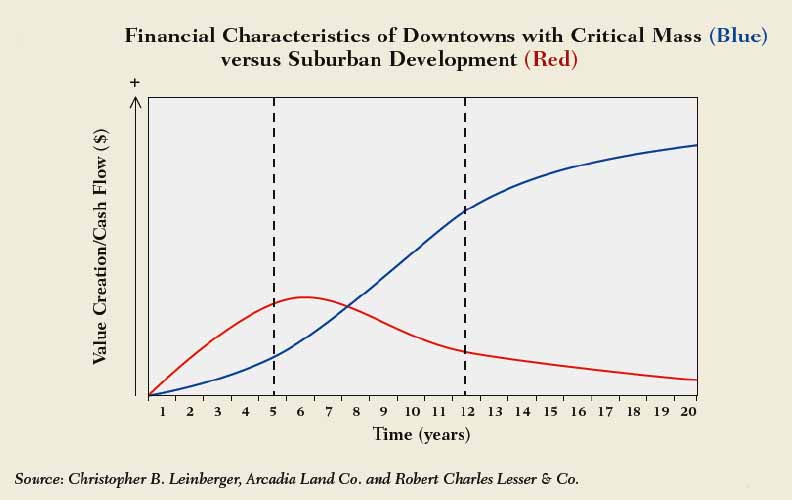
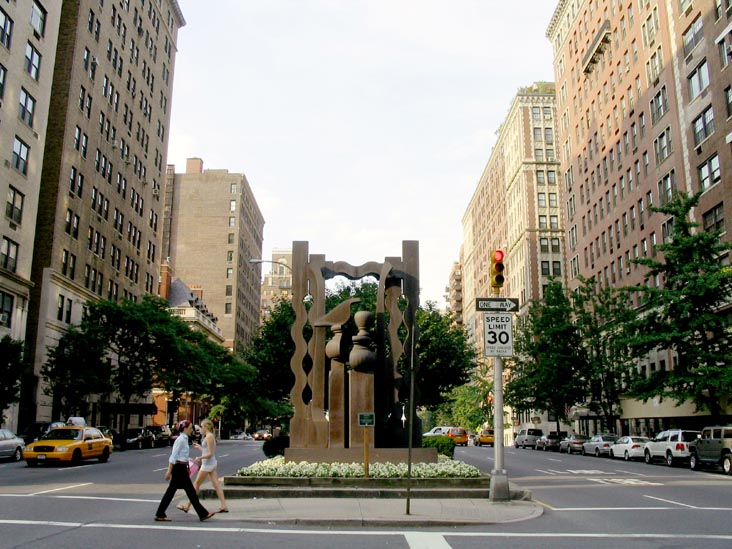
Walkability means value. Not for some esoteric notion of holding hands and happily skipping down the street, but rather proximity. The distance to things you can walk to, the density, and mix creating synergies that drive the variety and real estate value of said destinations. The mix of all that creates the increased incremental value of urbanism where the whole is greater than the sum of parts rather than less.
(Here is a picture of the Upper East Side to drive home the point about necessary ingredients for determining valuable places. The height/density is a direct response or outgrowth of the demand to be in the area.)
The stuff inside of a building or unit, ie quality of counter tops and fixtures, etc are well and good, but those are the fine-grained adjustments to the real estate microscope. Location and proximity, or propinquity, is the big knob.
The problem of the Arts District is its clustering of the venues so tightly that any potential vitality is suffocated by an over abundance of simple boxes. Sure the architecture might be complex but that is only skin deep. Value is driven by complexity. And real complexity is created by the mixture of types, uses, buildings and the interconnection of a walkable urban fabric. The point of walkable urbanism is the value of having your daily destinations within a safe, pleasant walking distance.
This is still Henry Ford assembly line urbanism when we need the technology of the 21st century of smart, interconnected systems thinking with the ability to learn and adapt populating our approach to urbanism and development. Simplicity vs. Complexity.
It is the difference between Wrigley Field and Fenway Park being so loved and "stadium districts" getting, well, torn down every twenty or thirty years. Which was the smarter investment? I'll answer my own question, it is the development that is the cherry on top, the culmination of the messy mix of its urban neighborhood.
Of course, I just spent a thousand words talking about the investment going into the Museum Tower and the only real problem is the clover leaf strangulating it. If that was my pension money, I'd be putting a little extra into protecting my investment and getting rid of that thing so the tower and its residents actually can participate in the City around them.
Underestimate highway engineering's negative effect on real estate value at the peril of your investment.
But, taking back the streets nonetheless. A first class version of the paint and cones preferred by the rabble for taking lanes back from streets in favor of increased people space on our public streets:
As the best works of art are always representative of the human struggle of a particular time period (or endless struggle against our own barbaric nature which lies only a shallow cut beneath the surface of culture and community), if this isn't a great form of expression for modern art, I don't know what is.
This actually accomplishes something, a positive step in our quest for a return to humanity, toward interaction, rescuing us from our wheeled-steel traps. This is the very opposite of some lights under an overpass. This is King Crimson vs. a lip-syncing Britney Spears. But art, culture, and community is hard work.
Dallas gets front and center attention from Fast Company for advancing culture in Cities. Not surprisingly however, all three photographs shown are of the much more photogenic Winspear Opera House rather than its ugly little brother, the Wyly. Regarding the Wyly's not so coincidental appearance as a prison cell:
The unending nihilism of the twin-architects doesn't make for attractive buildings, but it does make for the kind of deep objectivity necessary for critical analysis of its audience. In that way, the Wyly actually is a work of art.
The question remains, does the Dallas Arts District get this attention because of the availability of culture, of peak experiences for all or because of its size, scale, and level of investment befitting of its marketing arm? Does it advance culture locally even as much as aggregations of local artists in Oak Cliff or elsewhere? That is a legitimate question, not a rhetorical one.
My opinion is that both are necessary. The Dallas Arts District acts as a port, importing culture to be experienced by the local citizenry, whereas Bishop Arts, X+, Deep Ellum, et al are the silent whispers of local culture screaming, laughing, crying, or lashing out.
But regarding urban form they couldn't be more polar opposite. The local is off stimulating investment in new areas, the creative busy bees are finding the sweet honey in new infill areas of opportunity. On the other hand, clumsily clumping the Arts District and bounding it by freeways and high-rises was a mistake from the beginning, dissipating the potential for leveraged qualitative improvement of under-developed or non-performing properties as interactive, participatory urban integers. Wouldn't they be better off as centerpieces of reinvestment zones scattered in and around downtown and the nearby emerging neighborhoods?
But that is water under the bridge now.
We're still a simple minded people that get the city we deserve and cultural experience more equivalent to a drive-thru Mickey D's. Or at least, that might be the way we view ourselves. Expressing the deeper issue of self-confidence we struggle with, the internal conflict of braggadocio masking a rather lowly opinion of our City.
Personally, I would like to see some more cross-pollenization between the two, the imported and the local, the potentially exported. However, I worry that the urban form and exclusive nature of one might prevent the other from using its microphone and grand stage to show that Dallas also has local voices of culture. We don't have to always import ideas. "World Class" cities don't have to. They're voices, ideas, expressions come from within.
Straight forward comments and details first, followed by the rabbit hole of the mind.
Last night, I had the chance to have dinner in the Arts District at Screen Door in One Arts Plaza, which was ok, but given the similar price without achieving similar flavors I would call it a poor man's Bar Americain. Afterwards, we went to the Winspear Opera House to catch the local swing of the Broadway production of Spring Awakening.
First, I would like to say that I found it impressive how many people we ran into that we knew. Also, how lifeless and almost awkward the landscape and the entry/exit experience is in general in the Arts District. The landscape is incredibly arbitrary and haphazard at best and a general nuisance at worst. It was almost surreal after the show to watch as everybody blocked the exits to wait for the elevator/escalator to take them into the subterranean garage where the mole people could finally be happy once again. I know it is pretty much common knowledge by now, and these were mistakes sewn decades ago, but the clustering of these facilities (and its associated parking) really dilutes the power and life-giving properties of any one of them.
As for the actual musical which the majority of this post will be about, you can find a more seasoned and expert review of it here at Pegasus News:
Spring Awakening is not the musical for the closed-minded, stuffy, old, stiff generations that cannot handle nudity and profanity. This is a musical that displays graphic honesty in showing how we all reacted when we were teens and dealing with sexuality, sex, love, religion, parents, and the restrictions that society imposed on us. Those are all the elements in Spring Awakening that make it such a preeminent piece of musical theater.
Now I wouldn't go so far as to give it an A+ as the writer above did, but I don't have the musical background suitable for comparison. However, if I were to rate it within my own canonical criteria, I would give it a 2 out of 3 on the following scale:
3 out of 3 - Life Altering. You may come across a handful of movies, literature, music or other canon throughout the course of your life that truly and profoundly alters the way you think.
2 out of 3 - Worth Experiencing. Good but not profound. This is where I slot the majority of the DVD's, books, itunes library that I own. As I stated, this is also where I put Spring Awakening.
1 out of 3 - These are things that might be guilty pleasures, are overtly simple in their construct, or chick flicks that your girlfriend dragged you to see (which in some cases could be all of the above), but all have elements or are constructed expertly enough to find something worthwhile.
0 out of 3 - Not on your life. If you happened to have seen them, you are worse off for it and you are forgiven for walking out of the theater, shutting off the dvd player, and scolding whoever provided the suggestion in the first place. Michael Bay and Zack Snyder movies go here [still can't get the stench of 300 out of my mind].
What I did find incredibly interesting about the musical and the play it was based on, was that it was originally written (and subsequently set) in 1891 Germany, which is what I plan on exploring further. The review mentioned above alludes to the historical perspective I'm getting at:
Now, I will admit I did miss the foreshadowing that resulted in the New York casting of "Hanschen." In the original, the actor was blonde and blue-eyed, giving him an aura of the future German "Aryan" race. This being 1890, and the boy who played "Ernst" looked slightly Jewish, it was harrowing foreshadowing of what was to come. Nonetheless Hager and Fankhauser were both outstanding in their performances here.
I would like to use the serious statement above to outline my biggest annoyance with the production. Given the context of the play and its setting as well as the character names, I found it profoundly distracting when the production instantly jumped into time into a more contemporary forum.
The most egregious of which, is the song around the middle of the second act, where the full cast is involved, many on the stairs at the front of the stage performing a hyperactive en vogue-ish dance on a red bull and ritalin cocktail to happy hipster punk-like (or -light?) music. The reviewer above even paid special attention to the ballads which were quite moving and revelatory in terms of characterization.
It was so out of place that I couldn't help but have a Hot Fuzz "Love You, Love You" moment. Of course, this wasn't such an affront as to find it acceptable to behead those at fault and stage the most horrific traffic collision ever seen for the greater good.
In short, I think I would have preferred either a fully modernized/Americanized version or to remain more true to the source material. The hybridization was unnecessary for us to understand the potential parallels in history. In the end, the time warp was jarring, unnecessary, and distracting. We are smart people. We have read Twain and understand that history never repeats but often rhymes.
I think I find this one instance so irritable because of the historic background and time in which the play was written and set. 19th century Germany was a veritable cauldron of intellectual foment, but (and perhaps in reaction) it was also the protean stage of Nazism in Germany. It was written shortly after Wagner had died and Nietzsche had gone mad. While Neitzsche may have castigated Wagner's own bigotry, I'm the same guy who wrote a college paper blaming Neitzsche and his uber-man for the widespread belief in arian superiority.
I found the importance of the musical wasn't so much in the overt sexuality, but in the censorship and refutation by those incapable or uncomfortable with 'that of the other,' of individual expression and exploration, and essentially its documentation of the formative years of eventual Nazi party members. In the first act, before I knew any better it struck me as unhappy hipster tale as written and perceived by a GenX playwright. The fact that it wasn't, its setting, was the most fascinating element to me. The irony of the play itself being censored is enough for martyrdom.
Next time we think about what the wacko Texas School Board does or superficially attempt to build a City for the "Creative Class," we should keep in mind every little piece of minutiae we legislate, adding to the Rube Goldberg machine of Bureaucracy. See the Build a Better Block project and its subsequent shutting down by police. They knew what was going to happen, but they did it anyway in order to point out some of the unnecessary, antiquated, and suppressive nature of the current Dallas zoning code. The quote by cops that "roads are for cars" is telling about the inner conflict of a city that wants a creative city, but undermines it by constructing the entire city's genetic code around car movement.
But, back to Spring Awakening and censorship. In the age of the internet, an outlet for democratic expression, the best and only censorship is unpopularity. Fortunately, despite my personal annoyances, this musical had enough going for it (particularly the voice of whoever played Ilse) to make it quite popular and relevant. And worth seeing. 2/3.
"The American love affair with the car...it's an awful lot like Stockholm Syndrome." ~ Me. In the Sixties the philosopher Ivan Illich showed that the amount of energy invested into cars and road infrastructure would be sufficient to cover the distance by foot - and in a considerably more beautiful and peaceful environment.









 Posts
Posts