





Showing posts with label Rediscovering Complexity. Show all posts

Friday, March 23, 2012

Converging Parallel Geographies: An Analogy for Placemaking

I mentioned on the Urbanology podcast the two parallel geographies of the internet and the actual physical landscape of cities. I talked about how the internet would actually advance urbanism and clustering because of web 2.0's evolution as an agent of self-organization. We're still people, we still have human needs. We'll never be the automatons interacting only by computers. Unless of course, you think it's possible to mate and reproduce via these here interwebs.

Therefore, we're amending our creation of the internet to further align and enhance our other great human invention, cities. The two parallel geographies are converging, enmeshing. Unlike what Joel Kotkin thinks, that the internet will enable all of us to live in far flung suburban locales, that they're diverging. I also think Kotkin's university and academic credentials are essentially made-up and underwritten by dubious economic forces, but that's another story.

Here are two maps:
The internet...

And the syntactical integration map of London...
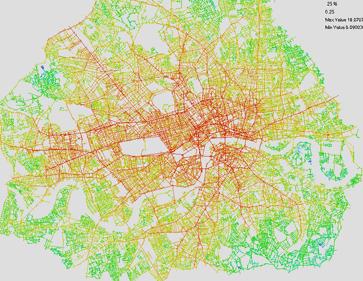
They're quite predictably similar when accounting for the variations in physical geographic features. The internet has no such problems. They both measure and map the connections between people, places, and things.

This is how IT types are more inherently and intuitively in tune with how cities function (or dysfunction). It is about direct connections of many interconnecting things. However, in the physical geography, proximity still and will always matter. Until we learn to teleport. And likely even then.

What's apparent in both is that there are two hierarchical gradients at work (both created through processes of natural self-organization - ie people empowered to meet their own wants and needs). You have the meta-gradient which covers the entire organism, the city (which vary in scale in competition with other cities). There is less overall value the further away you are from everything.

Within that there is an internal hierarchy of places or hubs where google is the equivalent to the internet as Times Square to New York.
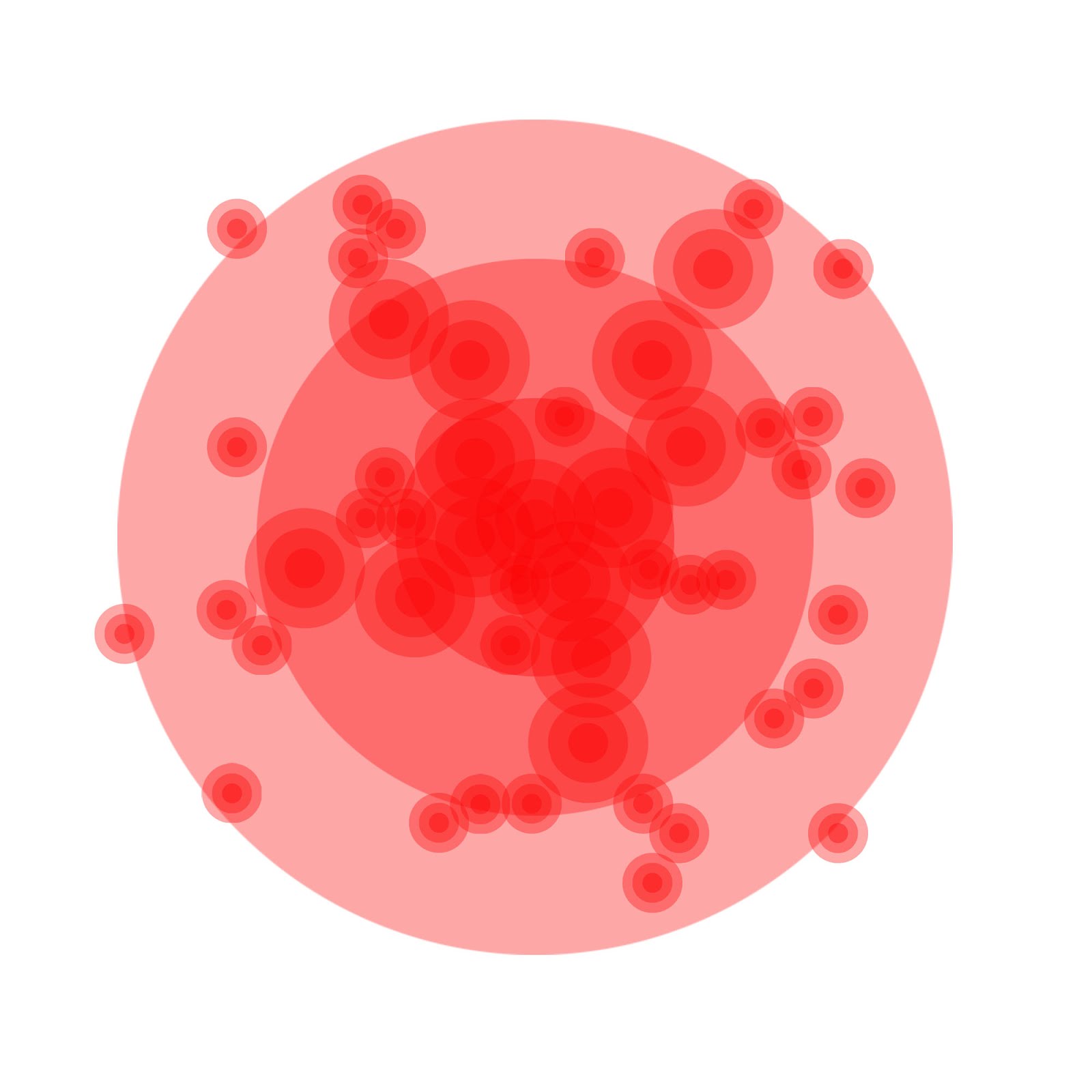
But please, dopey students and deluded professors, continue to tell me that Times Square is what it is because of LED boards. If that was the case Victory in Dallas would be jumping.

The reason it isn't is because Dallas gets the formula backwards. It should go like this:

In terms of self-organized living systems:
Purpose --- > Interconnections ---- > Elements

Similarly, with the internet & cities that same formula could be described thusly:
Emotion (need & want) --- > Integration --- > Accommodation (then decoration)

This is why 99% of designer types are utterly clueless and/or arrogantly deluded. And it's not entirely their fault. They're people. We are drawn to the immediate, the tangible. The things we touch and see, ie the Elements. As the late Donella Meadows wrote in Thinking in Systems, Elements are the least consequential.

Trying to change an entire city by adding a "name-brand" building is like trying to build a snowflake by hand.

We see websites but we don't see the internet. We see Morphosis buildings and Calatrava Bridges, but we don't see the bonds between people. We do see the infrastructure, but the dysfunctional city is the one where that invisible city doesn't align to the physical. Whatever purpose underlies the decisions made here, seems to be first and foremost moving the car. All else be damned. Such as empowering people to meet their needs without owning said car.

Rome of the centrally planned empire is bent and broken over 2000 years to mold better to human need:
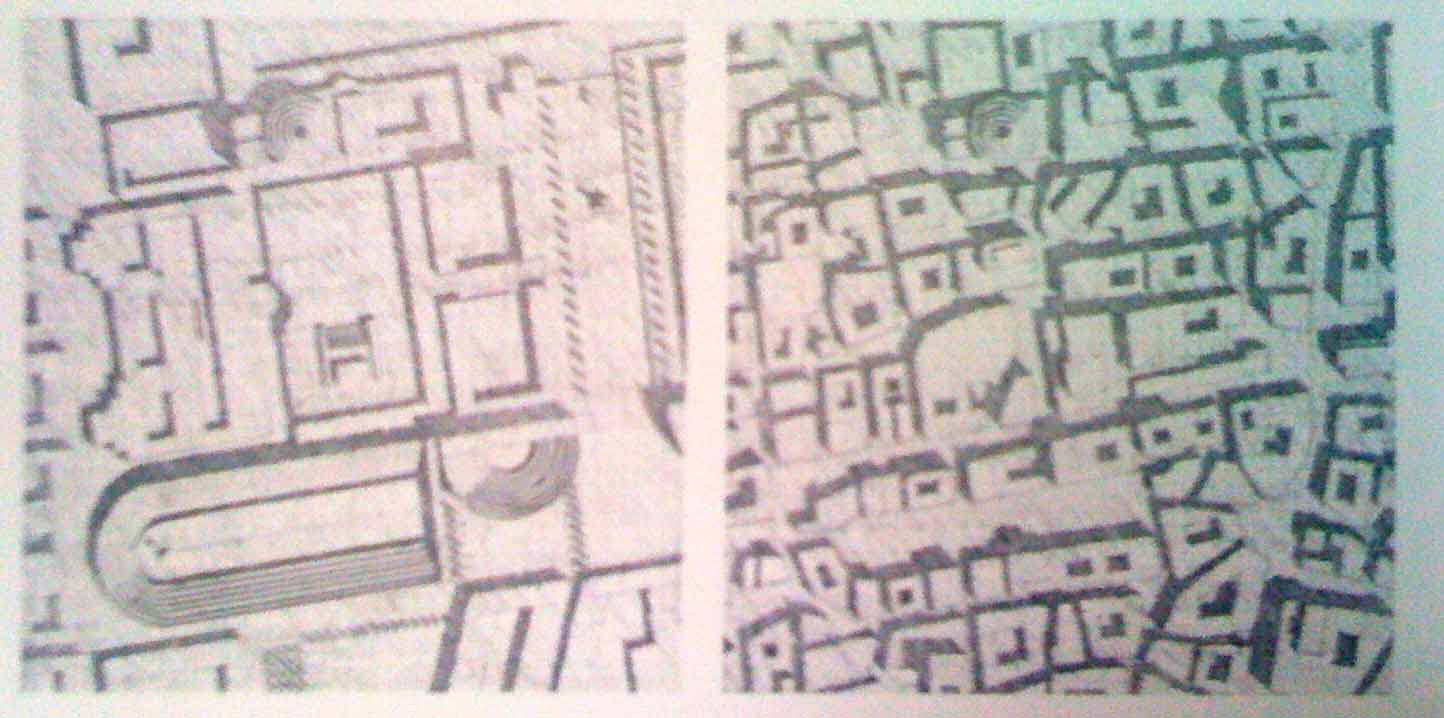


The people who attempt "revitalization" via the supplication of "stuff" are under the impression that their design (or the design of their personal cult superhero (cult of personality is all-powerful in the land of the ideological)) is so great and desirable that their design will bend the world to it. This only works on a micro-scale. They attempt to provide accommodation which will then bring about integration (ie people coming to that place) and that is why most of these attempts (supply-side urbanism) fail miserably. Or at least, the return on investment is far greater than expectations or promise. And usually lower than the amount of investment. Why?

The reason is that integration, those interconnections of networks, connects people. It empowers them to meet their needs and wants. It is the release valve of demand. When you integrate networks, the return on invesment is exponential, provided it is sustainable/maintainable.

BILBAO EFFECT
The best example of this is Bilbao.

People can see Gehry's building. They can point to it. They can touch it. But it was the least influential in Bilbao's recent renaissance than anything else substantial that the city undertook. First, they repurposed. A coal/shipping town repurposed as globalization moved industrial jobs elsewhere. They focused on empowering the arts (they had a lot of people out of work, bored, and tinkering).

Because the city is an archipelago of sub-hierarchies, loosely connected, they needed to reintegrate their city's networks. They built an entirely new subway system. They expanded their port as well as their airport. They integrated these various local and global infrastructures of interconnection. All of this began 10 years before the Guggenheim, which was a mere cherry on top.

NETWORK ANALOGY
Because the same processes are at work between the internet and cities (connecting people to meet needs and wants. The root force is human emotion (need & want) for social & economic exchange (mostly), I often draw the analogy between Place and your Computer. We wish to connect to people, places, and things. Both physically and digitally. To get a computer/place to work first you have to plug it in, essentially empower it:

To multiply its value, it has to then be interconnected at larger scales...networked.

Locally, regionally, and ultimately...globally:
Here's the rub...when those connections of local, regional, and global begin to interrupt integration (roads/wires) they limit the overall value and diminish the experience. Imagine ever bigger roads and trunk cables connecting every place on the planet. Oh wait.


Value = sum of integration (local + global)

However, the infrastructure of global integration often subtracts from local integration. Imagine trunk cables plugged into every house. Similarly, highway infrastructure and airports and railroads interrupt local connectivity and therefore diminish value. This is why these things should be mitigated, meeting local neighborhood fabric tangentially.

And therefore we go wireless to minimize the overall infrastructure of our interconnections.

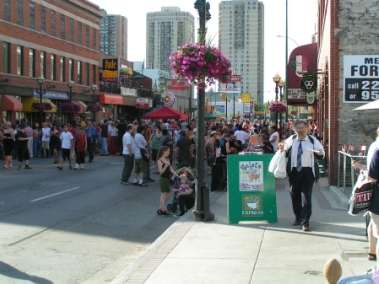
However, there will always be value in the local street. Because that's where the local physical interface occurs (building face, entries/retina screen), and in between, place happens:


Tuesday, January 4, 2011

Ask the CarLess Guy?

Received this thoughtful question today, and one I've thought about for a long, long time but haven't really written much about specifically or in detail, but the issues are all familiar:
Patrick,

I am a reader of your blog, https://carfreeinbigd.com, and enjoy it greatly. However, I was wondering if you have ever given any thought to, or written about, how modern Apartment complexes play into livability versus how they were constructed in the past.

It seems to me most modern apartment designs are done on a multi acre scale instead of the old style (early to mid 20th century) of a random building or two along a street, relying on that street for parking needs. Modern complexes, with the exception of the Tx Doughnut, seem to be an isolated retracted space shielding themselves from the surrounding neighborhood. Newer complexes like in Uptown seem to be bridging the gap between the classic one off building and the apt community.

In uptown at least this increased walkability and density happened in a positive manner. Larger complexes, aka the village, are more suburban in feel and function. Most folks despite the density in the complexes still use a car to travel to the City Center, from their apt, however, based on the density you would think it's more walkable.

Classic apartments, in Lakewood, or East Dallas, Oak Cliff, ect, provide a nice mixture of income level folks without becoming a "scary Section 8" complex since a building or two by its very nature is so small. It minimizes the potential "scariness "of buying a single family home next to an apt complex. Additionally, they provide a nice mixture of density, without becoming overwhelming the character of the neighborhood. In the long running allowing it to slowly become densier and more walkable.
Anyways, I have rambled with long enough. Thanks for your though provoking post.

Without writing 10,000 words in detail of every little nuance and reasoning for the observed by-product of economic inertia, I try to respond:


Glad to hear from you and you are 100% correct in your assessment of the different development form and format. The deeper question then to ask is why did this shift occur and how did it happen. Then the next step is to determine if some measure of return to that real estate delivery system is 1) feasible and 2) desirable. The reason for the shift has a number of origins: new building standards/codes, Euclidean zoning, as well as financial mechanisms behind what gets approval for loans and what doesn't - which is typically the tail that wags the dog - in that it is a byproduct of the above, but then dictates it thereafter, hence the inertia of the entire real estate delivery system and why we mistakenly think of suburbia as a market demand.

All of these were in some ways a form of market determinism, but the solutions were ham-handed. They went too far and undermined, well, complexity and interconnectedness (interconnectedness produces complexity) if all evidence and Space Syntax are to be believed, which I do. It was like treating cold symptoms with nerve gas. Not sure the details of this metaphor parallel reality, but the hyperbole is intended.

As my next column in D magazine (February issue) will cover, physicists are showing that as cities double in size, they produce efficiencies in outputs. More specifically, this means about 115% increase in output for every doubling in population size. Outputs are data elements. Things we can measure and they can be both good and bad. For example, cities are the greatest invention of wealth generation man has ever created. This is the very reason for their creation along with the increased efficiencies of inputs within cities. Inputs are things like infrastructure, roads, energy, etc etc. Cities use 15% less of these things for every 2x of population.

Wouldn't every business man like this equation? Less upfront cost, more returns (economically, socially, and environmentally profitable).

But along with the benefits of cities, they also produce negative outputs, such as crime, disease and waste/pollution. Industrialization made cities awful, dirty, crime-ridden, smelly, polluted, disease-infested places with plenty o' poverty as well. We failed to innovate in terms of addressing these negative outputs from economic production and in turn, cities became the stigmatized places we still live with today. These actions begot an equal an opposite reaction (and probably overreaction given the state we're at today). We erased the city to erase the negative outputs of city life and also lost all of its benefits. Cheap (and now subsidized) gas/oil prices have only exacerbated/accelerated the process and further entrenched how difficult it will be to shift market sentiment.

Those that studied cities and found the efficiency numbers above, found that Sun Belt cities such as Dallas underperform on both the front and back-end. We are wasteful with our inputs (in that we use a lot of energy and infrastructure per capita) and we get less positive outputs, but because negative outputs are determined by population size, we still have all of the negative issues/outputs, aka crime, disease, pollution. To summarize, Sun Belt cities get all the bad and none of the good of cities. The bad is determined by population size, the good is determined by urban form.

Getting back to the specifics of building form, the reasons for the bigger projects rather than smaller are entirely economic: bigger banks and bigger developers and bigger architecture firms, etc require bigger returns and to get those bigger returns they need big projects that can maximize efficiencies in building practices. At the end of the day however, this only works for short-term financial gain, which is how the financial system is rigged, rather than long-term, continual and sustainable value. ie if a building is built cheaply so that it falls apart and is unlovable in that we let it fall apart, it will just be cast aside in the future. This is the throw-away economy of the 20th century as applied to cities.
Side note: one of these days I want to address the short-term vs long-term economic engines by way of stakeholder vs. shareholder economies.
Waste is a cost (the air we breathe, cost of creating/having landfills, etc etc). Fundamentally, we constructed a broken system. In the natural world, there is no waste. It is all closed loop systems, cradle to cradle, where waste equals profit. We've created the opposite as if it were possible. These outputs, waste, get externalized, ie written off. Somebody else's problem. We're starting to just now bump into those debts the 20th century accrued. Cities become profitable when we don't throw them away every generation and start again. Every building, every stone is reused, repurposed.

Furthermore, since a building might be cheap and ugly, everything around it withdraws or "defends itself" against adjacent ugliness for lack of a better word. This includes streets and the transportation system. It is all connected. Build a great street, say the champs elysees, value and density gather around it, embrace it, and it is financially rewarding to interface directly with it. Therein lies the depth of all of these issues and the bureaucratic entities that defend the status quo (from both a public AND private side). The bigger the entity, the more resistent to change, aka necessary adaptation. From a global perspective, this is why I think there are two types of evolution (whether in design or in natural world): Drastic and painful due to unwillingness, or gradual, incremental, and constant.

I also agree with you that the old way was preferable in that it creates more authentic, true, walkable urbanism - or better yet, functional, efficient urbanism as a platform for human livelihood. It is inherently complex, since it is interconnected (also in the 4th dimension in that it is tied to history, or some tradition, ie years of decisions/thought put forth years and years before - modernism also suffocated all of this thought - a selfish mistake by modernists). Interconnectedness is the primary reason for many chicken/egg dilemmas of urbanism. Also, I think what we call authentic is that it was incremental and demand driven. Much of what we see built today is supply driven, ie the housing bubble/burst. There weren't real demographic shifts calling for an extra 25 million new households, but the financial system (and its mouthpieces) said there was money to be made, so build we did...bigger and bigger, more and more.

I also think that if we can apply modern materials and methods to this process while making it economically viable to do so is probably approaching necessary at this point. So what we have to do is drill deep into the real cavities, the systemic issues and mechanisms producing the cities that we see and feel, and that aren't working for us, change them, so there really is no choice, but to build great cities, buildings, and places. I prefer a system that doesn't outlaw the bad, but rather financially punishes the bad and rewards the good. To do so, we have to be honest with ourselves as to what those cavities are and honestly address them rather than adding some veneers and calling them world class.


Monday, April 13, 2009

A New Renaissance?

Remembering the ethics of the past, two articles of totally different subject material:

First, Frank Rich at the NYT:
Even at the cratered Citigroup, a technical analyst was moved to write a report last month urging his peers to stop living in “denial” and recognize that we are witnessing the end of “25 to 30 years worth of excess.” The “new normal” in lifestyle, wealth creation and profitability of companies, he wrote, “may be a shadow of the past.”

There was a poignant quality to this Citi report, which cited as its mantra the R.E.M. song “It’s the End of the World as We Know It (and I Feel Fine).” Its tone somehow reminded me of the stirring speech written by the American playwright Clifford Odets in his classic drama of the Great Depression, “Awake and Sing!” (1935). “Boychick, wake up!” the grandfather Jacob tells his grandson, Ralph, as the battered Berger family disintegrates in the Bronx. “Be something! Make your life something good ... Go out and fight so life shouldn’t be printed on dollar bills.”

When Lawrence Summers was president of Harvard, he famously delighted students by signing his autograph on dollar bills that already bore his signature from his Treasury secretary days. How we leave that bankrupt culture behind and get to “something good” will be as much a factor in our recovery from this Depression as the fate of the unemployment rate and the Dow.
TreeHugger on the return of Permaculture in Urban Agriculture and goes philosophical:

"Permaculture is about asking, 'Why am I doing this?'" Read said. "It's not about clever technological solutions for driving, but asking, 'Why am I in this car in the first place?' I constantly end up taking things out of my life that I don't need."