Showing posts with label Bloggidocious Buddies. Show all posts

Tuesday, October 19, 2010

For the 1000th Post on this here Blog

I'm announcing yet another blog to keep up with! /OMG Please stop the madness.


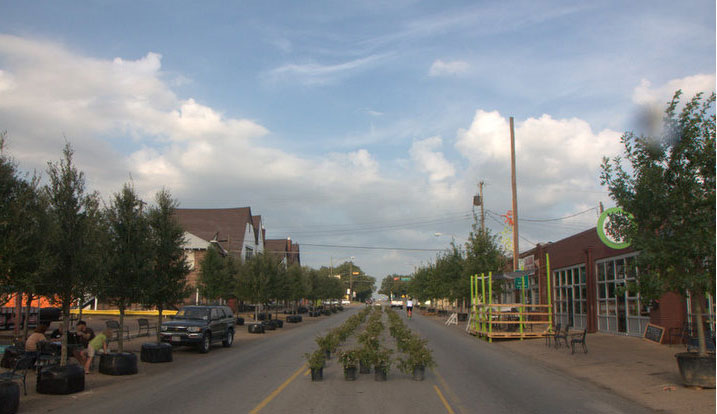
Actually, this one all about the Better Block Project (ed: updated dead link) and following the virus across the country as Guerrilla Urbanism takes the bull by the horns reacting to over-engineered and under-responsive public streets. When I talk about parallel geographies between web and place this is it. Idea spreads memetically via the web and they begin to appear.

/Strict, mindless adherence to archaic, dogmatic formulae. It's like we're living in engineering Taliban.

I've also been made a contributor/editor over there, so while the posts won't be as frequent there as here, I'll be sure to mention updates there from here. Got it?

Thursday, September 30, 2010

All You Sucka Emcees


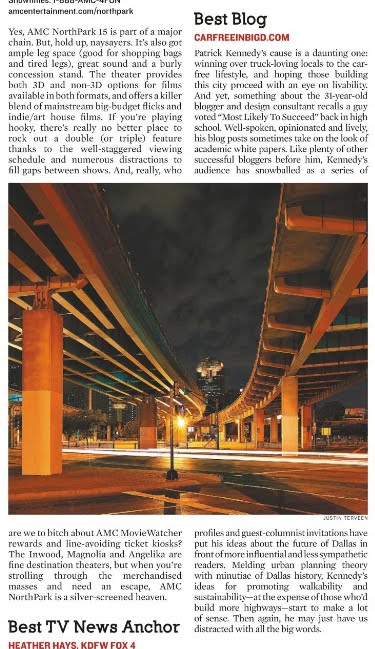
So last night I ran into Jason Roberts who greeted me with a "congratulations on the award!" I looked at him quizzically, perhaps suspiciously. "What award? What are you talking about crazy bald bespectacled man?" Turns out it was this award:


Since the print screen function didn't transfer in quality very well from the online PDF at the Observer, I'll post the text here:
Patrick Kennedy's cause is a daunting one: winning over truck-loving locals to the car-free lifestyle, and hoping those building this city proceed with an eye on livability. And yet, something about the 31-year old blogger and design consultant recalls a guy voted "Most Likely to Succeed" back in high school. Well-spoken, opinionated and lively, his blog posts sometimes take on the look of academic white papers. Like plenty of other successful bloggers before him, Kennedy's audience has snowballed as a series of profiles and guest-columnist invitations have put his ideas about the future of Dallas in front of more influential and less sympathetic readers. Melding urban planning theory with minutiae of Dallas history, Kennedy's ideas for promoting walkability and sustainability - at the expense of those who'd build more highways - start to make a lot of sense. Then again, he may just have us distracted with all the big words.
Followwwww the pendulum with your eyesssssss....repeat after meeeeeee...

/blushing

In all seriousness, what appears to be Wilonsky's words are probably the nicest and most flattering thing written about me since high school yearbooks where I was not named most likely to succeed, most likely because I was skipping school too often. Boring stuff that public secondary education. I think I'll go see Waiting for Superman sometime this weekend.

Frankly, I'm almost embarrassed to see my name by all of those other great, important, and talented people throughout the pages of the Observer's Best Of issue. Their words remind this East Coast native why I'm here, why I take the time out to write (and wish I could do so more - the irony of timing, that this award comes when I have the least amount of time to dedicate to it), and why I'm not leaving Texas any time soon. I came here first as a challenge and an adventure. I stay because I found a sympathetic spirit, kindred with my own leftist libertarian bent. While everyone may not share similar views, if we are focused on improving our city, I am certain we can find common ground and move in a positive direction. I care about what is just, what is right, and also what is economically beneficial without truly harming others. When directed towards the city, these principles manifest in a more livable, more enjoyable, more sustainable, and more lovable place.

Everywhere I go and every new person I meet, they all seem to want the same thing. They, and I, want Dallas to be the greatest city in the state, the country, and in the world. If we can focus the machinations of power in the right direction, we will get there. Other cities (urban economies) in the region should be worried that we might actually get our shit together someday, which we slowly but surely seem to be doing.

Coming up in the next few days: a pictorial review of my trip to Vancouver and a critique of the recently revealed Dallas Bike Plan...as soon as I get some spare time. The economy! Slowly but surely manifesting itself into projects. We iz gettin' bizzy.

Wednesday, May 19, 2010

Deets on the Friday's Cross-Town Happy Hour

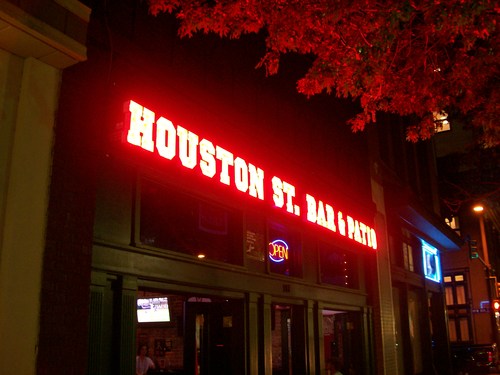
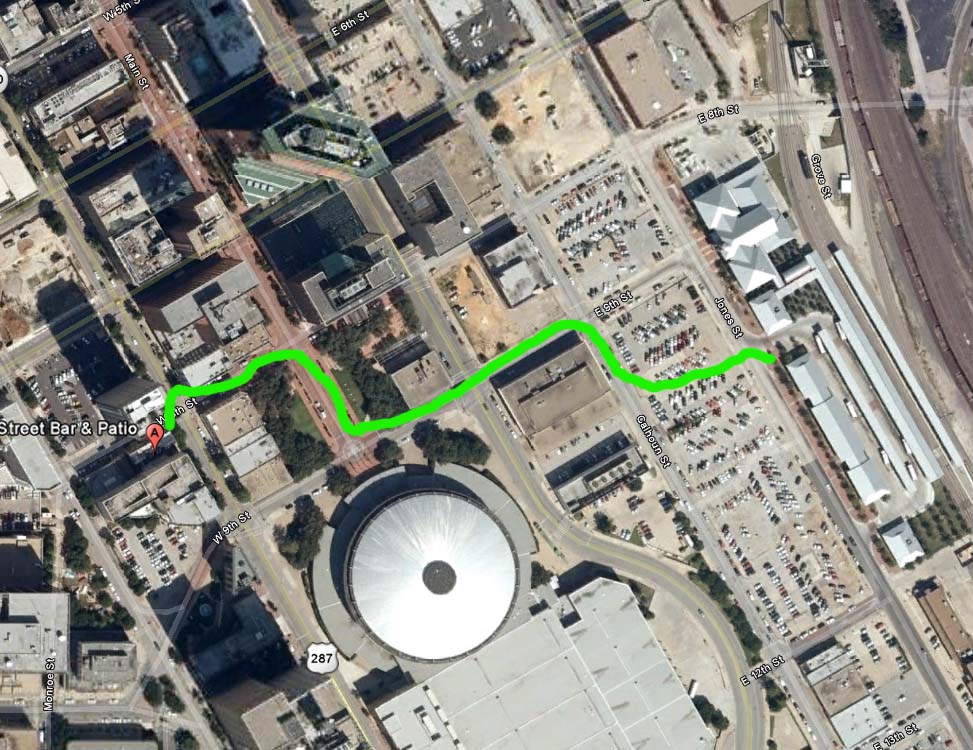
The first annual FortWorthology/WalkableDFW joint happy hour scheduled for this Friday in (hopefully) sunny downtown Fort Worth will take place at Houston Street Bar and Patio. Further information below and be sure to check both sites for the Free Beer Guess the Cities to be featured on each site on Friday.

Houston St. Bar and Patio

Departure times from Union Station in Downtown Dallas (if you are catching it somewhere else, you are on your own...fortunately, I have the link):

Westbound from Union Station:
4:35 pm
4:55 pm
5:15 pm *
5:35 pm *
5:55 pm *
6:22 pm
6:57 pm

* recommended

Where we will get off at the second to last stop along the line. Here is a handy map for how we will get to Houston St. Bar and Patio from the Fort Worth Intermodal Station:


Departure times to get back to Dallas unless you drank too much to catch the train and decide to stay on the street in a downtown Fort Worth hotel (you know who you are). And if that is the case, then you are doin' work and I salute you:

Eastbound from Fort Worth Intermodal:
7:46 pm
9:12 pm
10:38 pm

Fare information:
We will be traversing through 2-zones in the TRE lexicon which equates to a one-way fare of $3.75 or $7.50 for a day pass.

Friday, April 30, 2010

Announcement: May 21st

[DSC01465.JPG]
Actually, I think of it more as a solution. Thank you very much.

If you haven't been to our friends at FortWorthology, head over there some time. If you haven't been to Fort Worth, have we got something in store for you.

As many of you may know, on most Fridays, we organize a local happy hour preferrably in local, walkable neighborhoods throughout Dallas. It is also often orchestrated with a free beer from me to the first person who guesses the City shown in various imagery and hints of the City's history, origins, demographics, morphology, yadda yadda.

Well, on May 21st, we will be having a dual happy hour with the good people of FortWorthology, set in where else but in the siamese sister city of Fort Worth! Omigod that's so far away. How is that walkable? Glad you asked. We will be taking the TRE out there.

Next question: Why so far away? Well, that answer is two-fold. First, Kevin of FortWorthology has the crazy idea that he wants to train around the country for three weeks to see the land and visit the great cities sprung from its soil. Second, we want some time for people to plan, since it isn't exactly about walking from the office to the corner pub.

Kevin also has some ideas for location and we will be working out further details including potential cross-site competition for the Free Beer Guess the City. Perhaps two cities, two potential beers??? Yum. I just might have to guess in his site's competition.

Thursday, February 25, 2010

Over at the Observer

The Observer has linked to my post on the January downtown 360 plan stating that I suggest they think bigger. I don't recall if I used the phrase "think bigger," but the point that needs to be made is that these big catalyst projects that are discussed (Statler Hilton and Old Dallas High School - which I posted about years ago, found it!) might be too big to pull off in the short-term with the budgetary issues. So I think I'm actually suggesting thinking smaller???

While this is a publicly-driven planning process, I think the model of identifying large catalyst projects as part of the solution to the planning process worked pre-crash, but I'm skeptical now. This is essentially what happened with the Mercantile: identify the empty building, heavily subsidize a private developer to renovate a building, remove the developer's risk, build a park adjacent, hope for the best. I think it is going to take deeper, more strategic thinking and some political leadership to make for some of the systemic changes that need to occur.

I was trying to arrive at strategies that generate more bang for the buck to arrive at solutions to problems, ie surface parking lots and daylighting tunnel businesses, that could be more cost effective than writing a $20 million dollar check for abatement of either of those buildings. Work on the easy wins to build up value around those buildings, which then makes those catalyst projects make a little more sense.

I'm just inverting the thinking from throwing money at individual vacant buildings to catalyze the area around them, to working the fabric around the vacant buildings, so those "eyesores" seem less tragic. Those inherently are singular, top-down projects, and we need to be focusing on empowering a more emergent urbanism, meaning more developers intensifying surface lots and vacant properties, smaller, more finance-able projects, focusing on the fine-grained urban infill, and meeting the under-supplied niche housing markets while supporting all the goals of walkability and livability.

Monday, January 25, 2010

W. 7th in Fort Worth and Retail as Place Driver

I have talked about what the future of retail will look like several times before (here and here) and I'll be hitting on the same issues discussed in those, within this post which is directed at a real place, still in its hatchling stages of development.

In particular in one of the previous posts, I discussed where retail in dallas will re-congregate, with particular emphasis on the CityPlace/West Village area. Not because of anything particular that has yet been designed there, but rather the convergence that is established by infrastructure and coding (it's urban genotype) will ensure its success.

The fundamental point is something that I've been evolving and packaging for consumption since then: 21st century retail's need for 3 kinds of convergence:

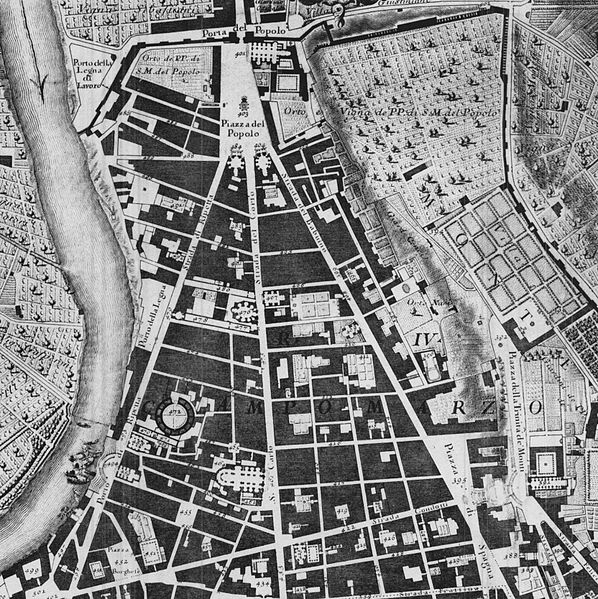
2-Dimensional convergence is what you see in a planometric drawing of a city, perfected during the Baroque and used effectively since. I often use the L'Enfant DC plan, Broadway's axial cut applying a hierarchy through New York's regular grid and Rome's various papal axes, in this case the trivium arriving at Piazza del Popolo (work of Ed Bacon also is very effective at teaching this) to illustrate this point:
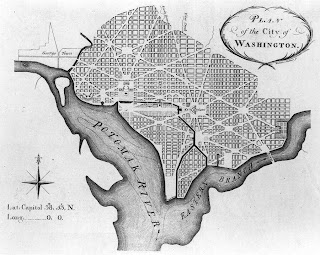
http://3.bp.blogspot.com/_ybHuuY2_MCE/SEBTLmxCyYI/AAAAAAAAACY/8P9lOHTstt8/s320/DC%2Bplan.jpg


http://upload.wikimedia.org/wikipedia/commons/thumb/f/f0/Map_of_northern_Rome,_Piazza_del_Popolo,_by_Nolli.jpg/598px-Map_of_northern_Rome,_Piazza_del_Popolo,_by_Nolli.jpg

What often happens however, is that these inherently create people spaces (moreso than retail spaces) as the convergence of multiple conduits requires an outlet, more space for the arriving people from various directions. For example, if you were to pour two or more full glasses of water into another vessel, you would need a larger container. Retail requires proximity of other stores meaning narrower distances for cross shopping, so the retail spills down Via Del Corso from Popolo, or Connecticut from DuPont Circle, or down any of the streets off Times Square.

3-Dimensional Convergence refers essentially to mixed-use buildings. If there are residents above and adjacent to the retail, there is a consistent base to support an amount adjusted exactly to the quantity of residents within walking (or elevator/stairs) distance. Quality of place then creates a larger draw which means more demand and a larger center.

4-Dimensional Convergence can refer to time of day, but more precisely I'll use it to suggest a multitude of useful forms of transit converging in one place, within certain time periods of each other, which requires some degree of regularity of arrivals. For mass transit, this means dependable and preferrably frequent stops nearby, with little to no changes in form of transit. Also, quality of place matters, creating a perception of safety for drivers, bikers, and walkers to feel comfortable arriving at any time of day.

Eventually as cities re-adapt to an organization less dependent solely on the auto, various retail "centers" will emerge into a hierarchy based on the quality of and quantity of types of convergence, ie to simplify necessarily, having 1 form would be a neighborhood center, 2 forms of convergence a town center, and 3-forms a regional center.

This is why, in Dallas, I know West Village/CityPlace will be successful as it continues to develop; I believe downtown will emerge from its slumber once again as it has these advantages built into its "Urban DNA", and traditional shopping malls like NorthPark can continue their success ONLY if they maximize all three forms of convergence. For NorthPark specifically despite its ongoing success in comparison with most malls, this means improving and simplifying connectiong to DART, as well as infilling its surface parking lots with residential density, pedestrian-friendly street grid, quality public spaces.

------------------------

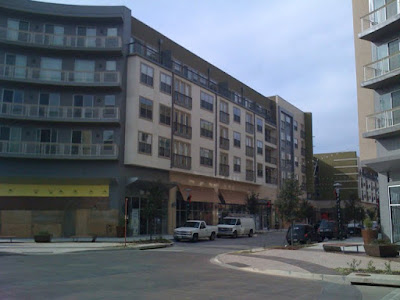
Meanwhile, as we live our own Dallas-centric exploration into the 21st century city, our neighbor to the West is working on a project that has similar level assets, if not more than any particular neighborhood in or near Dallas. This would be the new development at West 7th.

It has the cultural district within eyesight, is close to a Trinity River that is currently an amenity, closer to its downtown, is directly on the main link between downtown and the cultural district, whereas McKinney, the uptown main street is a right turn out of downtown. Using Hillier's axial studies, suggest each such redirections can have a profound affect on urban success or lack thereof, per axial shift.

West 7th the street is exactly the kind of overly wide arterial that materializes when design criteria is limited solely to traffic flow. Still speaking generally about arterial design, any aesthetic concerns for the pedestrian are an afterthought and appear exactly as such, and thus are not effective.
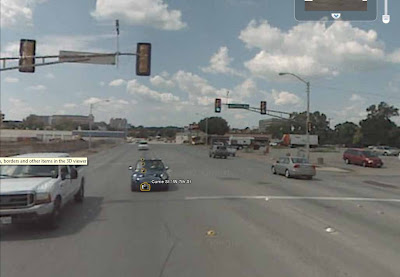


This kind of design typically leads to the type of decay and disinvestment of the immediate area, that ironically drives land value low enough that it can then be redeveloped into something better when efforts coalesce and a developer is confident that his surroundings will improve as well, protecting his/her investment...which is exactly what has happened here. In some ways, it just reinforces the idea that places often have to bottom out before they get better (see: the amount of attention and intelligence directed at Detroit currently.)
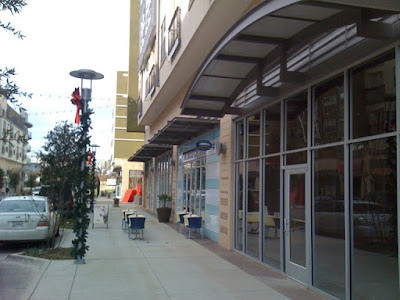


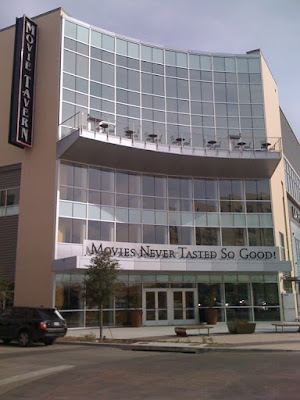
The plan at the W. 7th project creates its primary "place," one street parallel to 7th. You could say that this is a mistake from a theoretical standpoint, but as I stated in another recent post, it is a necessary compromise. The primary concern must be to build enough critical mass to create a "place" from Day 1, something that holds together. This, to date, has been the inherent flaw in the neighboring project Museum Place, which one might argue has the superior architecture.

The plan and design at W. 7th understood all of these issues. The potential of the future, but the necessity to hedge bets if 7th was never fully to become a street designed as both link and place.

Seeing that 7th currently is not a street designed for people (who would live on it right now?), they've done exactly what they should have done, not completely turn its back on 7th, but ingratiate itself with the grid as well as to design flexibility and adaptability of the building to interact w/ 7th in a way that can change hand-in-hand as 7th evolves. Success now. And predictably moreso in the future.

Once 7th is redesigned as a more pedestrian-friendly, complete street, it has the opportunity to be a "place" itself - as streets can be either links or places themselves. Currently, as with most streets it was designed specifically for moving traffic, meaning it is a link - but to maximize value and well-being of the local citizenry.

Why is it important to flip the modernist inside-out street design back to rightside-out? Because there is the most energy there - if and when an arterial can be designed to be amenable to humans - then the most valuable uses will clamor to occupy space on that street to minimize the distance or disconnect from energy of people movement and their direct access...facilitating commerce. That distance is a cost increment extracted from the local economy: a fraction of a cent, multiplied over however many millions of transactions, like in Superman 3.

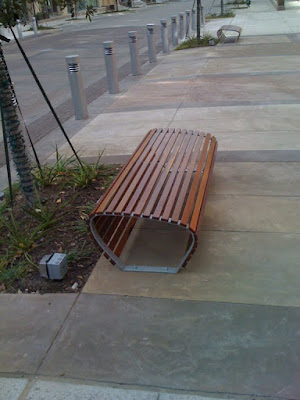
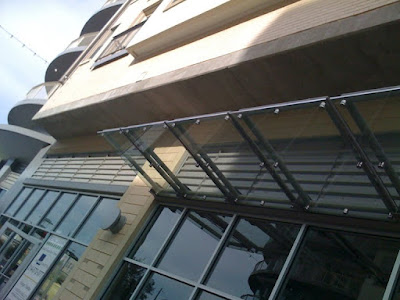
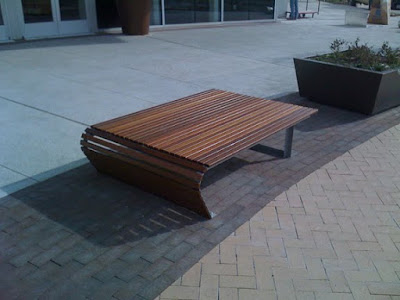
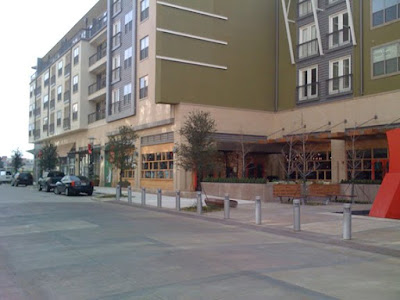
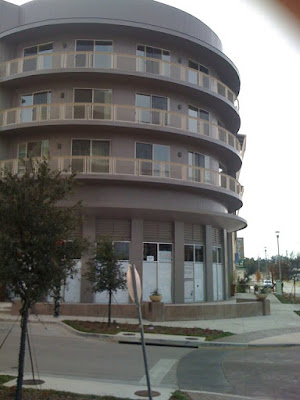
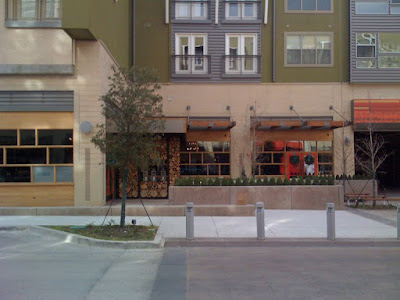
Imagery taken in December:


---------------------------
My last point is about the nearby Museum Place. As I stated, in my opinion it has excellent detailed architectural design and landscape architecture, but it doesn't yet feel like a place. With the efforts at the Cultural District, W. 7th, and Fort Worth's streetcar efforts, eventually it will. Like all cities throughout history that grew together, morphed, and coalesced, eventually it will all feel like one coherent place; a center close enough to downtown that provides a positive feedback loop with downtown Fort Worth, utilizing 7th street as the chains of the bicycle between pedals and spokes.

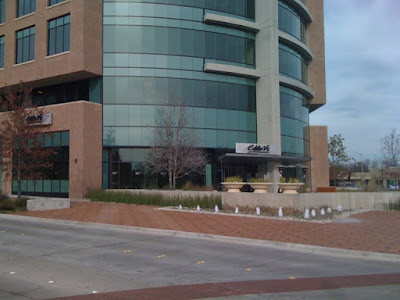
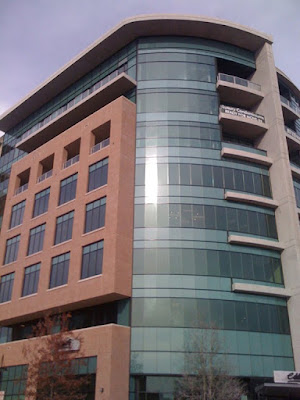
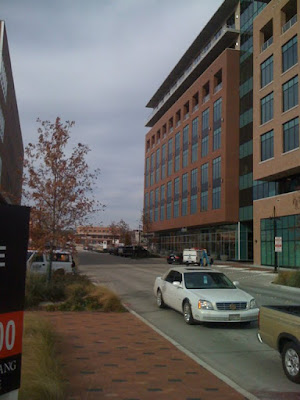
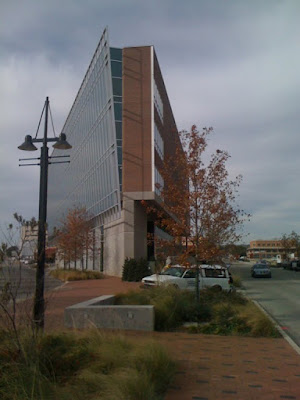
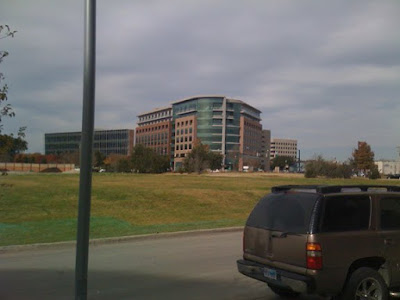
As of now however, the real story of all of this is that with its excellent detailed architecture and landscape design, Museum Place is held back by the street design around it.

Imagery:


Wednesday, January 20, 2010

Over at PegasusNews

My downtown 360 article is over at Pegasus News now. Here:

http://www.pegasusnews.com/news/2010/jan/20/downtown-dallas-360-plan-needs-broaden-its-scope/

Wednesday, October 21, 2009

Gracias, Mi Amigos

Be sure to make you daily trip over to Streetsblog for your daily info fix on issues related to the public realm. Their info comes at you raw and straight. Mainlined, just as I like it. No elaborate contraptions for intellectual inhalation, necessary.

Oh, and they picked up my Jaywalking Post to put on their page. Daily traffic is already up over 800% from normal.