






I mentioned on the Urbanology podcast the two parallel geographies of the internet and the actual physical landscape of cities. I talked about how the internet would actually advance urbanism and clustering because of web 2.0's evolution as an agent of self-organization. We're still people, we still have human needs. We'll never be the automatons interacting only by computers. Unless of course, you think it's possible to mate and reproduce via these here interwebs.
Therefore, we're amending our creation of the internet to further align and enhance our other great human invention, cities. The two parallel geographies are converging, enmeshing. Unlike what Joel Kotkin thinks, that the internet will enable all of us to live in far flung suburban locales, that they're diverging. I also think Kotkin's university and academic credentials are essentially made-up and underwritten by dubious economic forces, but that's another story.
Here are two maps:
The internet...
And the syntactical integration map of London...
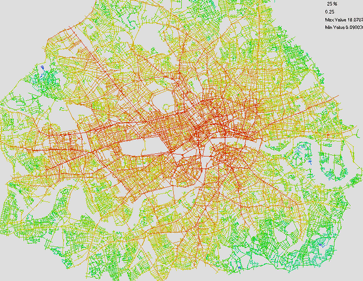
They're quite predictably similar when accounting for the variations in physical geographic features. The internet has no such problems. They both measure and map the connections between people, places, and things.
This is how IT types are more inherently and intuitively in tune with how cities function (or dysfunction). It is about direct connections of many interconnecting things. However, in the physical geography, proximity still and will always matter. Until we learn to teleport. And likely even then.
What's apparent in both is that there are two hierarchical gradients at work (both created through processes of natural self-organization - ie people empowered to meet their own wants and needs). You have the meta-gradient which covers the entire organism, the city (which vary in scale in competition with other cities). There is less overall value the further away you are from everything.
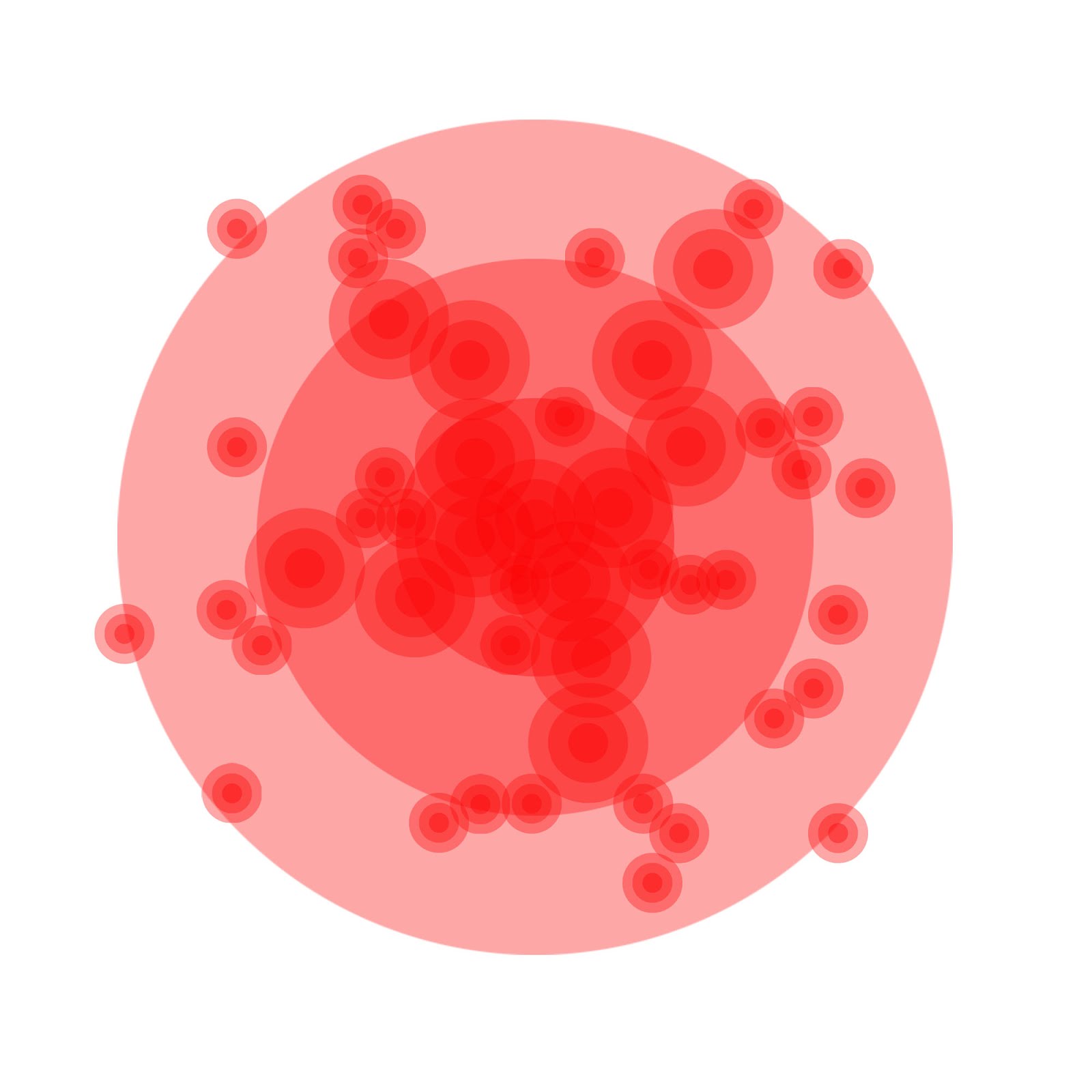
Within that there is an internal hierarchy of places or hubs where google is the equivalent to the internet as Times Square to New York.
But please, dopey students and deluded professors, continue to tell me that Times Square is what it is because of LED boards. If that was the case Victory in Dallas would be jumping.
The reason it isn't is because Dallas gets the formula backwards. It should go like this:
In terms of self-organized living systems:
Purpose --- > Interconnections ---- > Elements
Similarly, with the internet & cities that same formula could be described thusly:
Emotion (need & want) --- > Integration --- > Accommodation (then decoration)
This is why 99% of designer types are utterly clueless and/or arrogantly deluded. And it's not entirely their fault. They're people. We are drawn to the immediate, the tangible. The things we touch and see, ie the Elements. As the late Donella Meadows wrote in Thinking in Systems, Elements are the least consequential.
Trying to change an entire city by adding a "name-brand" building is like trying to build a snowflake by hand.
We see websites but we don't see the internet. We see Morphosis buildings and Calatrava Bridges, but we don't see the bonds between people. We do see the infrastructure, but the dysfunctional city is the one where that invisible city doesn't align to the physical. Whatever purpose underlies the decisions made here, seems to be first and foremost moving the car. All else be damned. Such as empowering people to meet their needs without owning said car.
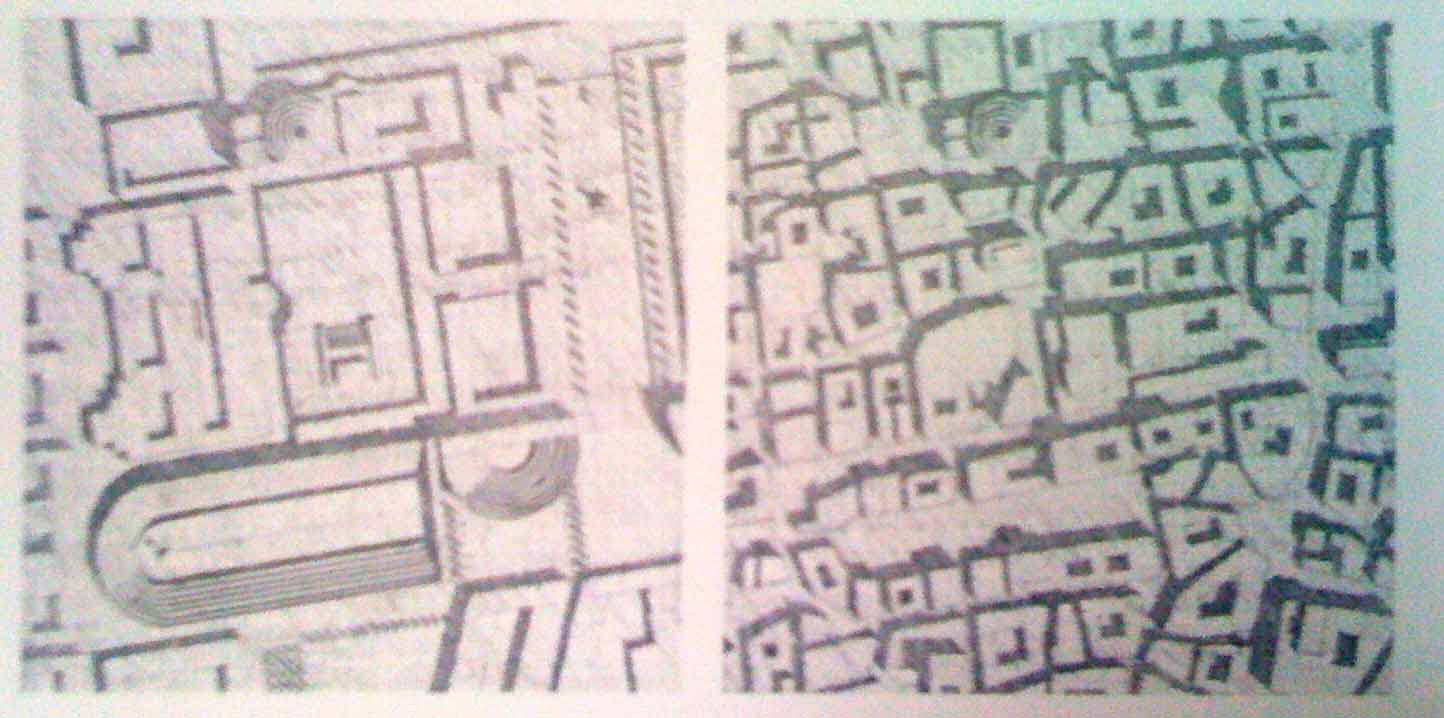
Rome of the centrally planned empire is bent and broken over 2000 years to mold better to human need:
The people who attempt "revitalization" via the supplication of "stuff" are under the impression that their design (or the design of their personal cult superhero (cult of personality is all-powerful in the land of the ideological)) is so great and desirable that their design will bend the world to it. This only works on a micro-scale. They attempt to provide accommodation which will then bring about integration (ie people coming to that place) and that is why most of these attempts (supply-side urbanism) fail miserably. Or at least, the return on investment is far greater than expectations or promise. And usually lower than the amount of investment. Why?
The reason is that integration, those interconnections of networks, connects people. It empowers them to meet their needs and wants. It is the release valve of demand. When you integrate networks, the return on invesment is exponential, provided it is sustainable/maintainable.
BILBAO EFFECT
The best example of this is Bilbao.
People can see Gehry's building. They can point to it. They can touch it. But it was the least influential in Bilbao's recent renaissance than anything else substantial that the city undertook. First, they repurposed. A coal/shipping town repurposed as globalization moved industrial jobs elsewhere. They focused on empowering the arts (they had a lot of people out of work, bored, and tinkering).
Because the city is an archipelago of sub-hierarchies, loosely connected, they needed to reintegrate their city's networks. They built an entirely new subway system. They expanded their port as well as their airport. They integrated these various local and global infrastructures of interconnection. All of this began 10 years before the Guggenheim, which was a mere cherry on top.
NETWORK ANALOGY
Because the same processes are at work between the internet and cities (connecting people to meet needs and wants. The root force is human emotion (need & want) for social & economic exchange (mostly), I often draw the analogy between Place and your Computer. We wish to connect to people, places, and things. Both physically and digitally. To get a computer/place to work first you have to plug it in, essentially empower it:

To multiply its value, it has to then be interconnected at larger scales...networked.

Locally, regionally, and ultimately...globally:
Here's the rub...when those connections of local, regional, and global begin to interrupt integration (roads/wires) they limit the overall value and diminish the experience. Imagine ever bigger roads and trunk cables connecting every place on the planet. Oh wait.
Value = sum of integration (local + global)
However, the infrastructure of global integration often subtracts from local integration. Imagine trunk cables plugged into every house. Similarly, highway infrastructure and airports and railroads interrupt local connectivity and therefore diminish value. This is why these things should be mitigated, meeting local neighborhood fabric tangentially.
And therefore we go wireless to minimize the overall infrastructure of our interconnections.
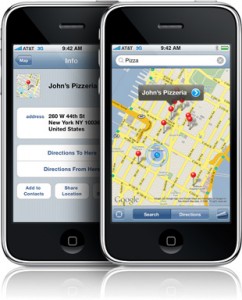
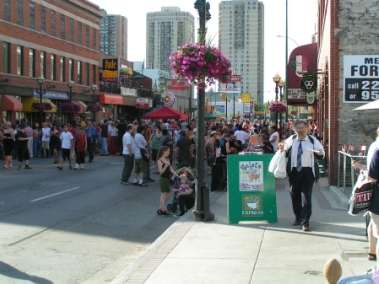
However, there will always be value in the local street. Because that's where the local physical interface occurs (building face, entries/retina screen), and in between, place happens:



 Posts
Posts