




Showing posts with label Now that is art. Show all posts

Wednesday, April 13, 2011

Straying a Bit Off Topic

For some time I've been contemplating starting a blog about the "100 most profound lines of The Wire," or something to that effect. And if you know me at all beyond the words on this blog, you likely already know that I consider The Wire to be one of the greatest pieces of artwork (across any genre) of our time. As one Washington Post writer stated (paraphrasing), "screw an emmy, it should receive the Nobel prize for literature." Not terribly surprising because the creators (a police beat writer from the B'more Sun and a retired city cop turned public school teacher) employed several novelists on the writing staff (Pelecanos, Price, Lehane).

Today, I received an email from a friend who is rewatching the 5 seasons exclaimed, "why did so and so character have to be killed off." You likely know who I am talking about if you've watched the series. However, he added another comment about Season 3's Hamsterdam, the legalized drug zone, that I want to comment on and bring 'round to how it relates to urban form/evolution:
Hamsterdam is great because like you said, bad things do happen in cities. If you're Catholic, you'd say we're all sinners. We're people. We do bad things. Bad things happen in nice parts of town perhaps just as much as they do in rougher parts, but usually out of sight, out of mind. A high ranking city official once told me about FBI maps that showed the highest crime areas in Dallas on a per $ per capita basis. The deepest, darkest, reddest, roughest area was actually in and around the Park Cities. Best hold your wallet crossing Hillcrest. Yes, white collar crime was included.

Hamsterdam quarantined the bad which was infecting entire areas of the city, which otherwise were home to many good people who had to dodge bullets just to live. In urban terms, it is really no different than some other undesirable use, like a lead smelter, you move it away from all the neighborhoods. You're just being honest in this case about drugs. The war is a lost cause (which is why they make parallels to war in iraq in season 3) and at this point is little more than welfare for those involved. OMG we'd lose jobs! Be honest it is lost, be honest with human nature and inevitability of drug use, and address it appropriately.

As The Wire showed, it was no panacea. The Hamsterdams became truly awful places, but they were localized. They could be policed and health officials could focus efforts as well.

When spread throughout the city, the decay and blight robbed citizens of the only wealth they might have, in the property they pass along through the family, and perhaps on a deeper level, the pursuit of happiness, which perhaps I'm mistaken, but could have sworn was guaranteed in the constitution. The areas then get either condemned or bought by redevelopers or slum lords and the downward cycle continues, or is just moved elsewhere in the Robert Moses manner of treating blight. Raze it, thereby further destroying whatever complex social fabric had previously existed.
As for the prior comment/rhetorical question, spoilers herein:
c'mon. you know the wire. if you like a character too much, he's bound to be killed. It wouldn't be much of a Greek Tragedy otherwise. Even McNulty was effectively "killed" by taking away the only thing he loved doing (thus "saving" him in the religious sense). Even underscoring the point by laying him out on the table.

I just rewatched it with Amanda and picked up something new. They were quite obvious in seasons 4 and 5 about emphasizing the cyclical nature and that the kids were each destined to be one of the adult characters. obviously, michael as omar. dookie as bubbles. Randy as stringer, the business head who gets lost in the system. I never really caught who Namond was going to become.

Then it hit me. Clay effing Davis. Yeah, Namond "made it out" but that doesn't mean everything was all good. He went into debate club. Clay, politician. In season 4, both used the line "I'll take any em-effers money if he givin it away." Namond becomes as big of a problem, if not bigger than any of the other kids... just like the pain in the A that he is at the start of his role.

Us coming to like that Eddie Haskell act of Namond was just a way of the show flipping it on us while we condemn Clay Davis. "How could anybody like that guy?" "What a scumbag!" Well, we fell for it and didn't even realize it. Just turn on the charm. Namond's just getting started taking em effers money.

Sheeeeeeeeeeeeeeeeeeeeeeeeeeeeeeeeeiiiitttt.

Tuesday, January 4, 2011

Turning the Human Reactions and the Fundamental Processes of Urbanism into Art

A Dutch artist captures the complexity of real urban processes in time-lapse. Set the rules and patterns emerge. Here by simply marking lines:

Friday, November 19, 2010

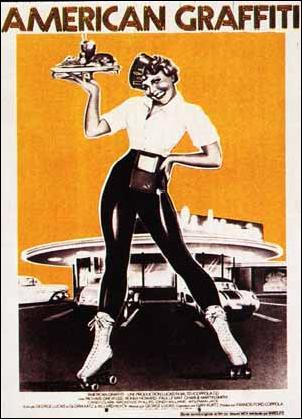
Livability Indicator #18: Graffiti


I have been wanting for some time to create a post about graffiti. Like all things, there can be two sides to it, good and bad. Density is typically reviled by the NIMBY types worried that a dense development will bring crime and lower their property values. When they think density, they are envisioning Flatbush tenements, or section 8 housing, or even typical garden style apartments the litter the sunbelt, built to last 15 years at best, often lasting 20- or 30-plus. They end up caving in on themselves.

Nobody cares for them, because they weren't built to be cared for. Furthermore, where tenements and section 8 barrack housing are forms of warehousing, shoving people into places, garden-style development was originally intended for market-rated housing. Often, these were considered the nicest places to live when new. They were garden-y! It was like a little bit of nature to ease the burden of living around dirty, stinky, smelly others. Oh, xenophobia.

At the time what we didn't realize was the form and arrangement of garden-style apartments (the "train wreck" as seen from above) without public infrastructure were cul-de-sac in nature, vestigial appendages ready to fall off without the lifeblood infusing it. And they die off eventually. All of them. There are basic rules to developing neighborhoods, they can't be disembodied. If they are so, we let them go. We don't care for them and they devolve, fading away into a history that will never be written about them.

On the other hand, people do want some place to care about. The better a neighborhood functions (or is designed in aggregate over time by the millions of hands molding them) the larger that sphere of "home base" is. This was best illustrated by Donald Appleyard. If you are fortunate enough to live in a great neighborhood, you will most likely describe your home as that place, "I live in Brooklyn." Well Brooklyn is a pretty big place. If your area is pretty crummy, overrun by a car-centric environment, you may describe only the walls you occupy as your home or possibly even smaller.

If an area is isolated from the larger system of a city (infrastructurally, socially, economically, etc.) and, in turn, in decay, we still have a need seeded deep in our DNA to "mark our territory." Since nobody cares about this area and, by extension, me, what do I care if anybody minds how/why I mark my territory or what it then looks like? Broken windows does have some merit, but like any theory, it can be taken too far. Gangs, often perpetrators of the kind of graffiti we deride as bad, might spray paint a symbol or word on buildings or signs to let rival or competing organizations know, stay out.

There is a critical connection here though, and it ties in with Sudhir Venkatesh's book "Gang Leader for a Day." Venkatesh was a graduate sociology student canvassing the area and before he knew it, ended up befriending local crime lords. What he found was an intricately organized, hierarchical structure that in many ways provided for the safety of its neighborhood in ways that the public sector failed to do so.

Perhaps you can sense where I'm going with this. Eventually, the power of the internet, the ability to spread global information virally at the speed of light led to the infamy of a shadowy graffiti artist named Banksy. Banksy was known for middle of the night spray paint stencils that were indeed art (here is a link to google image search for Banksy). Banksy parlayed his work into exhibits at the Tate Modern and an awe-inspiring opening scene to the Simpsons:


I'm guessing Banksy has done more than add art to blank walls but inspired millions to create their own art. When combined with a desperation for safer, cleaner neighborhoods, the spread of urban principles to the interested lay person, and a backlash against cars, the result has been street art around the world.

Since both the good and the bad are typically statements of ownership, expressions of those that occupy the place, eventually street art has become the Better Block, both art showcase as well as physical improvements to the neighborhood. When done right, it takes back the public realm from the car, creating a new center of gravity for the neighborhood. Neighborhoods need centers of gravity.

When roads become barriers, they make edges, therefore neighborhoods retreat from those edges and the center of gravity is internalized, disconnecting it from the urban fabric, virtually assuring an eventual decay. We need our roads to be seams, main streets for local activity. We need them that way, so the place is still connected to the body, the city. In that way it retains its permanence and makes caring for it not a hopeless and fruitless affair.

When the governing institutions fail to foster these places due to arcane, failed and entrenched policies (in this case more worried about moving traffic from two parts of the city that generally have no interest in interacting and/or to fill the coffers of engineering firms seeking to build bigger roads), we all become gang leaders. Renegades that have to take care of our neighborhoods on our own, possibly even illegally as the Better Block has shown.

When the illegal is more positive than the legal, it is time to revisit policy.

What graffiti shows, whether of the well-intentioned or poorly intentioned, is the yearning for something better. In a hand of poker, we're drawing three new cards. The mal-intentioned is also revelatory. It shows an area that is disconnected, isolated from mind or sight of the collective. Not enough care about the area to do something about it. We left it out to die on the vine.

When policy isolates and disconnects the way our highway building mania has done, it is also time to revisit policy.