http://cspan.org/Watch/watch.aspx?MediaId=HP-A-15317
"We get a D in infrastructure all across the country. We saw what happened in







Presidents have often played sports. Teddy Roosevelt liked to ride in Rock Creek Park and exercise vigorously. Eisenhower played golf. Richard Nixon bowled (and had an alley installed at Camp David). Jimmy Carter famously jogged. Clinton jogged and played golf but never tried basketball again as president. George W. Bush rode his mountain bike and had a daily workout. But these were all relatively solitary (or perhaps elitist) sports. Basketball is more social -- an urban game -- and it has become a truly global sport. For years, Michael Jordan, not the U.S. president, was the best known American in China. World class players from all over the globe try to make the NBA. Having a U.S. president who is a serious hoopster is great public diplomacy -- but the man needs a decent place to play. The current outdoor court on the White House grounds doesn't cut it.
hallucinated "wealth" rushing into the cosmic worm-hole of oblivion...or the 90s Clinton-era as some sort of perceived Valhalla. Neither of which is possible and any attempts at returning to such a place (which as it seems to me, the infusion of cash seems intent on maintaining that status quo) will only exacerbate the problems. In poor times, you need to be smarter than ever about where spending goes.
The committee staff took the kernel of President Obama’s vision — infrastructure programs to create jobs — and surrounded it with an undisciplined sprawl of health, education, entitlement and other spending. There’s money for nurse training, Medicare, Head Start, boatyard support, home weatherization and so on. Eleven of the programs in the bill account for the vast majority of the actual job creation. The rest may be worthy or not, but they have little to do with stimulus. The total package is so diffuse, it costs $223,000 to create a single job.I admire Obama's willingness to bring everyone under his umbrella, but this is what happens when they're nothing but dinosaurs, relics with their mind on the past system that "worked"...for a while.
In one year, it is estimated that 1.2 million people are killed in auto-related accidents around the globe. That equates to slightly more than 3200 traffic deaths EVERY DAY. These mostly preventable deaths, in casualties alone, exponentially surpasses the number of casualties from higher profile, more newsworthy, less common tragedies. Yet, the horrific daily toll receives little attention by political leaders and the media .
Subject: Important info on the Stimulus Payment
"This year, taxpayers will receive an Economic Stimulus Payment. This is a very exciting new program that I will explain using the Q and A format."
"Q. What is an Economic Stimulus Payment?
"A. It is money that the federal government will send to taxpayers.
"Q. Where will the government get this money?
"A. From taxpayers.
"Q. So the government is giving me back my own money?
"A. No, they are borrowing it from
"Q. What is the purpose of this payment?
"A. The plan is that you will use the money to purchase a high-definition TV set, thus stimulating the economy.
"Q. But isn't that stimulating the economy of
"A. Shut up."
Below is some helpful advice on how to best help the
If you spend that money at Wal-Mart, all the money will go to
If you spend it on gasoline it will go to Hugo Chavez, the Arabs and Al Queda
If you purchase a computer it will go to
If you purchase fruit and vegetables it will go to
If you buy a car it will go to
If you purchase prescription drugs it will go to
If you purchase heroin it will go to the Taliban in
If you give it to a charitable cause, it will go to
And none of it will help the American economy.
We need to keep that money here in
"...the stale political arguments that have consumed us for so long no longer apply. The question we ask today is not whether our government is too big or too small, but whether it works - whether it helps families find jobs at a decent wage, care they can afford, a retirement that is dignified. Where the answer is yes, we intend to move forward.Now President Obama dancing with both sides of the aisle during his inaugural address before landing on an entirely higher plane than the petty discourse of the previous generation of politics. This is his power.
Where the answer is no, programs will end. And those of us who manage the public's dollars will be held to account - to spend wisely, reform bad habits, and do our business in the light of day - because only then can we restore the vital trust between a people and their government. "
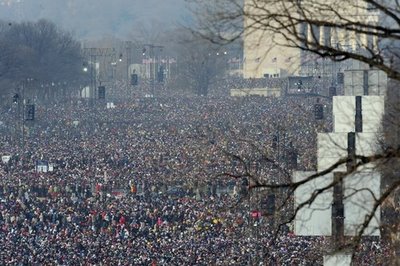

“In the midst of all this doom and gloom, it's hard to imagine it getting better... But keep in mind, what happens in strong downturns is there's a hefty pent-up demand. It's wrong to extrapolate these conditions for the next year or two."But Mr. Niemira is probably wrong. There is no pent-up demand. Americans have bought everything they’ve desired for the last twenty years. The over-spending and over-leverage will take a decade to unwind.
According to the ICSC, about 150,000 stores are anticipated to shut down in 2009, in addition to the 150,000 that closed in 2008 and 135,000 in 2007. Normally, 110,000 to 125,000 new stores open per year. At least 700,000 of retail jobs will be lost. The opening of new stores will grind to a halt in 2009.
The author is correct. We as a country are horrendously over-retailed. It doesn't take a Mathematics degree from MIT but it probably takes an MBA from the Wharton School to convince you it makes sense to figure that out. Dare I call it a recess(ion) of the ideological high tide of qualitative growth over quantitative. At some point, everyone being in debt can't possibly finance more stuff - without potential of future earnings - which doesn't appear to be on the horizon (on the whole) any time soon without some nationwide elbow grease.
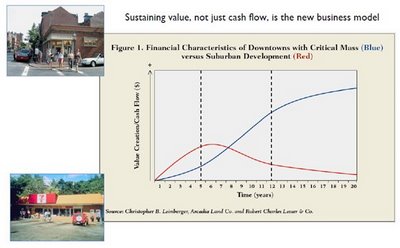
Why could this "restart" be such a good thing (for the purposes of this discussion, I'll keep it limited to retail format and its cause/effect relationship with urban form)?
For one, there will be a grand contraction (Ya think so professor?). Retailers will prune back their stores, there business models will shrink and that will open room for smaller and start-up businesses to find their niche.
Second, retail still requires synergy of other retailers. To borrow a term, it is about complementarity. That is, the synergy created by complementary uses. For retail, they need other retailers, large and small, usually best coordinated via a business partnership.
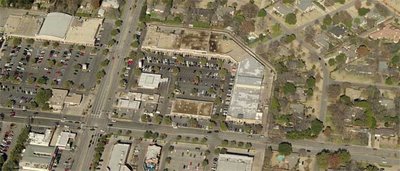
They ALSO need people and this happens in two ways: 1) via nearby residents, i.e. "live above the shop" and mixed-use buildings/neigborhoods, and 2) the spatial relationship to the "movement economy." You see it all the time currently, except that movement is typically always via car, on roads built solely for the car, which means they are hostile to any other form of transportation and, in turn, actually repel visitation.
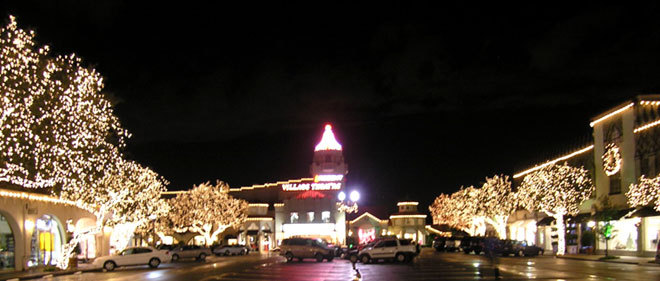
[Does this look like a place you want to be?]
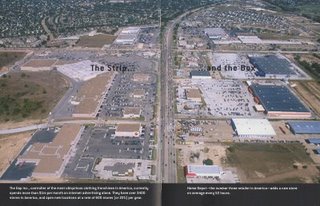
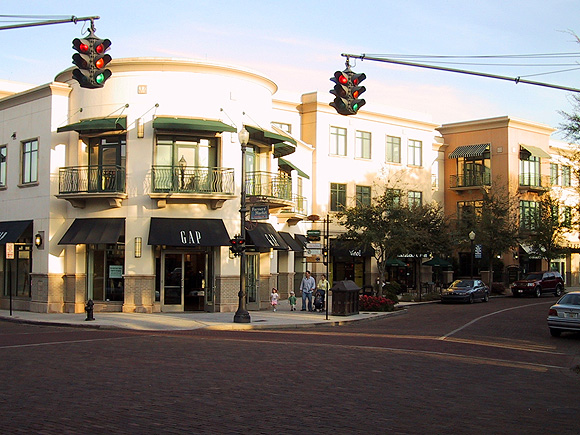

This one-time wave of funding will do one of two things: it will further entrench a broken system, or it will begin to build a new and better one. In the next six years, we'll either dump hundreds of billions of dollars into highways, roads and bridges or we'll begin to revitalize our communities and transform our economy. Sprawl or urban renaissance? That's ultimately the choice we have.Boston.com: The End of Bilbao Decade.
All that fever now feels passe. Architecture students, I'm told, are more interested in so-called "green architecture," work that responds to the global crisis of climate and resources, than they are in artistic shape-making. They're interested in urbanism, in the ways buildings gather to shape streets and neighborhoods and public spaces. They research new materials and methods of construction. Increasingly, they're collaborating with students in other fields, instead of hoping to produce a private ego trip.I'm not sure who "told" the author this, but if it is more than mere speculation, I am imbued by the generation of Millennial architects that "get it."

 Posts
All Comments
Posts
All Comments