Showing posts with label Crowd Sourcing. Show all posts

Tuesday, May 18, 2010

Hot or Not of Place: Addison Circle

Remember the instructions. We are looking for the subjective, the emotive. How does the place make you feel? We want to then compare findings of various places around the City with the objective, which I will use LEED-ND as a template.

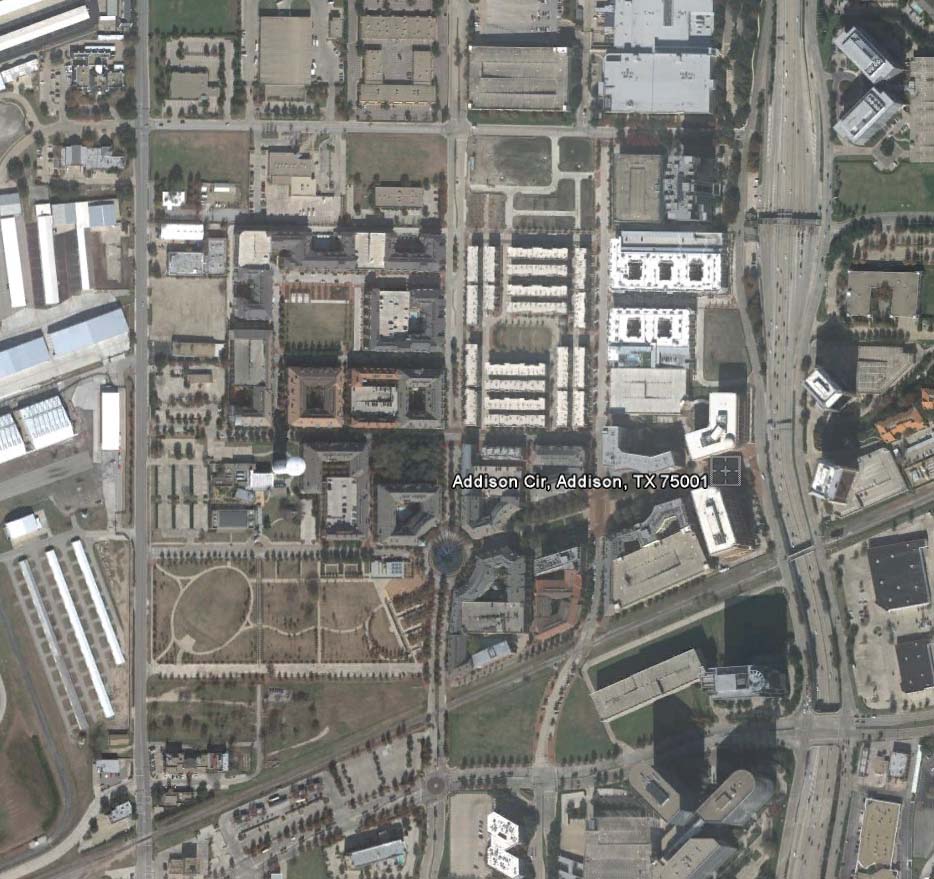
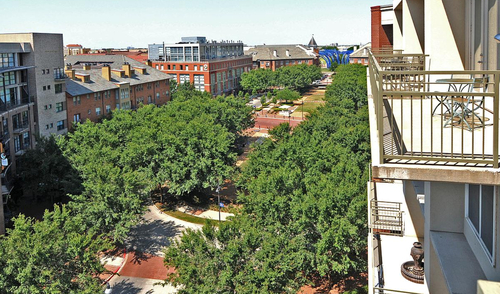
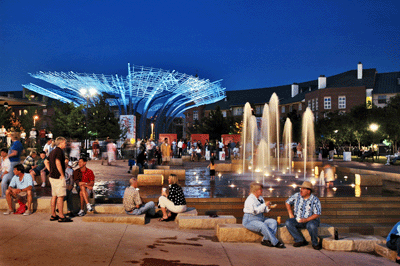
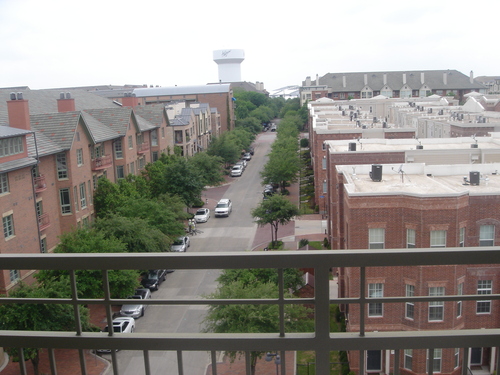
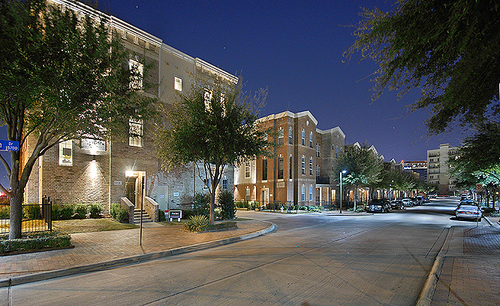
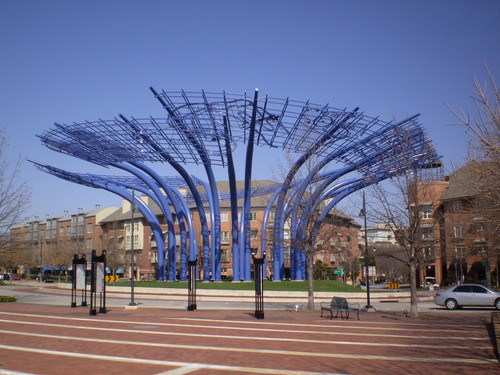
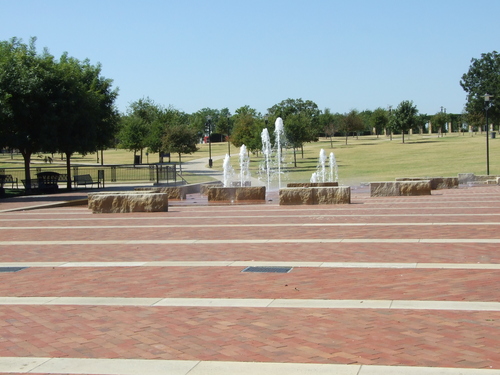
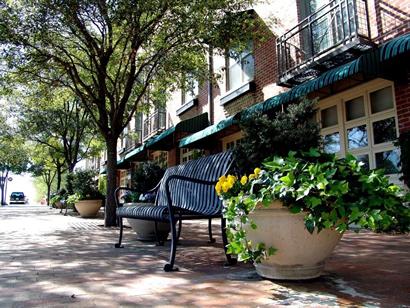
As background, Addison Circle is a development began in the late '90s in Addison, Texas by a City looking for a new "center of gravity," a place to hold their many yearly festivals. These include: Kaboomtown, Tastes of Addison, Oktoberfest, and others. In order to support those festivities, they decided to build a neighborhood to enjoy and take advantage of the open spaces necessary for hosting festivities. Having banned conventional garden-style apartments, the following imagery shows the end result.

What do you think? Give it a rating and what was done right? What could be better?


How Do You Rate This Development


NOT
1

2

3

4

5

6

7

8

9

10
HOT


Results


Another view from Aventura Condominiums


http://www.bslaweb.org/webart/AwardWinners2004/Addison-4.gif


View from the Aventura Condominium in Addison Circle

New Townhomes

Blueprints At Addison Circle

Untitled

Addison Texas Quorum Circle

Thursday, May 13, 2010

Hot or Not: Instructions

After seeking some council with all of you residing on the other side of this computer screen, I think the best way to go about this is to provide a simple 1 to 10 rating system where each of you can vote on each individual neighborhood or development around the metroplex. My hope is that this can give us a baseline for assessing the rights and wrongs of a place in comparison or contrast to various other places within the Metroplex. (I will probably occasionally include various ones throughout the country that might be similar to something we have here, i.e. LA Live vs. Victory)

After enough voting occurs, I will chime back in with what I believe was done right and wrong and what lessons we can all learn from the place for future reference.

What TO DO:
Rate the pictures of the place based on experience. How does the place make you feel within it. We want to take Apples and Oranges and find some commonality in a standardized scoring system. For example, if it is a great single family neighborhood it should rate highly.

We want to gauge the subjective. We want to measure the emotive capacity of a space. What I will do is run the neighborhood through the objective criteria established by LEED-ND for what a neighborhood in order to show (or not) the limited ability of the objective. My hope is that two places might rate equally high on LEED-ND, but have a huge disparity in a place's ability to emote, which is probably far more important and telling.

What NOT TO DO:
If you once lived there and had a problem with the landlord or your neighbor either abstain or try to put it out of your mind. If you have had architectural training, I'd like for you to try to turn that off as much as possible and focus on the quality and experience of the places between buildings. The places where cities are experienced and remembered.

I will try to incorporate a number of photographs to provide the full experience of the place. Try to look at the place through the eye's of a scientist, as if you are looking at what is under your nose for the very first time.

I've got a busy sched today, but I'll try to get the first one up as soon as I am able.

Thursday, May 6, 2010

Hot or Not

Shall I start a series focusing on the current buildings/places in Dallas and beyond?

Should it be a comparison of two buildings/places?

Should I open it up to a poll? Debate amongst the readers/commenters?

Or should I just make lists or rankings of the best (urban) buildings, streets, places around various parts of the city?

This is what is rolling around in the noggin right now.

Suggestions?

Tuesday, December 8, 2009

The Work of None or All

In this age where we're all so unskilled, under paternalistic, yet broke and and in turn feeble nanny states, I see a future for CrowdSourcing like this: DIY Cities.
DIY city
The city could be an open platform that connected citizen service-providers and problem-solvers with opportunities to serve. There would be a transparent database of needs of the community, and instruction or guidance on ways to help that situation. SeeClickFix is an excellent model of capturing and making needs transparent from which to build. Cities would extend this to include matching people with particular skills and availability with the right cause. For example, if there is a family that is struggling to care for its children while parents are working, other parents can offer to babysit for the hours needed. If there is a pothole reported, someone from the city can go fix it and report back. Tasks are also tagged related to required skills or experience.

So, there could be physical requirements (strength) and intellectual requirements (marketing) that help direct citizens towards the right kinds of tasks. There could also be an exchange or “trade” for services—e.g. trade babysitting for dog walking, plumbing for legal advice. The platform would go far beyond traditional city services, as this exchange and participation could become a way of life. Ultimately all citizens would have a complete and growing profile of their skills, experience, and contributions in a Facebook-like citizen social network paired with opportunity matching.

= self-empowerment. We have to become the change we wish to see. Frankly, my guess is that the age of the single career is pretty much kaput and people will be taking several odd and part-time jobs, which they might enjoy quite a bit more (variety, getting hands dirty, etc) rather than pushing paper in an office.

The people behind SeeClickFix asked me to put their link on my blog, while I like the idea, seeing that they are already tied to the DMN, I'm not sure my blog would reach that many more people.

Wednesday, October 7, 2009

New Competitor for WalkScore Enters the Ring

http://www.northjerseymusic.com/photos/bands/band-773.jpg

I've mentioned WalkScore on here before, here, here, and here; the rating service not unlike any search engine that applies proximate relationships of various businesses. We've discussed many of the limitations on those links and in the comments discussion, mostly dealing with WalkScore being a simple metric that measures nothing more than distance relationships but nothing of the quality of the walking environment, with the implication that if things are close together, it is obviously easier to walk from one place to the other, but are there sidewalks? Do you have to dodge bullets, Avi?

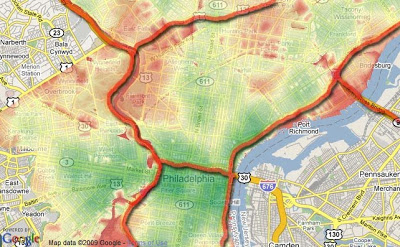
Well, a GIS company in Philadelphia has released the beta version of the next evolutive level in walkability metrics by applying various factors, individualized based on priority (crowdsourced?) and adds in necessary metrics of violent crime, illicit activity (not quite sure what that entails yet), etc. Essentially allowing visitors to apply their own livability factors to determine the most desirable areas for them. Meaning that the more of things you find in a livable community are in one place, the greener it will be. A higher quantity of things that detract from livability, then in turn detracts from walkability, and you get a red blob.

I highlighted the freeways in Photoshop to illustrate the correlation between walkability and factors that deter walkability, which I included at -5 violent crime and illicit activity. The only two areas that vary from this are UPenn (which has made significant investment in the areas around their campus to increase livability by way of mixed-use and housing opportunities - their enrollment applications have spiked as well) & 30th St. Station areas and along 676 (**thx to Dallas Progress for the correction -- when all else fails, I'm stupid and easily transpose concurrent thoughts) which is a sunken freeway near Old City, much less obtrusive than sunken freeways we have 75 and Woodall Rogers (hint: b/c Woodall Rogers rises after a few blocks on both sides). The red areas get much worst in South Philly along I-95 near the stadiums, port, airport, and other industrial sectors.


Anyway you slice it, the greenest areas are typically going to be Old City, Downtown, parts of South Philly, and Walnut Hill/UPenn. But, we already knew those areas were walkable.

Monday, July 6, 2009

Raise the Hammer: Crowd Sourcing and Gate Keepers

Interesting take.

Filesharing is a tragic missed opportunity for the music industry to dramatically extend its reach to potential listeners - and potential customers. Just as free radio play increased music revenue and cheap videos increased movie revenue, free or cheap music filesharing could also have increased music industry revenue - if the industry embraced it instead of resisting it.

Tuesday, April 14, 2009

Chicken Nuggets

Arianna at HuffPuff: Lot of good news in banking...but the important part to extract and apply outside of banking:
Unlike the big banks, credit unions are not owned by shareholders, who are looking for maximum quarterly profits, but by members, who are looking for stability and service. Since their goal is not to maximize short-term profit, credit unions by and large steered clear of risky subprime loans. As a result, their balance sheets could pass the Geithner stress test just fine.
Critical for a few reasons, 1) to bring into question the legitimacy and/or relevance of the modus operandi of publicly traded companies, 2) in the real estate industry this confirms my opinion to some extent that the scale of individual projects will be much smaller in the architecture and real estate industry based on lending ability of smaller banks (which is good) IF the redevelopment and rebirth of our cities is done as a series of many smaller projects leading to more regionalized, incremental, and if you will, fractal growth. And lastly, 3) how is this idea of long-term interest and cooperation applicable elsewhere?

Here is potentially one answer: Organic, Local Grocery Co-Ops.

Tuesday, January 6, 2009

Open Source Governing

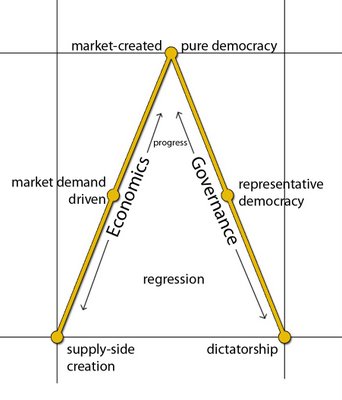
I've been noodling on this idea of CrowdSourcing today while at work and just trying to get my head fully around the dynamics and the direction that it is taking us and its relationship between business and governing. I guess this all stems from listening to Robert Kennedy Jr. once talk about the free and fair market is the most democratic form of economics. So, the two ideals are free and fair markets for economics and democracy (beyond representative democracy) of an educated and intelligent electorate.

Where are we on the path to those ideals and are they intertwined and interrelated, improved forms of self-organization?

But, if on one side we have a group, let's call it the market. And, on the other side of the room, we have an all-knowing individual. Let's call him the supplier. This doesn't sound terribly democratic [with the assumed caveat that self-rule is indeed the ideal]. In fact, this sounds closer to a economic dictatorship (benevolent or brutal). "You will buy what I give you" or in the benevolent case, "here ya go." Actually, it sounds very much like supply-side principles.

So, (obviously while skipping steps for the sake of rhetoric) the next step was to start focus groups and the like. Asking the market, "what would you like us to provide"? This is starting to sound like a democratically representative economics which is what we've known the most in this countries history with occasional lapses in both trade and governing towards the former.

Then, today I get emailed this. The Obama administration has said repeatedly that they plan on being the most transparent government in this country's history, blurring the gaps between market and supplier, source and end-user, by asking the country what topics and issues are most important to them and (presumably) addressing them eventually. This seems to me an excellent method of setting up a hierarchy of punch-list items (functionally useful) while maintaining a link between constituents and representatives, with governance following the ground-up movement towards a more democratic economic system (theoretical and improvement).

In a way, it seems like the internet is approaching the forms of Athenian democracy where everyone had a vote and Socrates ranted against for its inertia towards mob rule of the less-informed. The key adaptation (at least in this detail) however, is 1) there is still a seperation between mass and elected officials, but also 2) the very subtle inclusion of voting on the issues and questions raised allowing for the most pressing and prescient issues to rise to the top of the list.

Similarly, business models are popping up all over the place, all web-based b/c of the necessity for flexibility in organizing. YouTube replaces Television as Millennials begin to entertain themselves rather than fifty-something TV execs. We know that Millennials watch less TV than the preceding GenX, but internet consumption is up. They know what they want and they're doing it, rather than waiting to be spoonfed a bland, focus-grouped inferior entertainment product.

And, now we also have companies like Threadless, et al., allowing consumers to create their own product for a cut of the share. Fashion designers replaced by consumers. Everyone and anyone can be one; no longer some entrenched group hidden away defensing their way of life. In a way, it is approaching a perfect market for ideas to be tested where the best are naturally sorted to the top. As Neil Takemoto writes, this is the essence of the Creative (Class) Economy rather than the artist enclaves colonizing run down warehouse districts.
WikiUrbanism

I often write, sometimes here/sometimes in real publications, about the effect the new generation will have on urbanism. I remember when then GenY was thought to be some awful version of GenX on steroids. That the internet would creation a video game playing nation stuck indoors with the only human interaction online.

Well, as it turns out, like with any new invention/substance interjected into a society, there is a period of dislocation before that group of people come to terms with it, much like a drug. GenX overdosed, GenY adapted it to suit their needs. This is a generation that grew up largely isolated in suburbia, but thru nature or nurture is a very social creature.

I thought this excerpt from a post at CoolTown Studios effectively captures the essence of how the wave of open sourceware is effectively overlaid onto urban principles and meeting the social and physical needs of future American cities. As you can see, many of these are reactive measures to the oppressive monotonous, relentlessly corporatized nature of suburbia:
  • The buildings and streets will be environmentally-conscious. That means less of a priority for driving and parking.
  • Public spaces (as shown above) will be primary focal points, like portals on the internet where people gather.
  • People are increasingly embracing and thriving in diversity, and that means a greater variety of places and spaces, homes and workplaces.
  • Authenticity has returned as a primary value, and that translates to more local businesses and human-scaled buildings.
  • Public health is as big a concern as ever, with more emphasis on walking and biking.
  • People will be looking to connect to their friends more often, more spontaneously, like on Facebook, but in person.