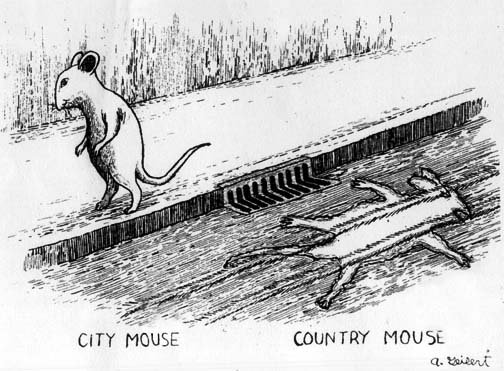
I love the idea of Democracy, how can you go wrong, right? It can even be a bumper sticker:
Self-rule? It's cool!In a world defined and shaped by memes and movements, there will always be a reductive competition of ideas, with the strongest surviving the test of time for the appropriate duration of their strength. People are merely conveyors and carriers of ideas. With enough support, it becomes a meme and certain people become the predominant agents of that idea, the representative. This applied hierarchy of competition and cooperation allows for a necessary reduction in memes, movements, or directions, without which, there would be no order.
Therefore, democracy in its purest form is somewhat of a biological impossibility (at least in our current evolutionary iteration), as it goes against nature, which will always nominate the better of two ideas, not both. History is essentially, the written documentation of the competitive lasting power and usefulness of various ideas or memes.
It has been said that the internet is democratic. It provides a potential medium for voice, knowledge, and access to an increasing number of individuals. What it really is, like any agents of democratization, is really an accelerant in the consumption and digestion of ideas in competition. Eventually, it is easy to see who deserves voice and who doesn't, as their message is eventually forgotten to the roadside of history. This is the kind of littering that I can believe in.
This applies to design as well. While input is critical, if you let every Joe Schmo and Jill Rabble dictate the details of a design, the design "representative" is no longer an expert, but an organizer, facilitator and arranger, attempting to wrestle with, and apply, some order to chaos. This is my theory of what happened to Main Street Garden. Of course, as most people miss in my post, I imply that since the "Urban Genotype," is in place, ultimately the place will prove a success no matter its current, malleable "phenotype."
------------------------------------
All of what I have just written, is in fact prelude to this article by Joel Kotkin suggesting that Phoenix, a Sun Belt city, should "put away its dreams of Gotham." One might think, that there would be some intellectual merit to this point. Is he suggesting that Phoenix apply time-tested principles of urbanism to its own local geography, climate, and material? No. In fact, Kotkin suggests that Phoenix strive to be more like Houston, the dreamland of pseudo-freemarketeers despite nothing being free-market about government sponsored highway construction, the ultimate dictator of Sun Belt city form.
What Houston has, like Phoenix he points out, is multiple centers and that New York is one big mass of shit apparently. What he doesn't or refuses to understand is that New York, like every other city in the world, is an amalgamation of an arrayed hierarchy of centers. Physically, the city is its defined by its metropolitan area first, of which Manhattan, Newark, Brooklyn, Queens, etc are all various elements, competing, collaborating, cooperating, and interacting and support local, regional, national, and international economies.
Within Manhattan, for example, there are then hundreds of centers that vary in scale from the neighborhood center, to regional centers, to Times Square, the crossroads of the world, which might be considered a national or international center.
The way these centers are organized physically and hierarchically (size/draw or magnetism), as well as interrelate, are defined by geographical elements (bodies of water), infrastructure (type of transportation system), and quality of place.
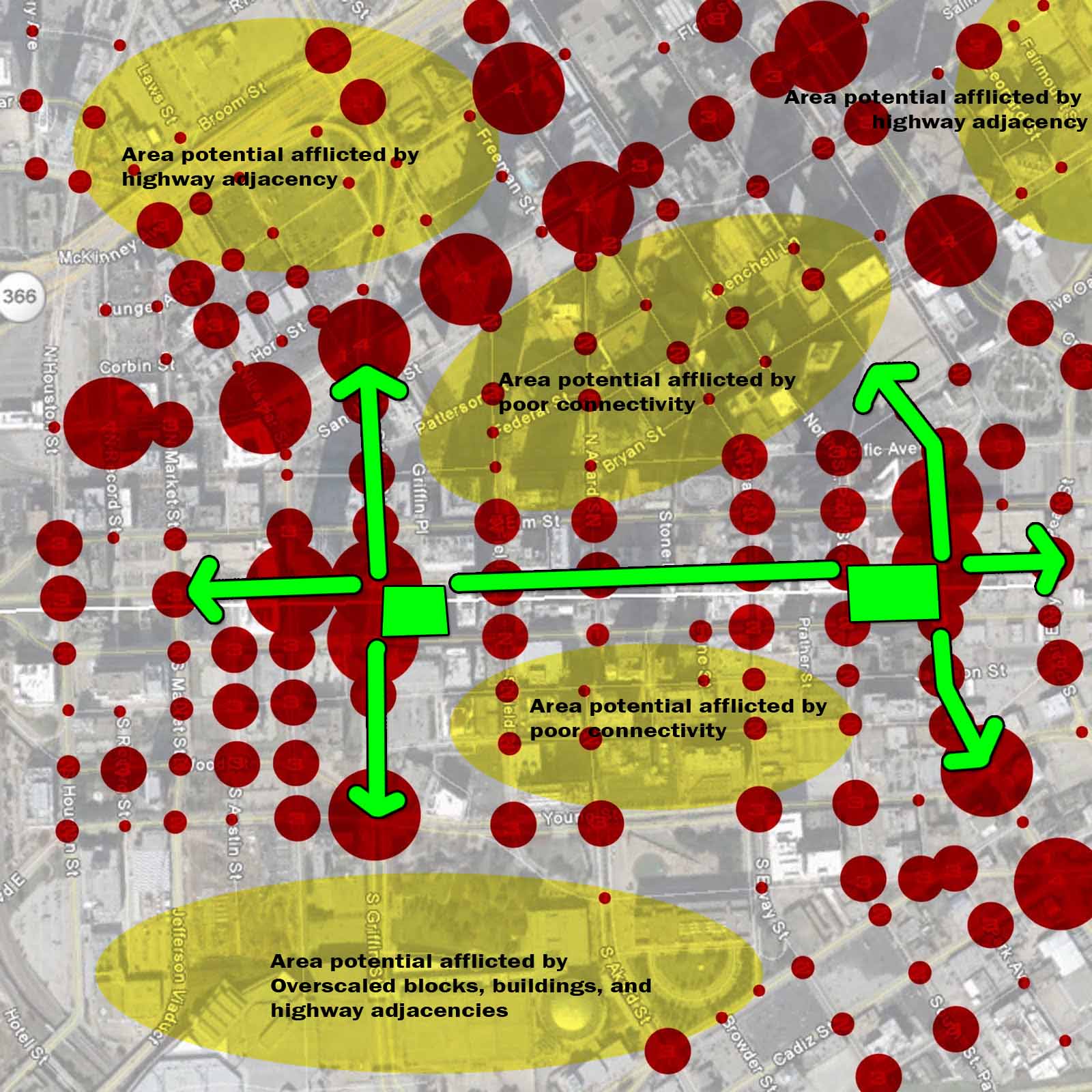
Historically, what people call the organic nature of classical and medieval cities, are really the amalgamation of different "centers." For Kotkin to say, Phoenix should be like Houston because it has multiple "centers" is ignorant of urban dynamics, perhaps willfully. The difference is the type and design of the infrastructure and transportation system of cities. Sun Belt cities are defined nearly entirely by the highway, and thus the distance between centers.
My guess is this distance (defined by highways) is what makes "centers" more differentiated and understandable for a mind that lacks an intuitive understanding of subtlety and distinction like Kotkin's. Unfortunately, that distance is the increment of every economic transaction that is crippling our economy: driving to a store, kids bussing to school rather than walking, lack of community, building new (empty) exurban neighborhoods, construction of highways thinking that supply is the way out of congestion.
All of these things are coming out of the wrong end of the digestion system of history.Or, perhaps he's just the paid mouthpiece for a highway lobby and road/auto industry that knows it is fighting a losing battle in the annals of human progress that has deemed their industry irrelevant for the 21st century city.
I feel certain that the citizens of Phoenix will eventually determine the most appropriate way to shape their city better than any advice that Kotkin can give them.






large.jpg)


 Posts
Posts