Showing posts with label Millennials. Show all posts

Monday, May 2, 2011

Millennials: Driving Just Ain't Cool

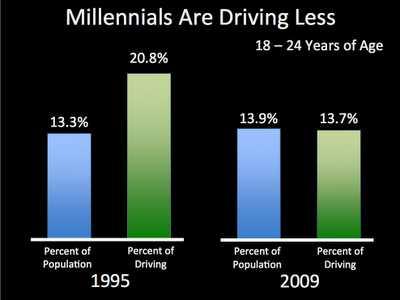
Andres Duany forwarded this to a professional list-serv, so I haven't found the source yet, but the point remains.

They're going to change our cities as drastically as the population bubble equal, the boomers. Many grew up in places where to get around at all, to any thing, anywhere, any friends, meant having a parent or guardian, aka chauffeur, drive them around. This is why there is a negative reaction from the demographic to cars. The more we fight it, the stronger the reaction will be.

At any one time, 50% of the population is either too old, too young, or too poor to drive, yet we build a world where no other option, but dependence. On cars, on others. Speaking for myself, when I was 13, 14, the bicycle was cherished. It meant freedom. Certainly not the school bus driver or waiting for mom to come home from work and the last thing she wanted to do would be to get back into the car after commuting to/fro.

And we're left with a situation where schools budgets are busted by bussing, police departments are spending time, money, man-hours on cruisers and regulating traffic rather than as integral parts of the community. Either of which could be spending the same money on, I don't know, salaries? More staff to help the cause?

Monday, December 7, 2009

The Life Raft

CoolTown Studios has an excellent post up describe the critical components of what many of our cities need, sun belt cities primarily, in the worst way.
Local, independent businesses on the ground floor. Not only do local businesses have four times the economic impact over nationals, but the entrepreneurs who run them are a key source for job growth. The ideal business in this building would be a third place restaurant/cafe/coffeehouse/lounge.
I've described something similar at this post:
we are working to develop a multi-family prototype geared to the needs of Millennials. It generally consists of smaller units, but more embellished common areas and amenities to accommodate their highly social nature and attract talented college graduates to Dallas.

A focus on urban infill housing and creating a more livable city will provide the foundation for getting out of this rut. The will is there, even if it is subcutaneous, but we also need leadership to guide us there through the darkness.

Tuesday, November 10, 2009

Your Neighborhood Sucks and Soon Your School Will Too

First, from Kaid Benfield's blog at NRDC, where he discusses ULI/PriceWaterhouseCooper's newly released emerging trends in real estate, and wouldn't ya know it. They got it right.
In the near term, the report advises investors to "buy or hold multifamily" as "the only place with a hint of hope, because of demographic demand" as a large contingent of echo boomers seek their first homes.
I've talked for some time about the demand of the "communitarian" generation, eschewing the conventional factors for relocation (jobs) for things like diversity, sense of place, URBANITY. Clearly, they are the demand driver that will pull us out of this mess. As I previously wrote:

Boomers are retiring and desire the type of freedom found in ideal “retirement communities” like the Upper East Side or Key West rather than being “warehoused” in an actual retirement village. Millennials want to escape similar confines of suburbia for more authentic and diverse (yet affordable) experiences and ways of life.

I often say that cities progress from being Viable to Livable and finally to Memorable. To the City’s credit, they are undergoing several projects that would register as “memorable,” in some cases admirably so, but we still have not yet achieved livability (the hard part) in downtown (and this coming from a downtown resident).

We just need to put our brains together to make the numbers work for smaller residential space per resident (efficiencies or roommates) while getting land values and expected returns by current land owners back into the realm of practicality.

Interestingly, the report even arrived at conclusions that I had expected but not yet seen evidence of, at least locally, :
The report even questions the continuing supremacy of suburban school systems, noting that increasing numbers of them will start to falter as their supporting tax bases decline.
This is, of course, completely logical, as suburban schools are forced to compete for municipal dollars for their own student transportation infrastructure necessitated by the very thing they're competing against, the upkeep of overextended infrastructure for a too sparse (and increasingly less rich) tax base.

Conclusion, not everybody can afford all of those suburban houses that we've built. And, we're seeing that reality played out before us. As mentioned before, the demand for positive urbanity, which will create more localized and efficient economies, is there. We just have to define and overcome all of the barriers to the delivery of the supply to meet the demand.

Monday, July 6, 2009

Sprockets Prefer Communism

Obviously, American millennials don't share a similar history as these East Germans, but this is one worry that I have: swinging the pendulum too far in the opposite direction. In this article, Der Spiegel discusses the causes and implications of the primarily young East German led re-emergent preference for Communism:
His verdict on the GDR is clear: "As far as I'm concerned, what we had in those days was less of a dictatorship than what we have today." He wants to see equal wages and equal pensions for residents of the former East Germany. And when Schön starts to complain about unified Germany, his voice contains an element of self-satisfaction. People lie and cheat everywhere today, he says, and today's injustices are simply perpetrated in a more cunning way than in the GDR, where starvation wages and slashed car tires were unheard of. Schön cannot offer any accounts of his own bad experiences in present-day Germany. "I'm better off today than I was before," he says, "but I am not more satisfied."
Naturally, I believe that capitalism, when done right, is the most democratic economy, but typically the bottom-up democratic version gets overwhelmed by cycles of business growth and monopolies. Thus, corrupting markets and showing protections are necessary.

As we know, Millennials are communitarians. The opposite of the more defensively individualistic Baby Boom generation. But, this is a pretty fascinating case of people, often not old enough to remember the Berlin Wall, concocting a fake history because the current system has abandoned them rather than simply fixing the system to adapt more appropriately to their needs.

Of course, if fixing the system were so easy, we would have been able to accomplish it already.

Friday, April 10, 2009

Downsizing

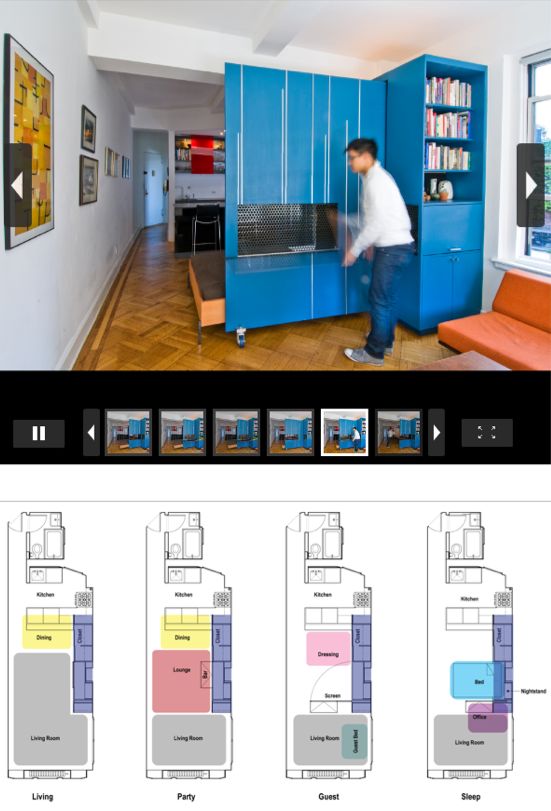
TreeHugger: Small Apartments w/ Big Impact.

Based on my Millennial presentation, we've been doing a lot of work developing a prototype for Millennial housing, a generation that can't afford to live in the City but desire to do so. So how do we make it affordable? Well, one way is to shrink the unit size and maximize spatial efficiency. The residential architects have been taking clues/inspiration from Cruise Liners and First class cabins.

TreeHugger here is focused more on specific unit types, whether it be pre-fab or standardized layout for maximum flexibility. My favorite for immediate practicality and use of the swing out screen and murphy bed:


My WTF moment for, sure you devised a foldout living space, but where the hell am I going to put it, how do other units relate to it, where are the utility hookups, and WHY THE EFF IS IT ALL BLOBBY AND SWIRLY?! Give it up already.

Friday, March 6, 2009

Friday Morning Links

Majority say Mortgage Plan Unfair.

Majority also didn't read nor understand the plan. Majority of journalists are lazy and under-qualified.

Freakanomics Blog: Planners and Architects weigh in on CarFree NYC
.

WTF. Okay, I can live with Sam Staley being included to provide a countervailing voice. But, Randal O'Toole? Has this guy been right on anything?! If you don't feel like reading it, O'Toole takes the patronizing tone that we should all be ready for businesses to fail. IN TIMES SQUARE!

They said the same thing about Copenhagen when they started closing roads. The density and activity is already there. This only enhances the pedestrian experience thus making it more amenable to businesses. Yes, pedestrian malls failed in the States, but only b/c when they were instituted in the 60s, the exodus had already begun.

Oh, and did I mention that O'Toole's backing comes from the money earned by car dominance?

When did the media decide that both voices should always be heard in equal parts no matter how asinine one side or how in the minority that side is? Perhaps we should have a debate like the survey from Flight of the Conchords: Are you Pro-AIDS or Anti-AIDS?


Millennial Survey. Take the time, help out a friend of a friend.

Dallas is 4th most congested city. But, to once again clarify (which this doesn't), there is good congestion and bad congestion. For example, NYC, Chicago, and DC surround Dallas.

Unsustainable Humanity? Does economic growth have to slow to prevent catastrophe? I disagree. The wrong kind of economic growth, based on land consumptive and/or destructive practices has to slow. Qualitative growth: energy efficiency, clean energy, and infill are the markets that can support new growth and expansion. As McDonough says, it's not about being "less bad," it is about building a world where being "more good" means more profit.

Thursday, March 5, 2009

Watch the Millennials Assert Themselves...

...and Republicans lose ground in every cohort by 2008:


Friday, February 20, 2009

OpEd to the DMN

We'll see if it gets published:

It is true that it is a sad time for the economy and all of us these days, but I see reason for optimism around the corner. It’s just going to take some introspection, some creative thinking, and good old fashioned elbow grease.

As an urban design professional in Dallas, I get a chance to interact daily with business leaders from architects to brokers, developers and lenders; all of whom are feeling the pinch in the current economic stasis. It seems that the prevailing opinion is that if we wait awhile, everything will spring back to “normal” like previous burst bubbles that DFW has endured in the last thirty years.

And why not, there are merely going by experience and it is true that Dallas is one of the ‘boomier’ and ‘bustiest’ [sic] cities that I have known. I like to joke that this trend is represented by the current iteration of the city skyline, with high highs, low lows, and very little in between.

I am writing to tell you that we will come out the other side completely different. I expect a tidal shift on the scale of the industrial revolution driven by necessity and changing demographics. The magnitude of the tectonic shift is evidenced by the current intensity of the growing pains.

The last 80 years have been a great ride for this country, but what has made it great is our ability to adapt to changing times. The growth witnessed during this period was one based entirely on cheap energy, sun baked for millennia and fossilized underground and the real estate development directly associated with it.

However, we know that we can not grow outwardly forever given the finite nature of this energy source. And perhaps more importantly, based on the recent Pew Research Center study, we don’t even like the end results of this development: Americans are unhappy with their cities.

We need to recalibrate our thinking from quantitative growth to a model of qualitative growth, improving what we already have. What this means for Dallas is that we must begin to focus on quality of life improvements, reinvestment in the core (the “face” of any city), selective infill in and around downtown and within walkable distances from transit.

The market is there. The two largest population bubbles in American history, the Baby Boomers and the Millennials (approximately ranging in ages from 8-30) are both looking for quality in-town housing and interesting urban places.

Boomers are retiring and desire the type of freedom found in ideal “retirement communities” like the Upper East Side or Key West rather than being “warehoused” in an actual retirement village. Millennials want to escape similar confines of suburbia for more authentic and diverse (yet affordable) experiences and ways of life.

I often say that cities progress from being Viable to Livable and finally to Memorable. To the City’s credit, they are undergoing several projects that would register as “memorable,” in some cases admirably so, but we still have not yet achieved livability (the hard part) in downtown (and this coming from a downtown resident).

At RTKL, we are working to develop a multi-family prototype geared to the needs of Millennials. It generally consists of smaller units, but more embellished common areas and amenities to accommodate their highly social nature and attract talented college graduates to Dallas.

A focus on urban infill housing and creating a more livable city will provide the foundation for getting out of this rut. The will is there, even if it is subcutaneous, but we also need leadership to guide us there through the darkness.

Always Two-Steps Ahead

But, never paid attention to. *Sigh*

Andrew Sullivan has been chronicling a growing debate of the overlap between "liberals" and "libertarians." I add quotation marks, because I question whether these words still have any meaning, having been stretched too far to encompass individuals who don't even come close to resembling the original intention of the parties.

I have been saying this for years - however, I'm not sure that I have yet chronicled it in the millions of words already on this blog in the 8 months it has been up and running. But, I prefer the terms progressives and social libertarians. I consider myself a leftist libertarian in the mold of Thomas Jefferson, not a bad model IMO.

I think we are seeing this "coming together" in the form of the Millennial generation. They are socially very liberal, i.e. libertarian, but are seeing the utterly corrupted end state of a completely deregulated free-market economy. We just need a similar takeover of ideals and solution-oriented togetherness in the Senate that we have seen in the White House and are seeing in the House of Reps.

It's clear that a free (and fair) market system is the most democratic. I know I'm ready to compromise with free market libertarians and I'm pretty sure I can make the socially beneficial case for free higher education, single-payer healthcare (cheaper for preventative reasons - sorry insurance companies), and strict enforcement of anti-trust laws. I'm even willing to step back from my living wage stance to help accommodate. If we maintain many smaller businesses, I think we can begin to flatten the obscene wealth gaps in this country and begin to restore the middle class.

Now only if we can get a new round of low-interest small business loans for startups for all the architects and everybody else currently out of work (to be timed with the cash flow from the initial stimulus plans). As Muhammad Yunus has shown, everybody possesses the entrepreneurial gene (only few have the means to do anything about it), not just the few barons of industry exemplared in times of extreme centralization...which incidentally always seem to lead to a crash!

Tuesday, February 10, 2009

Generational Update

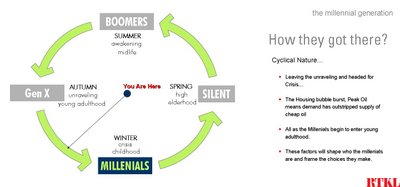
I noticed a spike in hits today on the ppt regarding the Millennials I posted. The date I put it up on this site was 9/22/08. The date the economy nearly collapsed was 9/18/08, however when I originally did this as part of a study for how Millennials will change the housing market was back in July '08.

I think it is safe to say that this particular slide could be updated and we are in full-fledged panic mode:

Tuesday, February 3, 2009

Yet Another Sign of the Changing of the Guard?

Obama and basketball, not quite the global game, but close. Definitely, the urban game of the people.
Presidents have often played sports. Teddy Roosevelt liked to ride in Rock Creek Park and exercise vigorously. Eisenhower played golf. Richard Nixon bowled (and had an alley installed at Camp David). Jimmy Carter famously jogged. Clinton jogged and played golf but never tried basketball again as president. George W. Bush rode his mountain bike and had a daily workout. But these were all relatively solitary (or perhaps elitist) sports. Basketball is more social -- an urban game -- and it has become a truly global sport. For years, Michael Jordan, not the U.S. president, was the best known American in China. World class players from all over the globe try to make the NBA. Having a U.S. president who is a serious hoopster is great public diplomacy -- but the man needs a decent place to play. The current outdoor court on the White House grounds doesn't cut it.

Tuesday, January 20, 2009

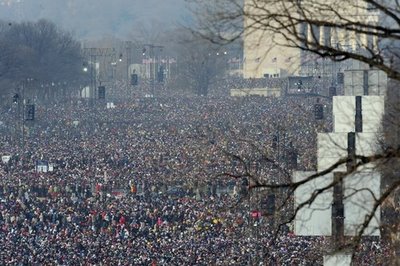
A New Era of Responsibility

"...the stale political arguments that have consumed us for so long no longer apply. The question we ask today is not whether our government is too big or too small, but whether it works - whether it helps families find jobs at a decent wage, care they can afford, a retirement that is dignified. Where the answer is yes, we intend to move forward.

Where the answer is no, programs will end. And those of us who manage the public's dollars will be held to account - to spend wisely, reform bad habits, and do our business in the light of day - because only then can we restore the vital trust between a people and their government. "
Now President Obama dancing with both sides of the aisle during his inaugural address before landing on an entirely higher plane than the petty discourse of the previous generation of politics. This is his power.

See the full transcript, here.

Monday, January 19, 2009

Of Knowing the Path and Walking the Path

WorldChanging takes on Obama's choice for Transpo Secretary, that is considerably less optimistic (and probably more accurate) than mine:
This one-time wave of funding will do one of two things: it will further entrench a broken system, or it will begin to build a new and better one. In the next six years, we'll either dump hundreds of billions of dollars into highways, roads and bridges or we'll begin to revitalize our communities and transform our economy. Sprawl or urban renaissance? That's ultimately the choice we have.
Boston.com: The End of Bilbao Decade.
All that fever now feels passe. Architecture students, I'm told, are more interested in so-called "green architecture," work that responds to the global crisis of climate and resources, than they are in artistic shape-making. They're interested in urbanism, in the ways buildings gather to shape streets and neighborhoods and public spaces. They research new materials and methods of construction. Increasingly, they're collaborating with students in other fields, instead of hoping to produce a private ego trip.
I'm not sure who "told" the author this, but if it is more than mere speculation, I am imbued by the generation of Millennial architects that "get it."

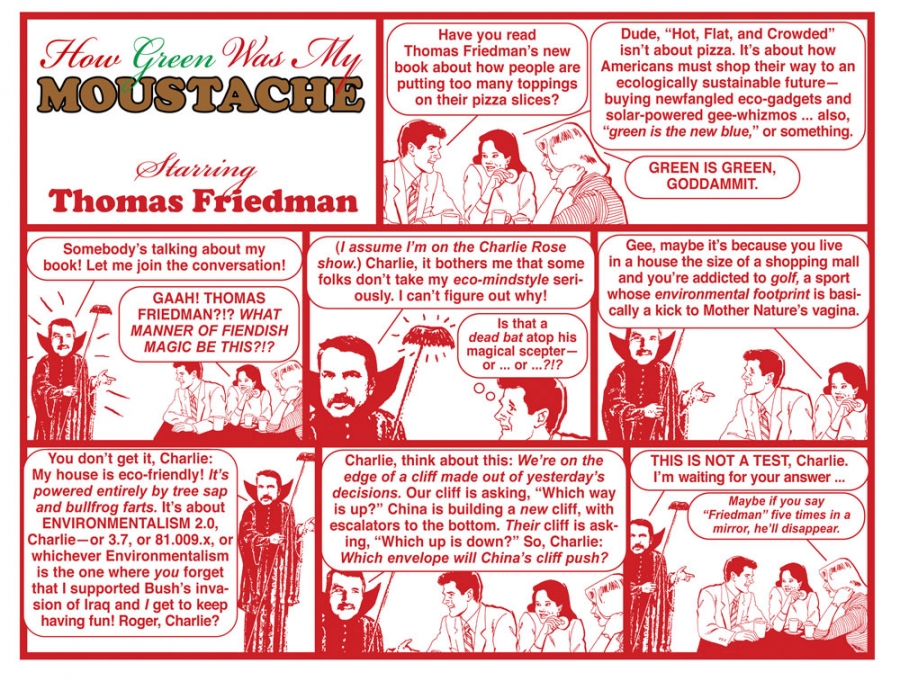
And lastly, I rather enjoyed this critique of the notorious front-runner, Thomas Friedman.

Wednesday, January 7, 2009

FORWARD Article

I hope that I'm not jumping the gun, but here is the rough cut of the article (with some later minor tweaks that occurred after editing...well, just because I was unhappy with a few phrases) that will be published on Jan. 22, 2009 in The AIA National Associates Committee's Quarterly Editorial Online-Journal, found here [Link]:

Full disclosure: I am not an architect. But, I did stay at a Holiday Inn Express last night. Actually, I just work for an architecture firm, in the Urban Design and Planning Group. I am writing because I have shared interests in sustainability and generational studies and believe these topics to be interdependent and intertwined. The point of this article is to discuss how the Millennial Generation will drive the architecture and sustainable urbanism of the 21st century and how the real estate market is failing them and architects and designers must deliver it for them.

Before moving forward with this thesis, it is critical to understand a few things about generational studies. First, generations are cyclical. Characteristics cannot be linearly extrapolated from one generation to the next. Rather, they are mostly reactive to previous generations. Next, there are always outliers and anomalies. The key is to focus on trends and find the statistical mean or center of gravity of the cultural shift.

Now, who exactly is a Millennial? Academics like to assign specific age brackets and birth years to define and identify generations. They bicker over whether they were born in 1977 or ‘82; 1994 or ‘96. I prefer to focus on epochal shifts - moments in history that define them - as people - as a group. So I will define this cohort as individuals graduating college post 9/11 at the oldest extreme and those involved in the historic 2008 presidential election at the youngest. Anecdotally, I have heard too many stories of eleven, twelve, or thirteen year old volunteers. They are active, involved, informed, and the largest generational cohort in American history.

If there is one word to best describe the Millennials, it is that they are communitarians. Millennials are team players, working better in groups than individually. They have redefined the internet’s networking capabilities while maturing along side of it, with the creation of YouTube, Facebook, Flickr, etc. proving the internet would not replace community leading to a world of plugged-in shut-ins, but serve as a tool to build and maintain relationships.
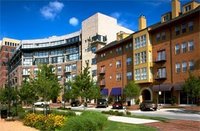
[Common areas and public spaces take precedence when designing for Millennials. Pictured: Addison Circle where each building faces a park. Image courtesy of RTKL.]

Their chosen fashion is about subtlety, details that give a hint of individuality without shock or rebellion. As Nadira Hira writes in Fortune, “this isn't a group you'll catch in flannel. They're all about quiet kitsch - a funky T-shirt under a blazer, artsy jewelry, silly socks - small statements that won't cause trouble. The most important decorations, though, are electronic - iPods, BlackBerrys, laptops - and they're like extra limbs.”

You have heard of Generation Me, say hello to Generation We.

In Millennial Makeover, Morley Winograd and Michael D. Hais describe the two types of realignments -"idealist" and "civic"- that have alternated throughout the nation's history. From pop culture, to fashion, to the historic turnout of 18-29 year old voters this election suggests that Millennials are beginning to come of age; seizing the mantle from the Baby Boomers, defining the collective consciousness.

The tidal shifts are not isolated to politics or pop culture. Our cities, the places that house us, provide platform to live, learn, love, interact, and transact, are also at the tipping point. They are lacking real urbanity. The real estate community is supposed to deliver what the market demands. But, according to Chris Leinberger, only 3% of Americans live in walkable urban communities, while 30% said they would like to join them. That is some serious pent up demand.

Millennials grew up in suburbia; bland environments dependent on others for mobility. They are entering the adulthood seeking lifestyle: vitality, diversity, and community. But, Millennials are not the only ones who will be driving this sea change from suburban to high quality urban environments. Baby Boomers will be retiring by the boat load. Retirement communities in their current form resemble warehouses more than they do the most desirable of retirement “villages”: real communities where retirees can be independent and empowered, such as the Upper East Side and Key West.

[Millennials meeting at a "Third Place." Stock image courtesy of RTKL.]

The paradigmatic issue is that the world constructed between 1950 and 2000 is one of planned obsolescence, of consumption. We have overspent, so retailers (and similarly, homebuilders) over provide products. Combined with a more frugal younger generation, a vast shift in urban form is required; scaling back and relocalizing in conjunction with relocation of the “market” where transactions occur in places that fulfill the social needs of the new generation. Driving to the mall is no longer as convenient (or desirable) as heading to third places: the corner store, the coffee shop, the local pub.

I recall the overly simplistic, undergraduate argument whether Architecture was an art or a science. Certainly, it is both, but art reflects its place in time. Architecture in the 21st century will be as different as the Millennials are from the Boomers. They are doing whatever it takes to get into interesting, urban environs at a time when it is hardly affordable for them. They are moving into “micro” units, taking on roommates, and more willing to live in multi-generational households.

Like society, the architecture profession is at a similar transitional stage as Generation We, the communitarians, and sustainable urbanism struggle to take center stage from the attention seeking, entirely self-referential architecture and high tech gadgetry posing as sustainability as if it is some sort of fleeting fashion, temporarily en vogue. These are postcards, nothing more.

We have to all become less specialized in our individual professions, under one umbrella, each as city builders with a common cause focused on placemaking, which becomes more than series of stills, greater than the sum of its parts. It becomes drama. Only through Architecture of the We, not the Me, can we design and begin to rebuild our cities as stimulating places for the next generation and achieve real sustainability.


Recommended Reading:

Farr, Douglas. 2008. Sustainable Urbanism: Urban Design With Nature. Hoboken, NJ: Wiley.

Greenberg, Eric, and Karl Weber. 2008. Generation We: How Millennial Youth are Taking Over America and Changing Our World Forever. Emeryville, CA: Pachatusan.

Hais, Michael D and Morley Winograd. 2008. Millennial Makeover: MySpace, YouTube, and the Future of American Politics. New Brunswick, NJ: Rutgers University Press.

Hira, Nadira A. “Attracting the twentysomething worker. The baby-boomers' kids are marching into the workplace, and look out: this crop of twentysomethings really is different.” Fortune, May 15, 2007. http://money.cnn.com/magazines/fortune/fortune_archive/2007/05/28/100033934/

Howe, Neil and William Strauss. 1997. The Fourth Turning : an American Prophecy. New York: Broadway Books.

Howe, Neil and William Strauss. 2000. Millennials Rising: The Next Great Generation. New York: Vintage Books.

Leinberger, Christopher. 2008. The Option of Urbanism: Investing in a New American Dream. Washington, DC: Island Press.

Nasser, Haya El. “Less is More in New Housing: Young Renters and Buyers Seek Small Spaces with Big Appeal—and Luxury at a Lower Cost.” USA TODAY, December 5, 2008. http://www.usatoday.com/printedition/news/20081205/tinypads05_st.art.htm

Zogby, John. 2008. The Way We’ll Be: The Zogby Report on the Transformation of the American Dream. New York: Random House.