





Showing posts with label Peak Oil. Show all posts
Showing posts with label Peak Oil. Show all posts
Thursday, May 27, 2010
LAST THOUGHT 4 THE DAY
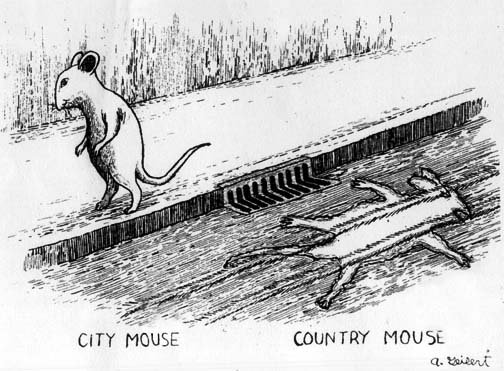
The North Sea produces oil too, but you don't see Scandinavia gettin' high off their own supply.


Tuesday, April 13, 2010
Not Monday So Much Anymore Linkages
Links and articles of the day that I thought were particularly relevant or interesting for you to peruse and ponder while I realize that Twitter has become my fully customizable morning newspaper:
"Sometimes Life Just Gives You a Moment." ~ Lester Freeman.
I told you that I'm going to start reintroducing The Wire references into as many posts as possible, particularly now with Treme garnering the kind of early buzz that the greatest show in the history of television never got.
With that said, here is my moment. Yesterday, I talked about juxtaposed contrasts in the example of street art as expressed by the community in they way of a guerrilla not-so-hostile takeover of a street into a complete street. Ironically and coincidentally, the DMN covers the polar opposite, the Garland Road plan:
This is 90s and early 2000s style urban planning and economic development, not unlike the Trinity River Tollway, adding more supply of traffic volume, telling people its going to make their lives better, improve traffic (as we know only temporarily), improve economic development (when we know road widenings do the opposite), then have some anonymous "urban planner" come in and dress it up with some pointless landscaping, sidewalks, and "catalyst projects" aka road side attractions that have to be heavily subsidized by the City in order to make them work and overcome the barriers imposed by the problem they are futilely trying to solve with another problem; the core project, the road widening.
Since the article never actually says, I am being quite liberal with my interpretation, but a little birdie told me a while ago this project was a ruse to widen Garland Road and dress it up with lots of rainbows and unicorns, all costs and no bang for the buck. If it isn't a widening the point still stands that the street section should be context-sensitive and respond to place rather than formula.
On the otherhand, with some cheap and creative efforts, X+ is stimulating bottom-up economic development and readying and otherwise erstwhile area for increased investment from outsiders formerly afraid of crossing the Trinity River with their dollaz.
------------------------------------------
Speaking of Ponzi schemes and suggestive that I've been right all along (or its just another confirmation bias) to avoid the moral hazards of doing work in Dubai and (this time) China, is an article with some of the worst formatting, but best content you'll find:
"Sometimes Life Just Gives You a Moment." ~ Lester Freeman.
I told you that I'm going to start reintroducing The Wire references into as many posts as possible, particularly now with Treme garnering the kind of early buzz that the greatest show in the history of television never got.
With that said, here is my moment. Yesterday, I talked about juxtaposed contrasts in the example of street art as expressed by the community in they way of a guerrilla not-so-hostile takeover of a street into a complete street. Ironically and coincidentally, the DMN covers the polar opposite, the Garland Road plan:
Residents made it clear that they don't want Garland Road widened, but they want it to flow better.Let me translate: The residents deep down know better, but are resigned to the fact that some "expert" in traffic flow (and nothing else relevant to actual urban design, economic development, or city building) made the call beforehand that this was a site for road widening with a single section and are convinced by his traffic bible and technical jargon.
This is 90s and early 2000s style urban planning and economic development, not unlike the Trinity River Tollway, adding more supply of traffic volume, telling people its going to make their lives better, improve traffic (as we know only temporarily), improve economic development (when we know road widenings do the opposite), then have some anonymous "urban planner" come in and dress it up with some pointless landscaping, sidewalks, and "catalyst projects" aka road side attractions that have to be heavily subsidized by the City in order to make them work and overcome the barriers imposed by the problem they are futilely trying to solve with another problem; the core project, the road widening.
Since the article never actually says, I am being quite liberal with my interpretation, but a little birdie told me a while ago this project was a ruse to widen Garland Road and dress it up with lots of rainbows and unicorns, all costs and no bang for the buck. If it isn't a widening the point still stands that the street section should be context-sensitive and respond to place rather than formula.
On the otherhand, with some cheap and creative efforts, X+ is stimulating bottom-up economic development and readying and otherwise erstwhile area for increased investment from outsiders formerly afraid of crossing the Trinity River with their dollaz.
------------------------------------------
Speaking of Ponzi schemes and suggestive that I've been right all along (or its just another confirmation bias) to avoid the moral hazards of doing work in Dubai and (this time) China, is an article with some of the worst formatting, but best content you'll find:
His 1999 book, Devil Take the Hindmost: A History of Financial Speculation, examined past speculative manias. Perhaps you've read articles comparing the tech boom and 1990s' bull market to tulipmania in 1630s' Holland.
The difference is that Chancellor was making that comparison before the tech bubble burst, some years before Alan Greenspan claimed it was futile trying to predict bubbles at all.
Chancellor's timing may have been fortuitous. To accurately predict something once might mean little. To repeat the feat perhaps means something more.
His next major piece - Crunch time for credit: An enquiry into the state of the credit system in the United States and Great Britain - included this prescient paragraph:
''The growth of credit has created an illusory prosperity while producing profound imbalances in the British and American economies...When credit ceases to grow, the weakened state of these economies will become apparent.''
That report was written in 2005, years before the credit bubble burst. Chalk two up to Chancellor.
Third time lucky?
He's now turned his attention to China, a fertile ground for his fertile mind. Released last week on the GMO website, China's Red Flags is split into two parts.
Crisis checklist
Section one identifies speculative manias and financial crises, offering a checklist for those trying to identify bubbles in advance of their bursting. Chancellor offers 10 criteria for what he calls ''great investment debacles'' over the past 300 years (the report explains each in far more detail);
1. A compelling growth story;
2. A blind faith in the competence of authorities;
3. A general increase in investment;
4. A surge in corruption;
5. Strong growth in money supply;
6. Fixed currency regimes, often producing inappropriately low interest rates;
7. Rampant credit growth;
8. Moral hazard;
9. Precarious financial structures;
10. Rapidly rising property prices;Although all these criteria need not be present in order for a bubble to be present, you can see where Chancellor's heading: not-so-subtly steering readers towards his own conclusion. In section two he takes each factor and applies it to the case of China.
Invest locally in places that are ripe. Like X+ and Bishop Arts. Of course, then my next piece of advice to residents of Oak Cliff is to be sure to pay attention to any and all zoning cases (particularly Davis Street) and be sure to fight for everything retaining a human/pedestrian scale. Everything between Davis and Jefferson is solid gold right about now and then in 10 to 15 years, look towards the Zang Triangle.
--------------------------------------------
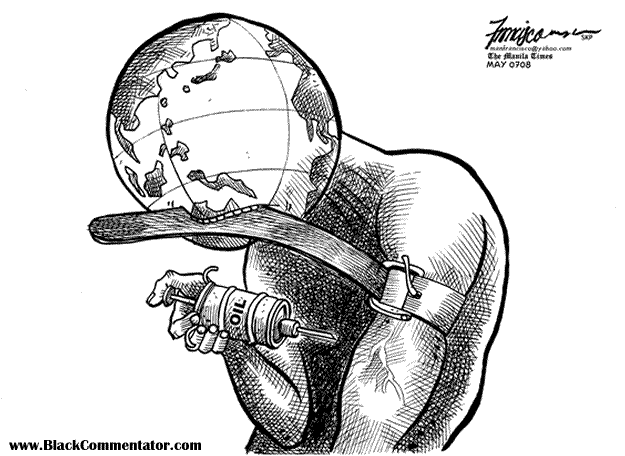
And lastly, and perhaps most importantly is the dual-purpose post from the Guardian supporting the fact that we have to look beyond our borders for news as important to us as THE US MILITARY AND LARGEST GASOLINE CONSUMER IN THE WORLD IS WARNING OF PEAK OIL and major shortages worldwide in 2015. Of course, we'll go all willy nilly about this and do things as stupid as the king of stupid supply-side city thinking, the Detroit Convention Bureau trying to prop up economic development with more supply side factors like increasing their convention center, such as digging through Canadian Tar Sands and widening Garland Road.
Tuesday, November 10, 2009
Post Monday Linkages
Kunstler discusses the eventual collapse of the Rube-Goldberg machinery of all American institutions and the potential outcomes:
Reality unfolds emergently, and this ought to interest us. For instance, I have maintained for many years that we are approaching the twilight of the automobile age - and the implications of this for daily life in the USA are pretty large. For a long time, I had assumed that this change of circumstances would proceed from our problems with the oil supply. But reality is sly. It has thrown two new plot twists into the story lately. America's romance with cars may not founder just on the fuel supply question. It now appears that our problems with capital are so severe that far fewer people will be able to borrow money from banks to buy cars at the rate, and in the way, that the system has been organized to depend on. Our problems with capital are also depriving us of the ability to pay to fix the hypercomplex system of county roads, interstate highways, and even city streets that make motoring possible. What will we do?He goes on...
For now, a cashless government gives out cash-for-clunkers, which is basically a self-esteem building program designed to make the government feel better about itself because it is ostensibly taking 11-miles-per-gallon cars off the road and replacing them with 27-miles-per-gallon cars, thus forestalling scary problems with climate change.Except a new report suggests the Cash for Clunkers program hasn't been nearly as successful as those numbers imply. (I don't know if those are pulled from thin air by JHK or were goals set forth by the administration.) Notice this report has nothing to do with the $24K claim that is the main talking point for the bickering:
The single most common swap — which occurred more than 8,200 times — involved Ford F-150 pickup owners who took advantage of a government rebate to trade their old trucks for new Ford F-150s. The fuel economy for the new trucks ranged from 15 mpg to 17 mpg based on engine size and other factors, an improvement of just 1 mpg to 3 mpg over the clunkers.--------------------------------------
Andrew Sullivan opens up an IEA report on peak oil.
-------------------"Many inside the organisation believe that maintaining oil supplies at even 90m to 95m barrels a day would be impossible but there are fears that panic could spread on the financial markets if the figures were brought down further. And the Americans fear the end of oil supremacy because it would threaten their power over access to oil resources," he added.
A second senior IEA source, who has now left but was also unwilling to give his name, said a key rule at the organisation was that it was "imperative not to anger the Americans" but the fact was that there was not as much oil in the world as had been admitted. "We have [already] entered the 'peak oil' zone. I think that the situation is really bad," he added.
Thankfully, there is growing support for legislation to end this "too big to fail" nonsense.
"The lesson of Lehman should not be that the government should have prevented its failure," David Einhorn, head of hedge fund Greenlight Capital, said in a recent speech. "The lesson of Lehman should be that Lehman should not have existed at a scale that allowed it to jeopardize the financial system."All that matters here, is that anything that is "too big to fail" is SO big that it equates to an agglomeration of wealth and power that they (singular individuals or the corporations they represent) are above any justice system and can either bribe or threaten the very foundations this country was founded upon. Once again, as soon as something approaches "too big to fail" it immediately means that it is "too big to exist."
---------------------
And more from the BackAsswards land of bizarro Keynesianism and stupid or corrupt economic development:
But it was the odd story of a parking structure in Columbia Heights, built by the city with $40 million of taxpayers' money, that may be the most pertinent data point in the future of parking. Here was a classic case of how good intentions can get fouled up with old-fashioned civic extortion. The retailer Target demanded the garage as a condition of moving to the city. The city built it. But something strange happened along the way: The expected hordes of drivers didn't materialize. They came by foot, by Metro, but not in cars, at least not in the numbers projected, and now the lot is losing money, costing the city some $100,000 per month.Lesson: it rarely pays to bend over for any business, let alone one with a suburban business model in an urban setting.
Tuesday, August 4, 2009
Drip Drip Drip
So this guy says that most of the oil fields in the world have passed peak. Personally, I'm getting tired of the debate of if/when, the key point he clarifies:
We saw the effect a year ago when gas prices tickled $4. Will they get there again any time soon? I have no idea. The point is that our dependency makes every aspect of civilized society and economies as we know them, extremely fragile. Prices can jump via market forces as mentioned above, shenanigans from OPEC, or rampant or predatory speculation (as many suggest caused last year's spike). Any or all of which can sieze up our economy and way of life like sugar in a gas tank.
Once again, I feel the need to quote Lewis Mumford with regards to the point of transportation and the underlying message that should percolate through all transportation planning decisions:
"One day we will run out of oil, it is not today or tomorrow, but one day we will run out of oil and we have to leave oil before oil leaves us, and we have to prepare ourselves for that day," Dr Birol said. "The earlier we start, the better, because all of our economic and social system is based on oil, so to change from that will take a lot of time and a lot of money and we should take this issue very seriously," he said.The critical point is that it is a finite resource and once all of the easy to extract oil is gone, it becomes more expensive to produce right when demand is at its highest and production can not rise to meet the demand. So supply falls, demand is high, prices go thru the roof.
We saw the effect a year ago when gas prices tickled $4. Will they get there again any time soon? I have no idea. The point is that our dependency makes every aspect of civilized society and economies as we know them, extremely fragile. Prices can jump via market forces as mentioned above, shenanigans from OPEC, or rampant or predatory speculation (as many suggest caused last year's spike). Any or all of which can sieze up our economy and way of life like sugar in a gas tank.
Once again, I feel the need to quote Lewis Mumford with regards to the point of transportation and the underlying message that should percolate through all transportation planning decisions:
"The purpose of transportation is to bring people and goods to places where they are needed, and to concentrate the greatest variety of goods and people within that limited area, in order to widen the possibility of choice without making it necessary to travel. A good transportation system minimizes unnecessary transportation; and in any event, it offers change of speed and mode to fit a diversity of human purposes."
Subscribe to:
Posts (Atom)

 Posts
Posts