Showing posts with label Streetcar. Show all posts

Friday, December 10, 2010

Your Daily Dissent

Decided to bump this to its own post. A reader dissents to a previous on streetcars:

Reader from Austin M1EK:
I'm one of those naysayers - and the problem is these are being sold as mobility improvements rather than amenities for urban development. We've backed down our plan here in Austin to almost as stupid as Fort Worth's now, because relatively few people are willing to be honest about the fact that a streetcar running in a shared lane is actually even worse than a bus if you care about speed and reliability.

But yeah, if you're a tourist, or have gone voluntarily car-free, a streetcar might be nice. How about if the developers pay for it then, and not just the initial capital cost - but bond out the operating cost as well? In the meantime, transportation funds should go to things that can actually shift mode choice - like light rail.

My response:

legitimate points.

Let me raise others that many don't often think about.

First, I want to mention something I heard last night, that the McKinney Avenue Trolley is up to 300,000 riders per year. And if you've ridden it recently during peak or rush hours, you understand. It is literally packed. Far more so than when I rode it to/from work every day living in uptown 2004-06.

The significance of this suggests a mode share change by the typically younger demographic that lives in uptown, millennials.

Secondly, as we begin to price parking more appropriately, people will be looking for outlets that don't require paying 100/month in parking downtown.

Light rail has an appropriate service length as do modern streetcars. Streetcars can better serve the neighborhoods within 1 to 3 miles with very frequent stops that light rail can provide only 1 or 2 stops at best. These immediately downtown adjacent areas are where the greatest gap between existing and potential lies, aka profit, opportunity, value, and of course, interesting walkable urban neighborhoods.

Lastly, and perhaps most out of the box, is the idea of mobility, shared lanes and traffic calming. The MATA trolley often makes driving on McKinney Avenue a pain in the ass. And that is a good thing. It is harder to speed, thereby making walking along McKinney and crossing it, much safer and more enjoyable (despite the narrowness of sidewalks).

It may hurt long distance mobility, but it increases localized mobility and the interconnection or "tethering" of neighborhoods.

Wednesday, December 8, 2010

Blast from the Past, On Streetcars

With Fort Worth literally lighting money on fire to the west (I can see the smoke signals from my new high-rise window), preferring to live in and defend their medieval castle (Stop the Trinity Plan! Oh no, it means competition!), I thought I would dig up this old comment I made on FortWorthology from back when Kevin was still optimistic and hadn't yet locked himself in a fetal position in the basement:

(it is responding to a naysayer supporting buses over streetcar)

Empiricism suggests otherwise once all of the auxiliary, correlated, and causal effects are effectively weighed which are either too inconvenient or too complicated for the anti-streetcar crowd. Fortunately, if this is what their final stand has come down to, streetcar vs. buses, then we (and our cities/economies) are in good shape for the future.

First, streetcars being on fixed alignments provide greater predictability for the real estate development market to properly associate price/value potential of a site given its proximity to the line. It instills a hierarchy, an awareness for what works rather than trial and error urbanism. While real estate development is guided by an “invisible hand,” that hand is always tied to an invisible arm, that being government and public investment. Do we want a smart, efficient, guided real estate delivery system or a dumb one that stumbles around the edges trying to either create real estate value from scratch or hoodwink people? See the housing bubble.

History has proven streetcars to be a far more effective tool in catalyzing development (particularly the high quality urban development the Mayor has stressed) whereas buses and their “greater mobility” aka greater inefficiency effectively doom themselves by their own inefficiency and sparse building patterns.

Second, modern streetcars are more accessible for the disabled, handicapped, elderly with the flat loading and along with their increased predictability for real estate the public awareness of the line is greater. The simplicity of alignments allows the linkage of important place to important place not only physically but in the collective consciousness of the community. They know where to catch it and where it will take them. So if people can’t get on a bus or don’t know where to catch it or how many transfers they have to take, all deter from the mobility you are claiming that comes from some antiquated or outright false theology.

Third, buses must be replaced every 3 to 5 years and are a maintenance nightmare due to their construction and internal combustion engines whereas Dallas and other cities have streetcars running that are a century old.

Lastly, and perhaps most importantly, the modern streetcars are slick, sleek, and represent progress. Much of the engine of the private market place is psychological and often irrational, driven by consumer/investor confidence. Initiating that confidence in the 21st century sustainable city, with positive symbols of which all cities who have them are inherently proud, is one of those steps to pulling a recessionary economy out of the doldrums.

Lastly, buses will still be part of the equation, but as circulators for the less dense areas of cities at the edges linking with other rungs of the hierarchy such as DART, TRE, AND streetcar. There has to be a multiplicity of solutions, an ecology of sustainable modes of transportation including more walkable/bikable development with associated improved public infrastructure. The effective load of buses will be lessened. Streetcars will serve and drive the physical form of areas 1 to 3 miles from the primary hub or job center being downtowns.

The empirical history of city evolution is the best lesson and will provide a far better guidebook than the misguided theology of the 20th century that so misguided us such as the theory of mobility (much of which was driven by the car/oil/gas industries successfully seeking monopolies) but rather real mobility through actual and differentiated choice, fundamental to any real marketplace of which the City is the ultimate one.

Thursday, July 29, 2010

Bring on the Streetcar

No progress ever occurred without having to overcome the skeptics.

Via FortWorthology, there is a great OpEd at the Star-Telegram in favor of, well accepting the Federal money for a streetcar. Duh.

To many, before this discussion started, a return of the streetcar sounded more like a tourism gimmick than a game-changing modern transit system. Two years into the discussion, however, most of us actively working to revitalize our central city would never call the proposed modern streetcar a gimmick. We have seen how the competitive advantages of walkable, transit-oriented urbanism have returned and how modern streetcar systems are transforming central cities into sustainable economic engines.

Companies are locating along modern streetcar lines, and developers are building thousands of housing units along existing city streets instead of along new and expensive roads at the edge of town. Highly skilled workers with choices are shopping for cities that offer a full range of transportation options.

Fort Worth needs to enhance its appeal to new businesses and residents. We can't ignore the negative effects of sprawl-related problems -- congestion, unhealthy air and far too many generic developments that aren't sustaining their value. Those issues have deep roots and won't go away soon, making it clear that we must promote a vibrant, distinctive and prosperous central city to stay competitive with our peers and that we must act quickly.

Let's recap. In both Dallas and Fort Worth, we have several "neighborhoods" ripe for reinvestment. They were originally created by streetcar as outward pressure and a new technology "unlocked" the value of the land a mile or a few outside of the City Center. For a variety of reasons, the lines failed, mostly through a lack of density.

Skeptics of streetcars generally fall into two-camps: those that have their interests against such things as freedom of mobility, ie controlling interests in a monopoly of transportation and those that hide behind some religion of "free market" willfully ignoring that no transportation in this country is designed or created by the "free market." This represents a letting go of the reigns of inertia that will ultimately grind our cities into some failed state while praying to that same religion to guide us into a happy afterlife of rainbows and unicorns. Fortunately, we have the power to steer that inertia towards a positive outcome, albeit not easily.

Cities need residential density. Streetcar needs density. These downtown-adjacent neighborhoods are the perfect spot, less burdened by the more intense activity of downtown business districts, while being close enough to those centers of gravity to walk, bike, or say streetcar to the amenities therein,

In order to deliver supply to match the demand for urban housing, these areas need transportation alternatives. Otherwise, the development will be engineered by and respond to car-oriented design. Meaning roads will be too overscaled and unwalkable. Parking facilities will be too big and therefore too expensive. And it all becomes a barrier to investment and you end up with a drive-thru McDonald's, which might generate 1/20th of the tax base. More potential residents move to a mind-numbing garden apartment in [insert suburb here so as to not offend one] built of sticks and paper and will last about twenty years before it becomes a slum and is then razed. Thumbs up.

Somewhat changing subjects...

There is a medium-sized town somewhere in this country I once suggested should look into unearthing their buried streetcar tracks as one component of a downtown revitalization plan. Shot down, too expensive. Of course it was. But, we're also talking about 30- or 50-year visions and available federal match. Another key strategy I proposed was to recapture excessive right-of-way in overly-scaled one-way streets through downtown.

The idea was two-fold. First, to calm traffic and "road diet" (verb) the streets so that they were more context-sensitive to a downtown location, and second, to roll that land into private development projects as an incentive to (re)develop into more intense, walkable and mixed uses and get some much needed residential back downtown. I've been seeing that idea pop up more and more across the country these days now that more budgets have burst.

Now? Streetcar porn:


Thursday, July 8, 2010

Toot Toot!

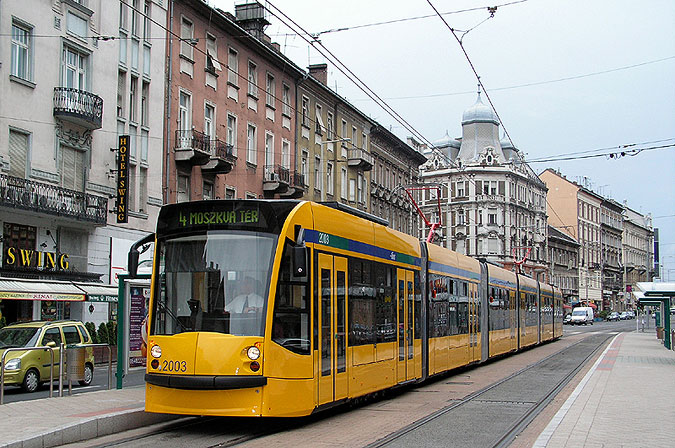
http://cincystreetcar.files.wordpress.com/2009/01/modern-european-streetcar.jpg

It looks like Fort Worth is one of the big winners for more hot stinky federal cash money for new transit lines. From the FTA announcement website:

Project: Fort Worth Streetcar Loop (Urban Circulator)
Sponsor: The City of Fort Worth and the Fort Worth Transportation Authority
Amount: $24,990,000

The City of Fort Worth and the Fort Worth Transportation Authority will construct a 2.5-mile one-way streetcar loop with between 20 and 25 stops and three vehicles to connect a Trinity Railway Express commuter rail station and Intermodal Transportation Center with the central business district. This will be the hub of a planned streetcar network connecting six designated “urban villages” targeted for redevelopment to the city’s major employment centers, such as downtown and the Near Southside Medical District. Ultimately, the streetcar system will connect residents in four economically disadvantaged areas to job opportunities in major employment centers, while stimulating the redevelopment of walkable urban neighborhoods with a variety of housing choices.

Dallas also gets a hand in the pocket to extend the MATA to St. Paul DART station and loop back on Olive:

Project: Olive/St. Paul Street Loop (Urban Circulator)
Sponsor: Dallas Area Rapid Transit Authority (DART)
Amount: $4,900,000

The Dallas Area Rapid Transit Authority (DART) will build a 0.65-mile urban streetcar track extension to an existing system. This project would link the current McKinney Trolley to the existing DART light rail St. Paul Station and to the McKinney Trolley Olive Street Extension in the heart of Downtown Dallas. The connection to the Olive Street extension would form an entire reversing loop for the trolley, making operations safer and more efficient, while connecting downtown destinations such as the Dallas Museum of Art and the Nasher Sculpture Center to Uptown Dallas.

That is about it for Texas projects except for some chump change to Brownsville. Just kidding. Brownsville is probably doing backflips over a $4 million grant for intermodal station. But the question is, what the heck are Austin and Houston up to???

Tuesday, April 20, 2010

A Clockwork Orange Line

Something to accompany your steaky-wakes and eggy-weggs this morning:

http://entertainment.ie/images_content/ClockworkPic.jpg
Eye-opening ideas.

With funding problems a plenty for not just the orange line, but virtually all planned transit lines the DMN Transpo blog has an excellent idea up from the awesomely Texan-named Garl Boyd Latham.

What we are learning is that we actually can't have our steaky-wakes AND eggy-weggs AND eath them too all at the same time despite knowing full well that transit capacity and hierarchy of service is necessary for the city's and region's long-term viability. The world is no longer made of funny money...and this is a good thing. Funny money makes for incredibly (and sometimes indelibly) stupid and short-sighted city planning. It gives us time to pause...and prioritize. What is most important?

Latham's idea is to finish the Orange Line to the airport and I agree with him that connecting downtown to the airport(s) should be a priority, representing a carfree link to the global economy. If your city doesn't have that, good luck in the competition of cities of the 21st century.

One issue with the Orange Line as currently planned is that once complete, it will create a logjam of trains on the existing downtown line along with the Red, Blue, and Green all converging along the same corridor of limited capacity and inherent (in)efficiency to move them all through the City. Hence the reason for D2. The thought was that D2 would run through the southern portion of downtown, alleviate pressure on the current line and leverage private investment in the neglected areas of town.

Sounds pretty good right. Of course, there are also financial realities. One D2 alignment costs approximately $300 million. That's the cheapest. The City's preferred alignment, to the new "bricks and mortar" project, the convention center hotel, costs approximately $600 million (jaw ->floor).

Oooooooh-Kay. Time to rethink. Rather than run a second line through downtown, Latham suggests running the Orange line directly to Union Station, eschewing the train traffic snarl on the current line.

A direct link from airport to Union Station immediately increases Union Station's significance within the city. Currently, it is an afterthought. If that becomes the single place for businessmen (and women) to catch their ride to the airport, it once again becomes a hub of activity. Furthermore, it is only two blocks from the Convention Center Hotel and provides the opportunity to leverage the value of land around Belo into functional urban fabric.

His other idea is to effectively replace D2 with streetcar. I like this idea for several reasons:
  • Streetcar is cheaper than DART lines which are much closer to heavy rail than they are light rail. Streetcar can cost around $20mil/mile where DART lines could be anywhere from $80mil/mile or in downtown or subway type conditions upwards of $200mill/mile.
  • Streetcars run on the street and help to calm traffic making downtown roads more walkable, which is necessary for urban investment and development.
  • DART hasn't shown the ability to leverage much in the way of retail activity. My guess is the reasons are two-fold: it serves a much larger area meaning that, like highways, it serves macro-destination to macro-destination: 'burb to job center (downtown) whereas streetcar is much more fine-grained. Second, it hasn't shown the ability to "mingle" with cars and pedestrians alike the way streetcar can.
  • The geometries of a heavier rail like DART make it difficult to turn and corner within the confines of downtown urban fabric. We end up with more spaghetti under in and around the freeway spaghetti which act as barriers, further disconnecting downtown from its foundations, the neighborhoods adjacent.
  • Streetcar is best at leveraging investment in areas immediately adjacent to downtowns, which I'm slowly but surely leaning to the opinion that Downtown is so constrained that if you don't remove the freeways, you have to build up the value around downtown in order to make downtown viable.
  • Because streetcar is more pedestrian friendly AND cheaper, it generates more bang for the buck by way of private investment, which means...
...take whatever money is alotted for D2 and:

1) Run streetcar from Union Station to Oak Cliff as is currently planned.

2) Run streetcar from Union Station down Canton/Young into Deep Ellum.

3) Do NOT move MATA off of St. Paul and extend it past Main Street Gardens to intersect with the new Canton/Young line with plans to eventually run it to the Cedars.


Everything is linked into Union Station, and if we ever plan on having High Speed Rail, Union becomes a true multi-modal facility serving the various necessary hierarchies of transportation in order to properly link downtown with the local, metropolitan, regional, state, national, and international economies and returning "pride of place" back to Union Station as downtown Dallas's front door to the world.

Thumbs up.

Thursday, April 8, 2010

Streetcars - Overhead Wires or Not

DC has a fight on its hands apparently as a 37-mile streetcar system was ready to start digging up its streets for the first phases of what the Washington Post rightly suggests is about "connecting neighborhoods rather than merely moving commuters."

Opponents, which are many and not of the inconsequential or disorganized kind, point to a longstanding ordinance banning any overhead wires for utilities, all of which are buried. As Dallas and Fort Worth both move forward with planning for streetcar lines, this might be another element to throw into the equation.

You'll notice some developments around the DFW area such as Addison Circle and Legacy Town Center where the utilities are underground, and it makes a significant difference. For the contrast, take a stroll through the State-Thomas neighborhood in uptown Dallas, where burying the utilities was optional for the developers. The patterning of overhead vs underground is helter skelter and disorganized.

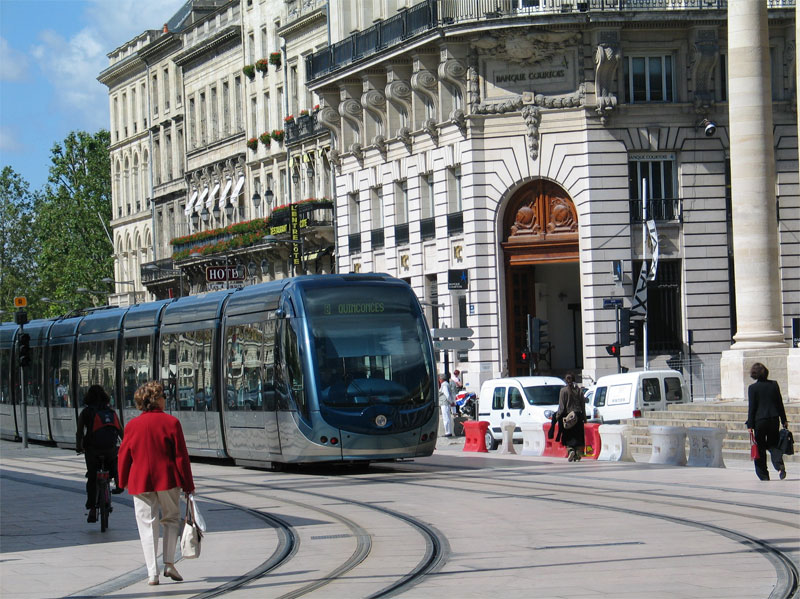
Greater Greater Washington has a new post up suggesting DC at least undergo a study to determine the exact cost/benefit differential for underground power instead of a pole and catenary system typical of most streetcar systems. They also include a picture of Bordeaux, France with their system implemented in 2003:

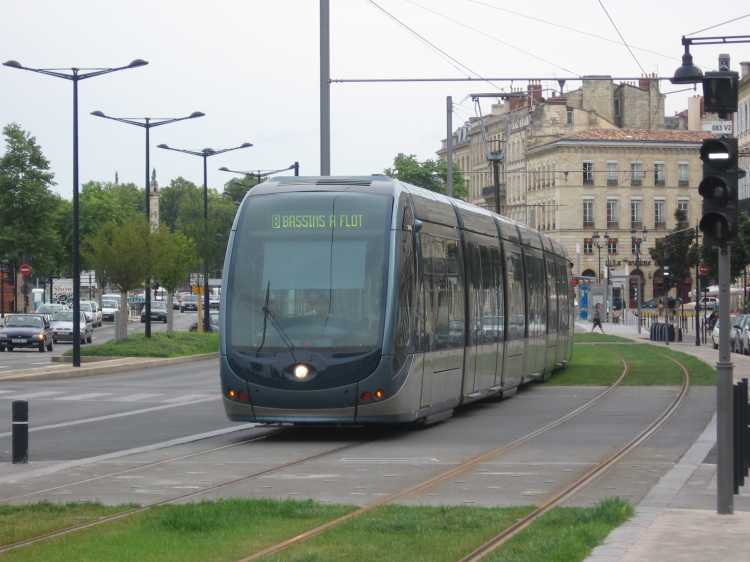
Bordeaux with ground power:


Bordeaux with catenary system
http://www.gardentrains.co.uk/2001web/2001webpics/2001web1to1/francebordeaux3.jpg

I have never been a big fan of the system of wires cluttering streets in order to operate streetcars. But, while it is easy to show pictures of a clean (no wire) systems, if it is too cost prohibitive, in my opinion it isn't worth throwing the baby out with the bathwater.

Thursday, February 18, 2010

One if by Car, Two if by Streetcar

Streetcar is coming. Streetcar is coming!

I'm sure most of the regular readers of this site have heard the good news. Dallas won a federal TIGER (transportation initiative) grant for $23 million to start design and construction of the proposed 1st phase of the modern street car line. The second piece of good news, is that it is actually going to be one of benefit rather than the tourist trap downtown loop initally proposed. The flip side of this story, is that while the application was pursued in concert with Fort Worth, the federal government took it upon themselves to extricate Fort Worth from the receipt.

There has been some speculation that red Tarrant county was victim of some partisan politics from the Feds. First, whenever I see the victim card played, typically red flags go up in my head. Before we start getting all conspiracy theory, let's remember that between the high speed rail and TIGER grants, that some of the biggest winners have been states with Republican governors. So without cynicism, perhaps we might find other reasons for Fort Worth being left out...like the feds might have some concern that Fort Worth is double-dipping with multiple applications (ie the New Starts Grant later this year)? That is just a guess, but one that I think might be a little more logical.

It is a setback, but ultimately one more of timing and inconvenience than anything else. The shame of it is, that in my opinion the area of Fort Worth due to get the early phase streetcar is more lined up for immediate real estate investment. This is where the real value of streetcar is found, ROI. I'll have more on this later, but first think about the kind of returns via private investment Portland ($2.5 billion) and Tampa ($900 million) talk about with their streetcar lines. And Tampa did virtually everything wrong!

So maybe there is hope for us when we begin to get off the rails (pun rather intentional)...
--------------------------

For the uninitiated, the first question one might ask is, "more streetcars?! Like that old-timey trolley thingy on McKinney Avenue? In fact, no. These will be sleek, quiet, comfortable low-floor, accessibly loading modern streetcars. And, I'm told that they will be purchased domestically from a company in Portland (rather than the Siemens cars), so I don't have to spend time belly-aching about bailing out Ford to build more stuff that we don't need rather than overhauling plants to build that which we will.

As freeways were the way to the future for the baby boomer generation, making the streetcar "of its time." Anything resembling nostalgia will limit its potential and reach towards the new population bubble, the Millennials.

Beyond style or preference, I find that the contemporary if not almost futurisitc look is an important indicator of progress to the public at-large. It is a subtle, but important message for building support that the City of Dallas is serious about building a great city rather than any feeble attempts at freezing people in time like a ride at Disney. This isn't about tourists, it is inclusive, but primarily for residents (the significance of which I will explain in a bit).

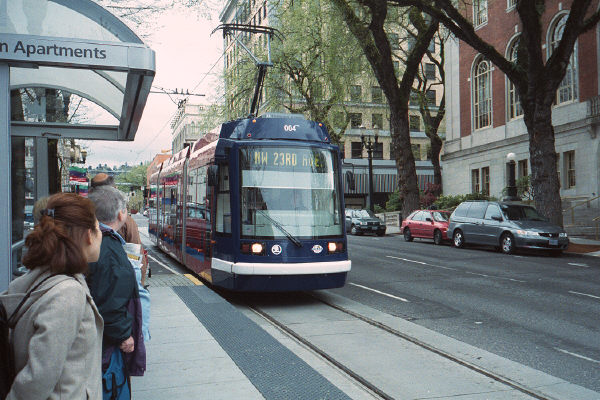
I expect them to look more like these Portland cars...
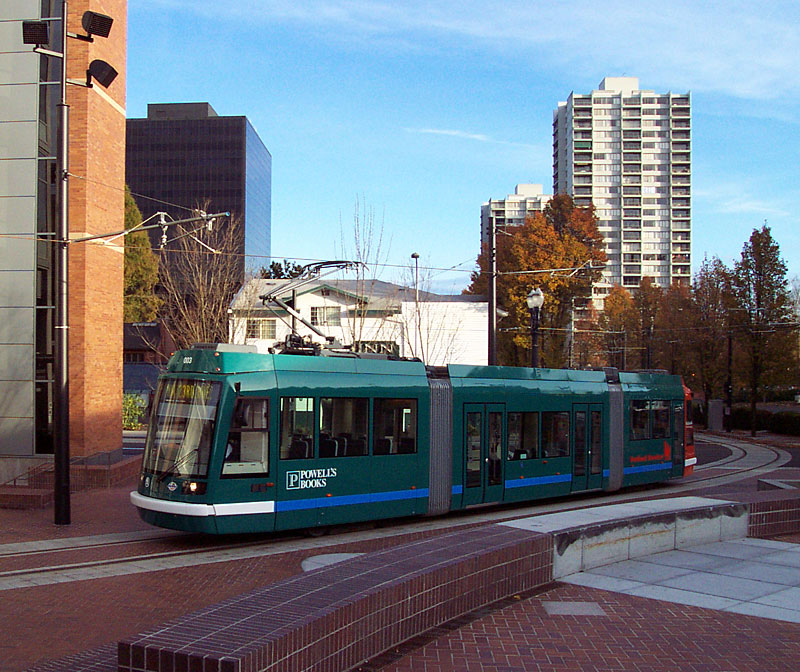
http://www.dogcaught.com/rfimg/0605/streetcar-psu.jpg

But, it is fun to check out what some other cities have:

Lyon
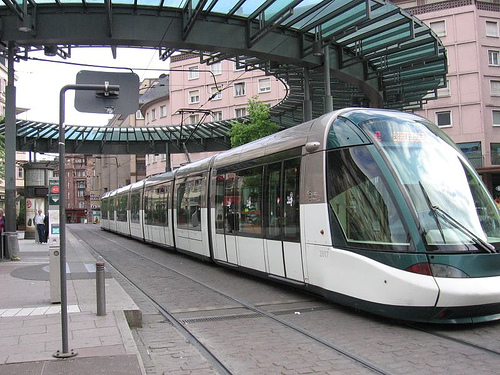
http://www.ecocompactcity.org/Eco-public-transport/big/Tram-big-Strasbourg.jpg
Strasbourg

Your second question might be, "what can this possibly do for me?" First, why turn your nose up at $23 million dollars from the Federal government that isn't going towards highway expansion (although as part of the TIGER grants, somehow something called "innovative highways" [guffaw] received funding including a highway expansion in Dallas. I guess being second in highway lanes per mile just isn't good enough. Kansas City, don't you know everything MUST be bigger in Texas, for better or worse - we make no qualitative distinction, or lest we consider ourselves failures and frankly, we just can't live with that.).

Public transportation can often be a lightning rod because of its relatively high upfront costs and seemingly low revenue generation. It is important to remember that no form of transportation on the history of the planet was ever "profitable" in and of itself. Even for me to ride a bike to the new bowling alley bar in Deep Ellum this Summer requires 1) cost to buy the bike, and 2) energy, ie calories. I have to eat a powerbar to expend the energy to get to my destination. Yet, it seems free, just like it does to hop on the highway and drive to Walmart. The true costs have been "unbundled," so the average person has no idea how much they've been screwed over by the automobile monoculture.

The primary purpose of transportation is to facilitate the functions of city (the transaction of human needs/wants), as Mumford states, "to concentrate the greatest variety of goods and people within that limited area, in order to widen the possibility of choice without making it necessary to travel. A good transportation system minimizes unnecessary transportation; and in any event, it offers change of speed and mode to fit a diversity of human purposes."

Car monoculture dislocates these operational efficiencies and have since, as predicted, proven a failure fiscally, environmentally, economically, socially, and medically.

Second, is that streetcars by nature encourage density (eek density! Arm yourselves with crosses and garlic!) and density pays the bills; it requires less infrastructure per capita lessening the tax burden on everyone. This is the ROI that I spoke of regarding streetcars and transportation in general.

Here is where I say, "this is how transportation should always be thought of, but never is." Except that I am not too naive to understand that it is FAR too easy to externalize certain factors/costs, and convince people that a new highway is actually a good expenditure. The question you have to ask people then really comes down to, how do you want to live, how do you want your city to look?

Third, the streetcars will help to lessen the burden on downtown parking for workers, as streetcar is best suited for short- to intermediate-range commuters. Less demand, with all that supply (OMG ALL THAT SUPPLY) could mean lower costs for parking for commuters into downtown. Though, that is a very slippery slope into circularity of argument.

Fourth, streetcars help lead to safe, interesting, vibrant areas - with unique restaurants and experiences. Note that I didn't say "will." The implication being that streetcars are some magic bullet for livable cities. They are one in a kit of parts. As I've said before, if it isn't part of a chicken/egg dilemma, you probably aren't on the right track toward building more livable cities.

See McKinney Avenue. It took the state's first TIF, will of city leadership/stewardship, and private developers willing to take a monumental risk so big that they had to go oversees to find lending for projects in what was one of the worst areas of the City 20-30 years ago. Now we have things like Crooked Tree coffeehouse, the prototypical third place/hole in the wall, offering character while indicating a mature, resilient, complete neighborhood. (Yes, I shamelessly plug my favorite spots in the City: those that are local, embedded in their community, friendly staff, and full of character.)

---------------------------------------

Historically, streetcars were largely private investment tools for new neighborhood creation. They were a scaled-down version of the common mass transit at the time, trains, and served a scaled-down catchment and service area. In this case, they unlocked the value of land immediately adjacent to very compact downtowns, as developers sought to capitalize on the demand to get out of cities that had become polluted/corrupted by industrialization.

These were the first suburbs and you still see the vestigial remnants of the emergent city forms in Lakewood and Bishop Arts. The underlying forces dictating these efforts were not unlike what continued to happen building further suburbia. The difference however, is that the streetcar suburb was still walkable, it still had a functional urban form, and a workable and predictable hierarchy imposed by the permanence of a fixed-line transportation element where the singular dominance of the automobile and its infrastructure diffused people, spaces, and buildings into "anti-city" where each component not only no longer communicated with the other elements of the urban equation, it now ignored them. Anti-city meant anti-economy.

Dallas, feeling its supposed raison d'etre went nuts with the new fangled contraption building over 200 miles and one of, if not, THE most extensive networks in the country, which coincided with a wave of building that made Dallas arguably one of the most beautiful cities in the country. You know the rest of the story.

Not coincidentally, streetcars are logically seen as one of the items to help restore the areas they helped to create one hundred years ago. In the modern megalopolis, each region of the city needs to have the appropriate scales of transportation to serve it in relation to its context. Streetcars typically serve areas within 1/2 and 3 miles of the primary convergence point, core or destination, typically a job center, ie downtown. These are the areas that have become blighted and desolate for the most part, and now have the potential to go from 0 to 60 as fast if not faster than did uptown Dallas because they will be swimming with the tide rather than against what is considered "conventional."

I'm not going to spend much time on the original downtown loop plan since I spent a couple of thousand words on it already, the methodology based on the form of transit and its purpose/history was so fundamentally flawed (or ignored) that it really isn't worth revisiting, but here it is linked if you want to check it out. The right decision was made in the end, I'd like to give the proper credit to those that helped make that decision, so the comments section is wide open for you. I know OCTA had a lot to do with it, but somebody above them had to make that call.

While I think a case can be made for Ross Avenue or Deep Ellum to get the first line, I think it is 1) important politically to address South Dallas and 2) Oak Cliff already has a more robust and defined character that makes the area ripe for success. The goal will be to allow that almost Austin-like [ducks] funkiness to remain under the extreme pressure of investment and new development. Some might call this gentrification, others investment. Either way, it is another engine that must be harnassed to maximize value (of all kinds).

---------------------------------

If we are to look at what this grant means to Dallas, Oak Cliff, and the future of the City, the first challenge at hand, is as always, dollars. The sum of federal spending that Dallas will receive, like many of the proposals, is half of what it had asked for. Can the entire line be built after the hat is passed around, or will the first phase be drastically cut short, especially considering that a good portion of the cost will be allocated to a the long Houston Street bridge that will obviously have no private investment immediately adjacent? Are there creative ways to cut costs?

The plan, as stated in the TIGER award, starts at Main Street Garden at Harwood and Main, head west down Main Street to the West End, hang a left on Houston to Union Station, where it will then cross the Trinity into Oak Cliff. The summarized submission then gets a bit vague stating that it will stop at Methodist Hospital before servicing several neighborhoods. I'm guessing if there will be budget cuts, these neighborhoods are what get expanded to at a later date.

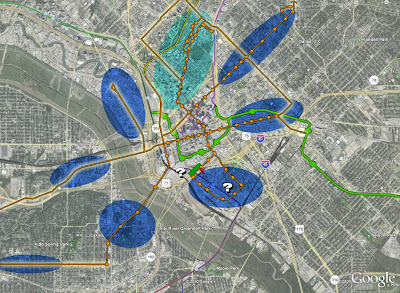
Looking conceptually at how streetcars can strategically reposition areas of Dallas, it helps to establish goals. Mine would be to catalyze reinvestment in the form of high quality walkable urbanism in the districts/corridors shown below. These would all be immediately adjacent to downtown, would create for the kind of urban housing that is proving difficult in downtown, and thus be mutually supportive of downtown Dallas. If I were to prioritize these areas based on need of immediate investment (desperation), readiness (somewhat subjective), and potential for future buildout (or what is the ceiling/highest and best use for this area?), it would be as follows:

1. Oak Cliff (between Bishop Arts and the Trinity)
2. Deep Ellum
2b. Ross Avenue to Lower Greenville
3. Cedars
4. Fort Worth Ave
5. Industrial Ave/Design District
6. Davis Street
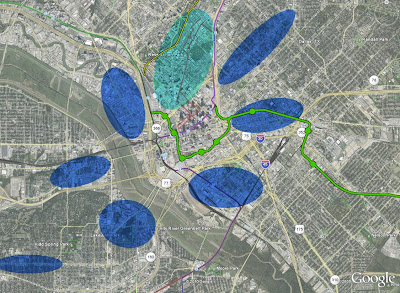

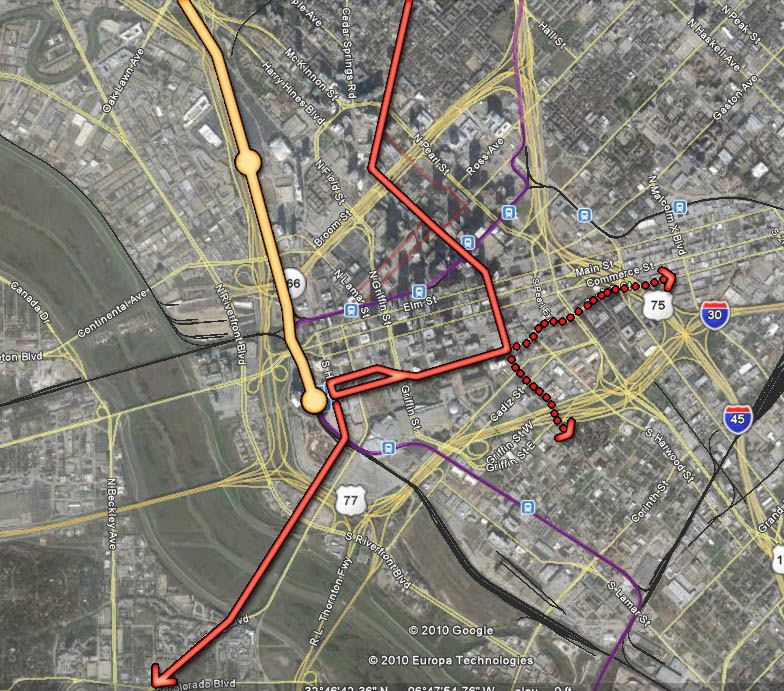
New/Future DART Line in green. Katy Trail in yellow. Uptown area served by MATA in aqua.

So if we add in the new phase, and stop it at Zang and Davis to save approximately $20 million/mile while still serving Methodist Area and being a 1/4-mile within Bishop Arts, I think this would be logical. There might be some desire to loop it back on Beckley, but as I'll get into, I would avoid "loops" in favor of Y- or T-turnarounds in a parking lot if the rights can be had.

(click to embiggen)
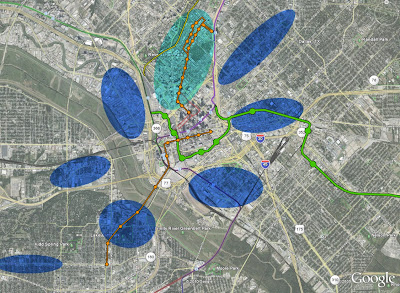

Rather than building loops, the next couple phases should focus on extending lines through downtown to the other areas in need of transportation alternatives and private investment. This would minimize transfer between lines to (typically) one at most. If I'm on Lower Greenville and decide I want to pizza at Eno's in Bishop Arts, if lines criss-cross, I can more predictably navigate my way on two lines max, rather than riding into downtown, catching the downtown circulator to some stop that I might not be sure of to catch the car heading towards Oak Cliff. Amount of transfers can be a mental barrier and should not be underestimated in terms of how it effects ridership.

This expansion consists of probably three phases. The first that I would execute would be to extend the MATA to Main Street meeting the new line, which would simultaneously be extended into Deep Ellum, thus directly linking Bishop Arts and Deep Ellum on one line. The next phase would take a radius line from the Arts District on Ross to Lower Greenville.
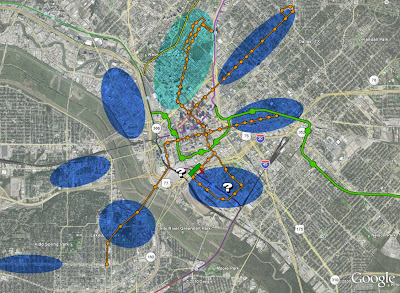

Eventually, the MATA/uptown line that is now extended to Main Street would continue down St. Paul to Old City Park and into the Cedars. If you look closely (or click to embiggen) I included several graphics along with this line. The first that I would like to discuss is the questionmark within the Cedars loop. As I said earlier I don't care for one-way loops. Maintaining both directions within one right-of-way creates for more predictability and "convergence," which is necessary for commercial or mixed-use areas. This also allows for movement all on one-track with switch points at stopping areas for cars in different directions to pass. This can be cheaper but difficult to design.

Also, one-way loops makes permanent one-way roads. We may not be ready for them now, but we might some day. And, in fact I would call it a priority to start thinking of all downtown roads as places rather than escape routes (link to highway as agent of disinvestment) and begin converting them to two-way streets. If you know me, you know that I often stress flexibility and adaptability, as none of us is clairvoyant enough to design for 2050 issues, but we can allow for the ability of those who are living in them.

The Cedars however, and areas like it that exist essentially as peninsulas, it will be primarily residential with some smaller scaled-neighborhood support type functions rather than any kind of high intensity mixed-use or commercial that you might see along Ross, Davis, or in Downtown.

Furthermore, in residential areas, you want to get as close to the residents (in this case even the hypothetical ones) as possible. With streetcar, the catchment area may only be 1/4-mile and with the dimension of the Cedars it makes sense to loop the track on Corinth, Lamar, and then Cadiz back to St.Paul (as shown). This would reposition the maximum amount of city blocks for redevelopment/improvement.

At Woodall Rogers, you will see a red "X" and a green blob. The red X would represent the cleaning up or "context-sensitizing" of R L Thornton through downtown. Cloverleafs are a property value killer and highly inefficient use of land that should be much too valuable for a spacious on/off ramp. These should be cleaned up. The green blob would be a new deck park (ya know, provided any/all of these highways go away as they should) over the freeway. This repositions the south side of the convention center (to help alleviate the gigantic barrier that the CC is) as potentially new office development and the North side of the Cedars as higher density residential/mixed-use on the park. This part of the street car phase then would complete a loop between Main Street Garden, Old City Park, and a new deck park.

Long-term:
Obviously highly conceptual.