




Showing posts with label Gizmo Green. Show all posts

Wednesday, February 3, 2010

Short Post on "Creativity"

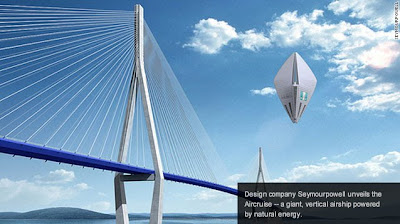
Some things just leave me in stitches. Like this idea at CNN.


Apparently, we all need to stay in hotels in the sky. Are our cities so deplorable that it defines luxury to get away from them? I don't think so. It's not like we're in Beirut or Baghdad here. Certainly not at exactly the same time that value and demand is returning to urban cores while poverty and crime is making its way to the suburbs.

Efforts like these are tremendously funny for their over the top ridiculousness, typically when they are efforts to distinguish class. Or they can also be incredibly offensive, like when they are experiments on the poor, most often explored and made visible after a disaster.

This isn't exploring new territory really. It is walking down an intellectual cul-de-sac masquerading as real problem solving. You don't get very far down the road until you realize no one is following you and have to turn back.

It is what I often call, unapologetically, "starchitectural douchebaggery," only a far more malignant strain of the virus. These efforts often aren't so much conducted by an established starchitect as it is by a wannabe starchitect, looking to make their mark. They are constructing their efforts for fame and glory on the same logic we are seeing discarded throughout the world (or in some cases, even washed back out to the seas of uselessness).
I'm gonna make a zoo in a submarine at the bottom of the ocean! Won't it be great?!
(City Center in Las Vegas, Burj Dubai, Jersey Shore, and these guys, moderately NSFW - all popping bottles of Grey Goose, seeking acceptance within a higher echelon. Looking to capitalize on a mass movement that has already moved on by, now open to mockery and scorn. Tragic figures really, the lot of them.)

The problem evident here is that the architects responsible (and the cheerleaders/sycophants) are mistaking novelty for creativity. I expect this problem is at least two-fold: first is the ideological bent that has transformed architectural schools into factories sculpters (both real and digital) rather than problem solvers through building. Second, is the financial engineering that created boat loads of funny money.

Ever notice how stupid both individual and group decision-making can get when money loses its value? See all of the above.

As for the implications, Bill Hillier wrote in Space is the Machine (an analytical counter-examination to Le Corbusier's building as machine):
Because theories can be wrong, architects need to be able to evaluate how good their theories are in practice, since the repetition of theoretical error - as in much of the modernist housing programme - will inevitably lead to the curtailment of architectural freedom.
The way to prevent losing freedoms in the real world is to grow up and act like an adult.

Adherents to the cult-like obsession with self-indulgent novelty seeking, like to cast this as "neo-traditional," because in their mind, there is no worse insult in the world than to be considered repetitive of the past. In reality, what is important is empiricism (or the objective application of what has proven to work) and that style is often rather unimportant. Douches, architectural or those found at your nearest club, all interested in novelty and the superfluous. Vapid vestiges of a disposed collective husk of our former selves.

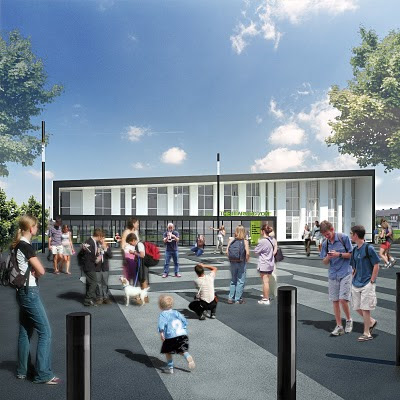
When it comes to shaping the world around us and that which we operate within, architects are our representatives. We seek comfort first, then beauty. This is hard wired into our DNA. We know it when we see it. Or, I should say, when we are within it, because of the digital sleight of hand architects and designers so adept with their renderings.
Hey look! Tons of people, that must be how it's gonna be! And, they're all young, healthy, thin and white! This building will create a magical dreamland!
(author of this blog does not endorse any of this quote)

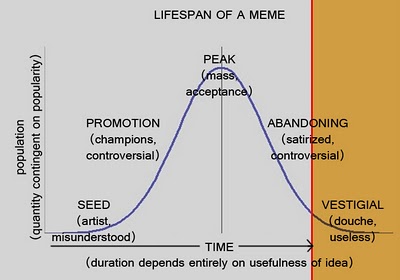
However, as always, there is a necessity for creativity. The difference between novelty and creativity however is similar to that between comedy and slapstick. It is Chappelle show vs. Mind of Mencia. It is Extras vs the American Office. It's David Cross vs Dane Cook. One lives through subtlety and nuance and exists in the first part of the bell curve/timeline above; the other on the back half. One leads, the other tags along.

The difference comes with what is useful, particularly now. Perhaps rather than thinking about how we can make hotels in the sky, or colonize the moon, or casinos under the sea, we should be qualitatively improving that world within which we live rather than seeking to quantitively expand that world:
How can city building respond to a difficult market in a difficult time?

How can I address the problem of sprawl with infill housing, when conventional building methods/materials or existing financial mechanisms prove antiquated or preventative?

How can I be green and still build affordably?

How do we address the issue of mobility in a sprawled out, unwalkable city without suffacating the project's design AND budget in "required parking"?

How do we repurpose our hyper-efficient dying, assembly line industries to meet the massive pent up and as yet unmet demand for in-town affordable housing with access to choice of transportation mode?

How can we overcome the financial instruments behind real estate and their demand for quick return on investments when the best buildings and cities are long-term, shared benefits?

How can I meet market demand for all of the above and still execute it elegantly?
I find this to be the fundamental problem with ReVision Dallas. The entries, at least the winning ones, look like science projects; amateur attempts at problem solving. Many are clunky because they lack identity. They are bad amalgamations of the quest for the future meme (sustainable and community-oriented), but designed by the hand and ambition of the past (superficial, expensive, self-indulgent).

Someday soon, we might grow up and embrace subtlety. Or perhaps, these are all necessary experiments to find the boundaries of what is ridiculous as we're caught in the tidal shift of two memes.


Wednesday, January 20, 2010

ArchRecord on Dallas ReVision

I've made my snarky comments here. Now, that the competition seems to have been finalized (we'll see if it ever gets realized), Architecture Record has an article about it.

Frankly, I found the comments much more insightful:

Reader Comments:
Anonymous}
Anonymous wrote:
These buildings are for Architects, not people.
1/20/2010 11:42 AM CST


Anonymous}
Anonymous wrote:
You've really gotta be kidding...
1/20/2010 11:36 AM CST

Anonymous}
Anonymous wrote:
This is one of the most anti-urban project I have seen in a long time, and Dallas seems to be attracting the worst of the worst. There is zero attention to the pedestrian scale or to context, which ultimately determines whether a project performs well urbanistically. The building frontage design is especially poor. Pedestrians need a lively exchange between the facades and sidewalk to feel comfortable, and to make retail work. This means articulation and permeability at the street level. What else can I say, except overall it reminds me of a prison with barbed wire on top, and the high tech nature is sure to lead to inefficiencies if not downright failures. Sorry, Dallas, thumbs down.
1/20/2010 10:52 AM CST


Anonymous}
Anonymous wrote:
Hideous

Friday, October 16, 2009

Like Least Fat American?

World's greenest skyscraper*, kinda like the world's greenest highway**?

*Being in NYC helps for transportation sustainability, the usual to and fro, but of course there is no mention of how far the material has traveled to build it, or the processes to make the steel and glass and the harvesting of the sources of those structural components. As we linked here before, many LEED buildings aren't nearly as "green" as we think they are. But, that isn't the point. It's an attractive, responsible building that fits in NYC. Does it need to be more than that or is this more marketing drivel run amok? What are our goals?

**First mistake, anything "green" is gonna have to be affordable and secondly, I recommend it doesn't involve cars or anything other leftover residue from the wreckage of the planned obsolescence economy.

Friday, June 26, 2009

Couple Us Designers Wondering We Could Go Family Style on Yer Competition

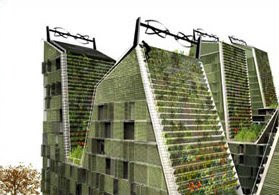
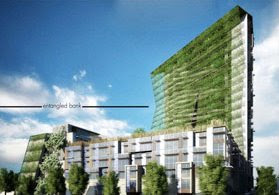
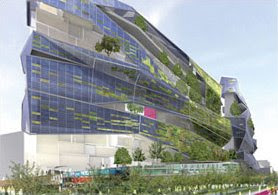
So, we have our winning entries for the Re:Vision Dallas competition. And the results are as predictable, superficial, and cliche as the competition title itself.

Behold:


(Of note: Not one of the three finalists were from Dallas.)

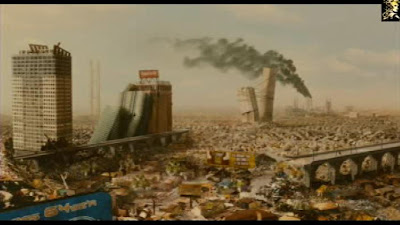
From simply a graphic rendering and architectural standpoint, all of these remind me more of this than anything I would really like to see happen in the city:

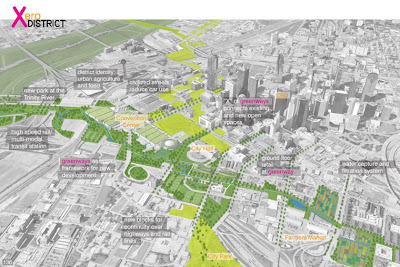
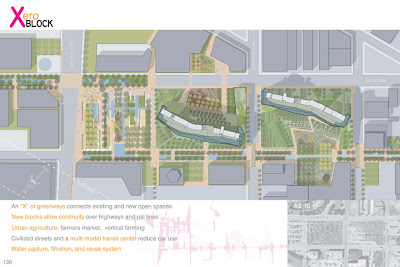
So every team engaged in some serious green washing and green gadget sustainability, which was not to be wholly unexpected. I was actually intrigued at first by this "X" district because a team actually started looking at their site contextually to deal with this site. Until I got a closer look at it. They basically just took the google earth axon view into photoshop and literally added a green connection from the project site to the Trinity River. How novel.
Of course, this would be nice, but they did nothing substantive to address the real issues affecting this site. A green blanket was laid over a fallen city, covering the highways, clover leafs, rail lines and vacant properties so that no one can see its dying eyes. Of course, this is an easy slight of hand with photoshop and a few snappy design catch phrases. No mention or apparently thought was given to how to address all of the grade changes, elevated and sub-grade highways, etc. that provide these impassable barriers.

I advised two groups that competed for this, suggesting to both that the constraints of this site were ALL beyond the boundaries of the actual project, not all of which are physical. No developer would look at this area. It had(has) no context. The freeway has gutted and bombed out both sides of it.

While in the mean time, the country is in deep and transformative recession. Rather than seeing something that addresses in an economically and physically sustainable manner a solution for job losses and failing industries, I still see highways and clover leafs. The two teams I consulted with ended up with solutions looking at how to reuse plain fuselages and the concrete road building industry as structural elements for prefab housing units. Taking one dying industry void of demand and repositioning them into areas of need, in town affordable housing.

Along these lines, I suggested carrying the theme further and restitching the fabric, grid, and parcels, that I-30 ripped to shreds in a methodical, phased, and context sensitive manner. Break down the dying industry of roads and cars, for one of the 21st century, the new American city.

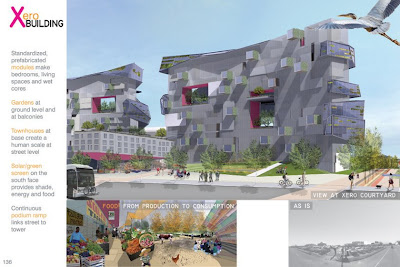
Instead, we get a correlated level of depth and duplicity that puts a blue heron flying across the page:


But how does this building fit within its site you ask?

Towers in the park: We don't want to frame the public realm, those areas critical for vital street life and local commerce, the areas that belong to all of us and make us love and be proud of our cities. We want to make self-referential buildings. In the words of a friend of mine, "IT'S ALLLLLL ME."

Which, in the end, I guess is a fitting eulogy for outside architects embodying globalist architecture where everything is nameless, placeless, and anonymous. It's all on a computer screen.

From the results shown on the website, I felt that "Commonwealth" did the best job of capturing this wholistic view of community healing and rebuilding.

Monday, April 13, 2009

The Battle Against Empiricism

In my CNU-NTX summary of the Duany presentation, I quoted him in reference to Civil Engineers and their quest for the perfect Level of Service A street:
"Under what theology does this work?! Where is the empirical evidence that these street designs make for a better place."
Well, there is a similar battle in the architecture field as well. I thought I might cross-post Michael Mehaffy's email to the Professional Urbanist Listserv, where he significantly expands on my riff against tall buildings (well, not so much against, but more as a voice of moderation to the hyper-density crowd -- I'm merely against them as the ONLY solution) to a broader discussion pointing out the obvious flaws (sometimes fatal) in "green" modernism.

Here he is referencing a paper he submitted to a symposium for classicism and sustainability at Notre Dame, and it is quite good:

  • Large smooth surfaces. These expanses do not age well over time; small dents and accumulations of dirt detract significantly from the pristine aesthetic at birth. At worst, such structures can become blighted and obsolete, and may have to be torn down prematurely. At best they require frequent, costly and energy-consuming maintenance. Presented to the public realm, they can be exceedingly anti-urban, and disruptive of the pedestrian realm.
  • Long unbroken lines, angles and joints. Again, these do not age well and slight imperfections over time show up disproportionately, requiring excessive maintenance and repair -- or, just as bad, suffer a decline in perceived value and appeal. That is clearly not a desirable occurrence when one is seeking sustainability over time. Another potential problem is that the high typical tolerances can be very expensive to produce accurately. A feature that was originally intended to reduce costs (minimalism) can in fact have the opposite effect.
  • Glass curtain walls. Even with the most energy-efficient assemblies, the insulation value of these is a fraction of solid assemblies.
  • Large-scale, deep-plan buildings. These limit daylight and natural ventilation, sever connections with the outside, and disrupt urban connectivity.
  • Large-scale sculptural objects. One key problem is that such structures are difficult to modify and adapt to new uses. This means that obsolescence is more likely if conditions or fashions change not a very ideal strategy if one is seeking resilience and sustainability.
  • Tall buildings. Not exclusively a modernist type, but certainly embraced by modernism, they have a number of serious drawbacks: high exposure of exteriors to sun and wind, high ratio of exteriors to common interior walls, tendency to promote heat island effects (which increases cooling demands), inefficient floorplates due to egress requirements, excessive shading of adjacent buildings, undesirable wind effects at ground, high embodied energy in construction, and expensive, high-energy maintenance. Tall residential buildings have also been criticized on social grounds as forming, in effect, vertical gated communities isolated pods that do little to activate the street or energize the larger urban network. While they can provide helpful density, there are more efficient low-rise forms that can deliver suitable densities too.
  • Reinforced concrete structures; steel frame structures. Both concrete and steel have high embodied energy and high associated carbon emissions from manufacture. The more exotic modernist structures very tall buildings, very large cantilevers, complex shell structures and the like have a proportionately high reliance on these high-energy materials.
  • Limited morphologies of repetition, abstraction, uniformity, and the large scale. Recent cognitive studies have shown that the minimalist form language of modernism, while of interest to other architects and making for dramatic photos in magazines, can be annoying or even stressful to ordinary people going about their daily activities. More research is needed in this area, but there is enough evidence to warrant a much more precautionary approach.
There is also the inherent problem of a continuous tabula-rasa, experimentalist approach, as a sound basis of producing robust and enduring designs - rather like

And I discussed the following advantageous features of what may be called "the traditional family of forms and types:"

  • Exteriors with articulation, detail and ornament. These features can hide dirt and wear, and actually improve in appearance with time. They also seem to make important contributions to pedestrian scale and interest, which is necessary if we want to create a functional pedestrian environment and a healthy public realm.
  • Complex relation of interior and exterior. The oft-maligned front porch and picket fence actually play sophisticated roles in creating connective layers of private and public, a kind of membrane system spanning between the innermost private spaces of a building, and the most public realms outside. The same is true for galleries, arcades, stoops, colonnades, balconies and other traditional types.
  • Focus of the building on its public realm. Most buildings prior to 1920 paid close attention to the way they addressed the public realm, with legible entries and ornamental details addressing urban space. These strengthened the relation of the building to its urban context, and strengthened the pedestrian realm around the building a critical need for a low-carbon neighborhood.
  • Punched windows. As many have noted, such assemblies reduce the amount of glazing and make it easier to achieve an energy-efficient wall assembly.
  • Low-energy, locally adaptable materials. Often traditional buildings have used locally available materials that have not required extensive industrial processing. Wood, for example, was relatively easy to work, and served to capture carbon. Even brick was usually quarried from local clay sources, and fired nearby with relatively modest energy requirements. These materials also made repair and modification easy and efficient, resulting in resilient and long-lasting buildings.
  • Thermal mass. Many traditional typologies have used relatively thick wall sections, which allowed for efficient moderation of temperatures.
  • Biophilic geometries. This fascinating area of recent research seems to show that for optimum health, human beings need to experience the geometries of nature within their built environments on a daily basis. These include the obvious natural elements like plants, sun and fresh air. But they also seem to include geometries that are characteristic of biological structures, including fractal scales, hierarchical groupings, characteristic proportions, roughness and texture, an optimum mix of unity and variety, spatial layering, a sense of prospect and refuge, and related geometries. Intriguingly, many historic buildings demonstrated rich aggregates of these characteristics. There is reason to believe they may have played a role in the care these buildings received, and their durability their sustainability over time.

Friday, March 27, 2009

Here's an Idea

As if internal combustion engines weren't dirty enough...

Scientists discover cheap way to turn coal into gasoline. There is always one asshole at every party, I suppose:

Cause:
The new process could cut the energy cost of producing the fuel by 20 percent just by rejiggering the intermediate chemical steps, said co-author Ben Glasser of the University of the Witwatersrand in Johannesburg, South Africa.
Effect:
But coal-derived fuel could produce as much as twice as much CO2 as traditional petroleum fuels and at best will emit at least as much of the greenhouse gas.
Ha! Yeah, like that is important...as if radical climate change even exists...NOW GIMME MY GAS and STFU!!!!

Actually, the scientist can defend himself:
"The long-term solution has to be solar, wind, renewable, but in the meantime I know as a chemical engineer that the easiest thing is to improve on what you're already doing," Glasser said. "The hope is that what we learn with coal-to-liquids, we can take one step further and start using municipal waste or cooking oil, for example, as the carbon source."
Not to mention the problems with extraction of coal. This is America. This is America on Gas Crack:


more movies at www.miloop.com

Monday, February 9, 2009

The Myth of the Efficient Car

Let’s get something straight about green industry: in its basic form it means we all have to buy new stuff … lots of it. As an industrial policy that will create jobs and increase spending, it’s pretty sound. As an environmental policy, it’s largely a fraud.
Bravo.

...and what you might not think about:
But there’s an even more profound problem with building more efficient cars. In 1865, English economist William Stanley Jevons discovered an efficiency paradox: the more efficient you make machines, the more energy they use. Why? Because the more efficient they are, the better they are, the cheaper they are and more people buy them, and the more they’ll use them. Now, that’s good for manufacturers and maybe good for consumers, but if the problem is energy consumption or pollution, it’s not good.

Thursday, January 22, 2009

On the Arts District and the Place Architecture is Leaving.

The Foster + Partners bldg is truly gorgeous. You could tell it would be from the very first renderings years ago. The OMA/Prince Ramus Borg Space Ship ...not so much.

[Imagery from nthomas7627's flickr photostream]


[A new analogy. Ready to capture hundreds of patrons of the arts.]

Unfortunately, for the Winspear, like many "object buildings" it needs a frame. We can frame it with our camera lens and it looks great, but ultimately a building is not intended to be experienced on a sheet of paper. I don't mean to be derisive about this building, but ultimately without the urban fabric to "frame" it, it is not an environment, merely an object.

This is the heart of the problem with architecture currently, which is really just residual from the 20th century and dying thankfully. A building has to know its surroundings. It can't exist in a vacuum. The Foster design understood this, which is why one can visualize it set within a more vibrant district lined with "background buildings." It is both dramatic and subtle, iconic yet with humility. The pseudo-Koolhaas/ultimately-Ramus building did not, which is why it looks like it is landing from outer space.

Rather than let it stand out against a foil of standard urbanity, the problem is exacerbated with other sculpture, crying babies screaming for attention. The arts district in its current bastardized form is incoherent b/c rather than stand out, it merely stands.

A singular building is a post card. A true urban environment is drama. We need to start working on making more movies.